The Problem with Defaulting Missing Time Data
Software systems frequently encounter missing temporal data – dates or times that were not recorded or are unavailable. The common practice is to substitute a default value, such as midnight (00:00:00), noon (12:00:00), the current time, or the beginning of the day. While this makes the data appear complete and simplifies processing, it fundamentally alters the information. An unknown fact is transformed into a known, albeit potentially incorrect, one. This practice can have significant consequences in domains where precision and the acknowledgment of uncertainty are paramount.
Consider medical timelines: an exact time of symptom onset or medication administration can be critical for diagnosis and treatment. In transport schedules, a missing arrival time that defaults to noon could lead to missed connections or miscalculations. Legal deadlines are often time-sensitive, and a default time could incorrectly advance or delay a critical date. Astronomical calculations require precise temporal inputs, and even small errors can lead to significant deviations in predicted celestial events. Historical records, when missing exact times, lose granularity, and calendrical systems rely on accurate temporal sequencing.
The issue was highlighted by an engineer working with a BaZi (Eight Characters) calculation pipeline. BaZi, a traditional Chinese astrological system, uses year, month, day, and hour components derived from a person's birth date and time. If the birth time is missing, the correct approach is to acknowledge this gap and perform an analysis based on the available year, month, and day components, while explicitly stating that hour-dependent conclusions cannot be drawn. Inserting a default time, like noon, would create a seemingly complete chart but weaken its evidential basis and lead to potentially spurious conclusions. This is akin to filling in the blanks of a historical document with plausible but unverified details – it creates a facade of completeness at the expense of truth.
The core engineering challenge isn't about choosing the *best* fallback time, but rather about how to preserve and communicate the uncertainty associated with missing temporal data. The goal should be to make uncertainty visible throughout the data lifecycle, from input and storage to processing and display.
Representing Uncertainty: Beyond Simple Defaults
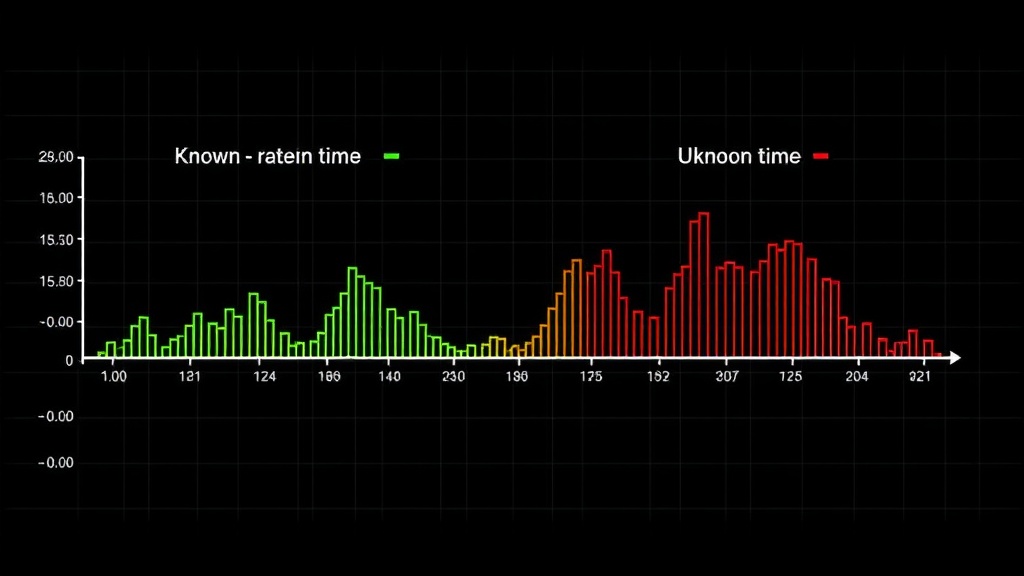
The prevailing approach of substituting default times is problematic because it conflates missing information with specific, albeit arbitrary, values. This can lead to downstream errors, misinterpretations, and a false sense of data integrity. A more robust approach involves modeling uncertainty explicitly. Instead of a single point in time, a missing time can be represented as a range or an interval.
For instance, if only the date of birth is known, the time of birth is unknown. This unknown time exists within a 24-hour period. In some contexts, a tighter bound might be available. If a patient reports symptoms started sometime in the morning, the unknown time is not the entire day, but a subset (e.g., 06:00 to 12:00). This interval representation acknowledges the missing information without inventing it. The software can then perform calculations or make decisions based on this interval, propagating the uncertainty appropriately.
This shift in perspective moves from a data imputation mindset to a data uncertainty modeling mindset. It requires developing systems that can natively handle and reason about uncertain temporal information. This could involve using specialized data structures or temporal logic that can represent intervals, fuzzy times, or probabilistic temporal information. The interface should reflect this uncertainty, perhaps by displaying time ranges or using visual cues to indicate missing or uncertain data points.
Implications for Software Design and Data Integrity
The implications of this approach extend to various aspects of software design and data integrity. Developers need to consider how temporal data is captured, stored, and processed. Instead of nullable fields that implicitly mean "unknown" but are often treated as defaults, systems could employ explicit representations of unknown temporal data.
This might involve using specific sentinel values that are clearly documented and handled by the application logic, or designing databases with temporal types that support explicit representation of unknown intervals. For example, a date-time field could potentially store a start and end time, where a null start and end time signifies a fully unknown period within a known day, or a start time with a null end time signifies an event that began at a known time and has an unknown duration or end. The key is that the system should not *invent* a specific point in time when none was provided.
The surprising detail here is not the complexity of handling uncertainty, but how deeply ingrained the habit of inventing facts (via defaults) has become in software development. This habit, born from convenience, often leads to subtle but significant data integrity issues that are hard to detect and debug. Acknowledging and representing uncertainty is not just an academic exercise; it is a practical necessity for building reliable systems in critical domains.
When software converts an unknown time into noon, it's not just a technical convenience; it's a lie. The honest engineering approach is to ensure that uncertainty remains visible. This requires a conscious effort to design systems that can represent unknown temporal data accurately, rather than defaulting to convenient fictions. The question for developers is no longer “Which default should I pick?” but “How can I ensure my system accurately reflects what is known and what is unknown?”