
Minicart: AI Takes the Wheel in E-commerce
Minicart enters the market with a bold promise: to let Artificial Intelligence handle the operational heavy lifting for online stores. This new platform targets small to medium-sized businesses (SMBs) and independent creators who often find themselves bogged down by the day-to-day management of an e-commerce operation. The core proposition is simple: launch your store, and let AI manage the busywork.
The e-commerce landscape is crowded. From Shopify and WooCommerce to BigCommerce and Squarespace, businesses have numerous options for building an online presence. However, many of these platforms, while powerful, require significant user input for marketing, inventory management, customer service, and order fulfillment. Minicart aims to differentiate itself by abstracting away these complexities. It’s not just another website builder; it’s pitched as an AI-driven operational partner.
Automating the E-commerce Grind
The “busywork” Minicart refers to encompasses a range of tasks that consume valuable founder time. This includes tasks such as:
- Product Listing Optimization: AI could potentially analyze product descriptions and images to suggest SEO improvements or even generate more compelling copy.
- Inventory Management: Predicting demand, flagging low stock items, and automating reorder notifications are crucial for preventing lost sales and overstocking.
- Customer Support: AI-powered chatbots can handle common customer queries, freeing up human agents for more complex issues.
- Marketing Campaigns: Generating ad copy, suggesting target audiences, or even automating email marketing sequences could fall under AI’s purview.
- Order Processing: Streamlining the flow from order placement to shipping confirmation.
By automating these functions, Minicart seeks to provide a significant competitive advantage to its users. Founders can redirect their energy towards strategic initiatives like product development, market expansion, and building brand loyalty, rather than getting lost in the weeds of operational minutiae. This is particularly critical for early-stage startups where resources are often scarce and every hour counts.
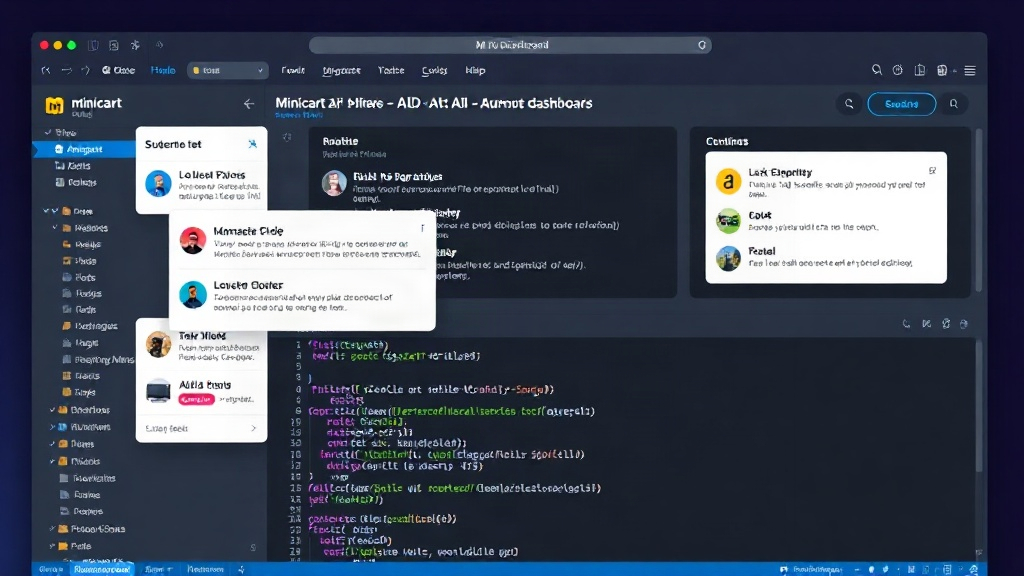
The AI Advantage: Beyond Simple Automation
The integration of AI goes beyond simple task automation. Minicart’s approach suggests a more proactive and intelligent system. Instead of just executing pre-programmed rules, the AI is expected to learn from the store’s performance data. This means it can identify trends, anticipate customer behavior, and suggest data-driven strategies for growth. For instance, an AI might notice a pattern in abandoned carts and propose a specific discount strategy or a change in the checkout process to address it.
Think of it less like a rigid set of tools and more like an experienced operations manager who has analyzed thousands of successful e-commerce businesses. This manager doesn’t just follow a checklist; they identify opportunities and potential pitfalls specific to your business and offer actionable advice. Minicart aims to replicate this level of intelligent oversight, scaled to countless individual businesses simultaneously.
Target Audience and Market Positioning
Minicart is clearly positioning itself to serve a segment of the market that feels underserved by current, often complex, enterprise-level solutions or overly simplistic DIY builders. The ideal user is likely a founder or a small team who has a great product but lacks the dedicated resources or technical expertise to manage a sophisticated online store effectively. This could include:
- Artisans and craftspeople selling unique goods.
- Niche product retailers seeking to expand their reach.
- Content creators looking to monetize their audience directly.
- Small businesses transitioning from brick-and-mortar to online sales.
The platform’s success will hinge on its ability to deliver on the promise of genuine AI-driven automation that is both effective and easy to use. If Minicart can truly reduce the operational burden, it could unlock significant growth potential for a vast number of businesses currently struggling with the complexities of e-commerce management.
What’s Next for Minicart?
As Minicart launches, the critical next steps involve user adoption and demonstrating tangible results. The platform needs to prove that its AI can outperform manual efforts or less sophisticated automation tools. Feedback from early adopters will be crucial for refining the AI models and user experience. Competitors will undoubtedly watch closely; if Minicart’s AI-driven approach proves successful, it could force incumbents to accelerate their own AI integrations or risk falling behind in operational efficiency.
The broader implication for the e-commerce industry is a potential shift towards more intelligent, automated platforms. As AI technology matures, the expectation for online store management will likely evolve. Businesses may soon demand not just a storefront, but an AI-powered engine that drives sales and streamlines operations with minimal human intervention. Minicart is betting that now is the time to deliver that future.