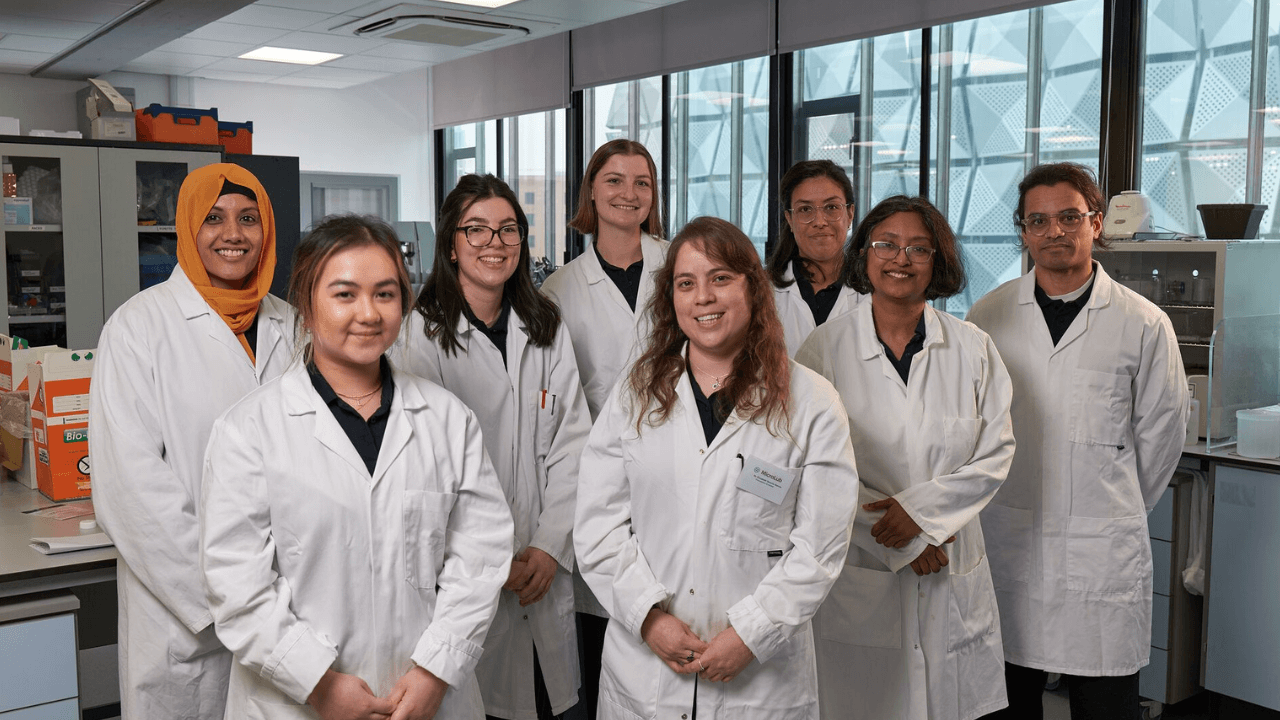
Deeptech Ingredient Solutions Firm MicroLub Closes $10 Million Funding Round
MicroLub, a deeptech ingredient solutions company with roots at the University of Leeds, has announced a significant $10 million funding round. The investment was led by Northern Gritstone, a prominent venture capital firm focused on university spin-outs and early-stage technology companies. All of MicroLub's existing investors also participated in this round, underscoring their continued confidence in the company's technology and market potential.
The company's core innovation lies in its proprietary technology designed to reduce fat and calorie content in food products without sacrificing taste or texture. This is a critical challenge in the food industry, where consumer demand for healthier options is increasingly clashing with the sensory expectations established by traditional, often high-fat, formulations. MicroLub aims to bridge this gap, offering food manufacturers a novel solution to reformulate their products for a health-conscious market.
The injection of $10 million in capital will be instrumental in scaling MicroLub's operations. The funds are earmarked for several key areas, including expanding the company's research and development capabilities, scaling up production of its ingredient solutions, and accelerating commercialization efforts. This strategic deployment of capital is intended to bring MicroLub's technology from the laboratory to widespread market adoption, enabling food companies to integrate its fat-reduction solutions into their product lines.
The Science Behind Taste Preservation
MicroLub's technology is built upon a foundation of deep scientific research, focusing on the molecular interactions that contribute to the mouthfeel and flavor profiles typically associated with fats. Traditional methods of fat reduction often involve replacing fat with carbohydrates or artificial ingredients, which can lead to undesirable changes in taste, texture, and mouthfeel. In some cases, these replacements can also introduce new health concerns or create processing challenges for manufacturers.
The company's approach, however, is different. While the specifics of their proprietary process remain confidential, it is understood to involve novel ingredient structures or delivery systems that mimic the functional properties of fat. Think of it less like simply removing an ingredient and more like engineering a sophisticated replacement that fools the palate into perceiving richness and satisfaction. This allows for a substantial reduction in fat and calories, potentially by up to 50%, while maintaining the sensory experience consumers expect from their favorite foods. This focus on sensory integrity is what sets MicroLub apart in a crowded field of food tech innovation.
The University of Leeds connection is notable. Spin-outs from leading research institutions often benefit from a strong scientific foundation and a pipeline of intellectual property. The university's expertise in food science and related disciplines likely provided the fertile ground from which MicroLub's core technology emerged. This academic pedigree lends credibility to the company's claims and suggests a robust, science-backed approach to solving a complex food science problem.

Market Opportunity and Competitive Landscape
The global market for healthy food ingredients is experiencing robust growth, driven by increasing consumer awareness of diet-related health issues such as obesity, heart disease, and diabetes. Regulatory pressures and evolving consumer preferences are pushing food manufacturers to reformulate products, creating a significant demand for innovative solutions that can facilitate healthier product development without compromising on taste or affordability. This is where MicroLub sees its greatest opportunity.
The competitive landscape includes a range of players, from large established ingredient suppliers developing their own fat replacers to other agile startups employing diverse technological approaches. However, MicroLub's focus on deeptech and its unique scientific approach to preserving taste and texture positions it to capture a significant share of this market. The ability to offer a substantial reduction in fat and calories while maintaining premium sensory qualities is a powerful value proposition for food brands looking to differentiate themselves and appeal to a broader consumer base.
The leadership team at MicroLub, bolstered by this new funding, is now tasked with translating their scientific breakthrough into tangible commercial success. This involves not only refining the production process and ensuring consistent quality but also building strong relationships with food manufacturers, understanding their specific formulation needs, and providing the technical support necessary for successful product integration. The $10 million raise provides the runway and resources to tackle these challenges head-on.
What This Means for the Food Industry
For food manufacturers, MicroLub's technology represents a potential paradigm shift in product development. It offers a pathway to create genuinely healthier versions of popular food items, from baked goods and dairy products to savory snacks and sauces, without the usual trade-offs. This could lead to a new generation of food products that are both appealing to consumers and aligned with public health goals.
The investment by Northern Gritstone, a firm known for backing deeptech ventures, signals a belief in the long-term viability and disruptive potential of MicroLub's science. It suggests that the market is ready for such advanced ingredient solutions, moving beyond incremental improvements to fundamental innovation in food formulation. The participation of existing investors further validates the company's progress and its strategic direction.
The success of MicroLub could also inspire further investment in university spin-outs focused on solving critical challenges in food science and sustainability. As the world grapples with issues of food security, health, and environmental impact, companies leveraging advanced scientific research to create better food ingredients will be increasingly vital. MicroLub's $10 million raise is a clear signal that such deeptech innovations are gaining traction and attracting the capital needed to scale.