Industrial Machine Vision Gets an Edge with Microchip and NVIDIA Integration
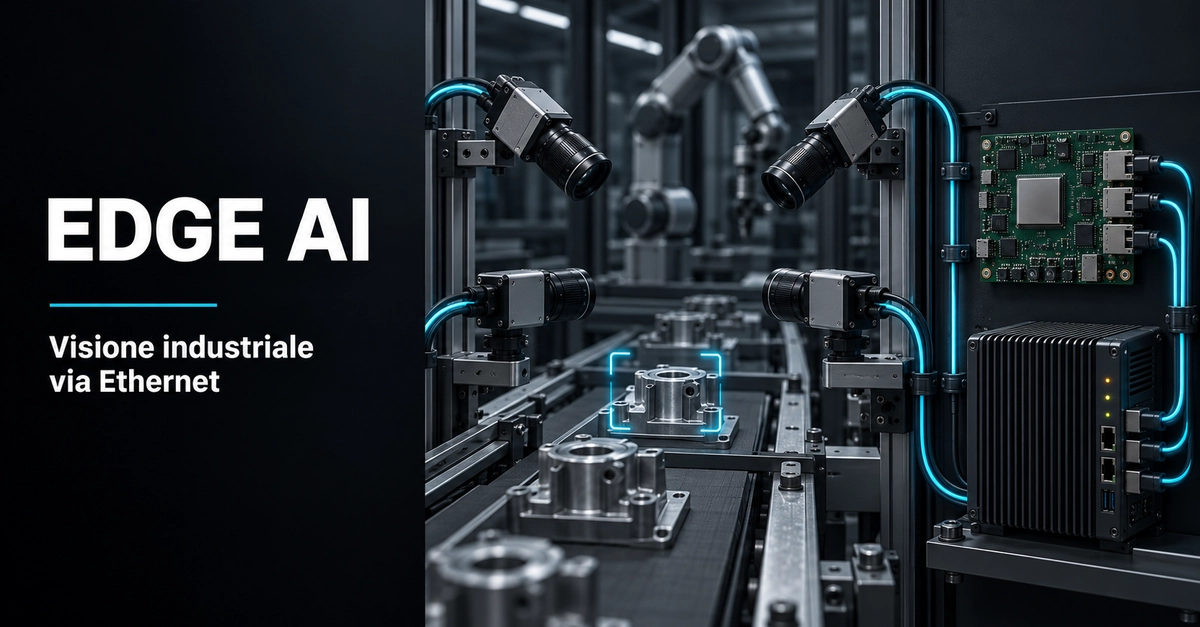
Adding machine vision to an industrial machine means building a reliable chain between what happens on the part and the control system’s decision. Images must show the relevant detail, arrive in time, be processed, and remain associated with the correct component. Once a system uses two, four or more cameras, connectivity, synchronisation and data management become as important as the recognition algorithm itself. This complex interplay is precisely where Microchip’s latest offering, the Revision 2.0 PolarFire FPGA Ethernet Sensor Bridge, aims to simplify operations, particularly when paired with NVIDIA's powerful processing platforms.
The announcement, made on August 11, 2026, positions Microchip’s FPGA technology as a critical enabler for sophisticated edge AI applications in industrial settings. The board leverages Holoscan Sensor Bridge technology, designed to aggregate data from multiple sensors and cameras and efficiently transmit it over Ethernet to NVIDIA GPUs for high-speed processing. This integration is particularly relevant for scenarios demanding real-time analysis, such as quality control, robotic guidance, and automated inspection, where latency and data throughput are paramount.
Streamlining Multi-Camera Connectivity and Synchronization
The core challenge in industrial machine vision systems with multiple cameras is managing the data stream. Each camera captures a specific view or aspect of an object or process, and for effective analysis, these data streams must be synchronised and processed in a coordinated manner. Traditional approaches often involve complex cabling, separate processing units for each camera, and significant overhead in data aggregation. Microchip’s Revision 2.0 PolarFire FPGA Ethernet Sensor Bridge tackles this by providing a unified interface capable of handling up to four Ethernet cameras simultaneously.
The FPGA architecture is key here. Field-Programmable Gate Arrays (FPGAs) offer a unique blend of hardware-level parallelism and flexibility. Unlike fixed-function ASICs, FPGAs can be reprogrammed to implement custom logic, allowing engineers to tailor the sensor bridge’s functionality to specific application needs. This includes precise control over camera synchronisation, enabling high-speed, low-latency data capture that is critical for dynamic industrial environments. The ability to manage multiple camera inputs at the hardware level reduces the processing burden on the main CPU or GPU, freeing up resources for AI inference and other critical tasks.
Leveraging Ethernet for Scalability and Robustness
Ethernet has become the de facto standard for industrial networking due to its robustness, scalability, and widespread adoption. By building the sensor bridge around Ethernet connectivity, Microchip ensures compatibility with a broad range of industrial cameras and existing network infrastructure. This simplifies integration into existing factory floor systems and reduces the need for proprietary cabling or interfaces. The use of Power over Ethernet (PoE) further simplifies deployment by allowing data and power to be transmitted over a single Ethernet cable, reducing wiring complexity and cost.
The Holoscan Sensor Bridge technology, developed by NVIDIA, is designed to accelerate sensor data ingestion and processing for AI applications. When combined with Microchip's FPGA, it creates a powerful pipeline. The FPGA handles the initial data aggregation, filtering, and synchronisation, ensuring that clean, time-stamped data reaches the NVIDIA GPU. This offloading of pre-processing tasks is crucial for maximising the performance of GPUs, which are optimized for parallel computation and complex AI model inference. This collaborative approach allows for higher frame rates, lower latency, and the ability to process more complex vision algorithms in real-time.
The Role of FPGAs in Edge AI
The trend towards edge AI – performing computation closer to the data source rather than in a centralized cloud – is accelerating in industrial sectors. This is driven by the need for immediate decision-making, reduced bandwidth requirements, and enhanced data privacy. FPGAs are well-suited for edge deployments due to their low power consumption, deterministic performance, and ability to handle real-time processing tasks that might overwhelm traditional CPUs. Microchip's PolarFire FPGAs, in particular, are known for their power efficiency and small footprint, making them ideal for integration into compact industrial equipment.
The Revision 2.0 board likely incorporates enhanced features for data buffering, error correction, and secure communication, all critical for industrial environments where reliability is non-negotiable. The ability to implement custom logic on the FPGA also allows for specific pre-processing steps tailored to the type of cameras and the nature of the inspection task. For example, an FPGA could be programmed to perform image correction, noise reduction, or even initial feature extraction before the data even reaches the GPU. This layered approach ensures that the most computationally intensive tasks are handled by the most appropriate hardware.
Implications for Industrial Automation and AI
This integration signifies a significant step forward for industrial machine vision. Systems can now be built with more cameras, capturing richer datasets, without being bottlenecked by data management and transmission. This enables more sophisticated AI models to be deployed at the edge, leading to improved accuracy in quality inspection, more agile robotic systems, and enhanced predictive maintenance capabilities. The combination of Microchip's flexible FPGA connectivity and NVIDIA's AI processing power creates a potent platform for innovation in Industry 4.0.
The surprising detail here is not just the integration itself, but the explicit focus on synchronizing multiple Ethernet cameras. While single-camera vision systems are common, scaling to four or more with reliable, low-latency synchronization has been a persistent engineering hurdle. This solution appears to directly address that pain point, making advanced multi-view inspection systems more accessible and cost-effective to implement.
What remains to be seen is the extent to which this solution will be adopted by camera manufacturers versus system integrators. Will camera vendors start embedding this FPGA-based bridge functionality, or will integrators purchase the board separately to connect existing Ethernet cameras to NVIDIA platforms? The flexibility of the FPGA suggests it could serve both, but the market's preference will shape the future of industrial vision system architectures.