Mela: The Evolving Game Experience

Mela introduces a novel approach to gaming by enabling players and artificial intelligence to dynamically alter game rules during play. This shifts the paradigm from static game mechanics to a fluid, community-driven experience. The core concept is simple: players propose rule changes, and the community, augmented by AI, votes on their adoption. This creates a game that is never the same twice, catering to a desire for emergent gameplay and social interaction. The platform aims to be a canvas for creativity, allowing a wide range of games from simple party games to more complex strategic experiences. The AI component acts as a facilitator, processing proposals, managing votes, and ensuring that rule changes maintain a degree of game balance or at least introduce interesting new dynamics. This isn't just about playing a game; it's about co-creating it as you go.
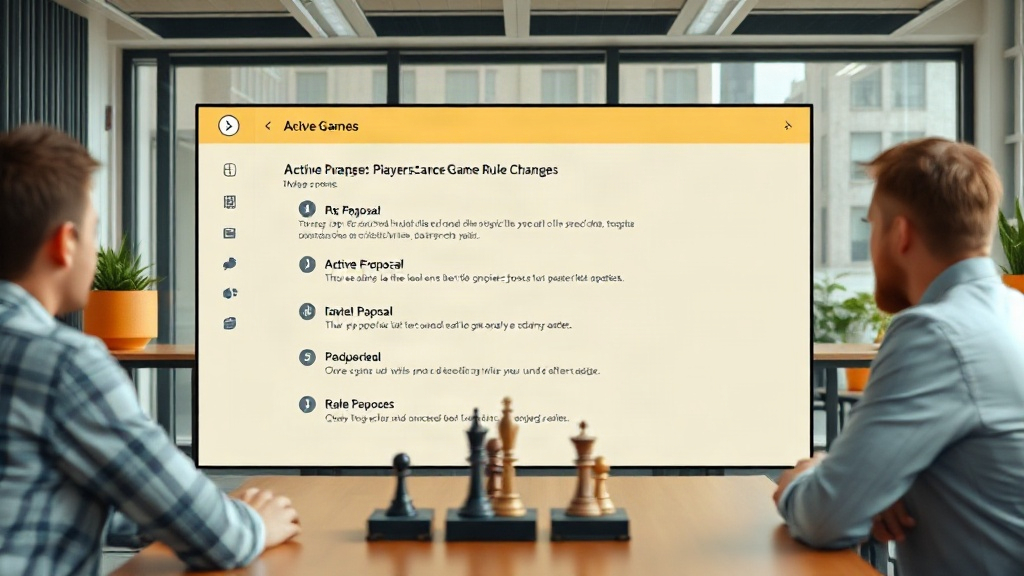
Mela's user interface showcasing active game session with rule proposal options

How Mela Works: From Proposal to Play

Mela’s gameplay loop begins with a player or the AI proposing a modification to the current game rules. This could be anything from altering scoring mechanisms, introducing new win conditions, changing player abilities, or even modifying the game board or environment. Once a proposal is submitted, it enters a voting phase. Players in the current game session can vote for or against the proposed change. Crucially, Mela incorporates AI to assist in this process. The AI can act as a participant in the vote, offer insights into the potential impact of a rule change, or even pre-filter proposals to ensure they are within the game's established parameters or thematic coherence. If a proposal garners enough support – the threshold for which can also be a modifiable rule – it is implemented immediately. This means a game can evolve significantly within a single session. For instance, a cooperative puzzle game might suddenly become a competitive race if players vote to change the objective and scoring. This dynamic rule-setting fosters a unique social contract between players and the system. It encourages strategic thinking not just about how to win the current game, but how to shape the game itself to your advantage or to create more interesting challenges.

The Role of AI in Collaborative Design

The AI in Mela is not merely a passive observer or an opponent. It serves as an intelligent agent that can actively participate in the rule-creation process. Its ability to process vast amounts of data and predict potential outcomes makes it a valuable tool for game designers and players alike. For example, an AI could analyze the current game state and player performance to suggest rule changes that would either balance the game or introduce novel strategic layers. It could also identify exploitative rule combinations that players might not discover on their own, prompting community discussion or proactive adjustments. Furthermore, the AI can help manage the complexity that arises from such a dynamic system. As rules are added and modified, the game's logic can become intricate. The AI can ensure that new rules are compatible with existing ones, flag potential conflicts, and even provide a natural language explanation of the current rule set to any player at any time. This is akin to having a dedicated game master who is always present, always informed, and always ready to help interpret the evolving ruleset.

Potential Game Genres and Applications

Mela's flexible architecture suggests applicability across a broad spectrum of game genres. Simple party games could become infinitely replayable with crowd-sourced absurdities. Strategy games could see their meta constantly shifting, forcing players to adapt their tactics on the fly. Even educational games could benefit, allowing instructors or students to collaboratively design learning scenarios. The platform could also extend beyond traditional games, potentially being used for collaborative storytelling, brainstorming sessions, or even complex simulation modeling where participants can adjust the parameters of the simulation as it runs. The ability to co-create and modify game rules in real-time is a powerful tool for fostering player engagement and community. It taps into a latent desire among many gamers to have a greater say in the experiences they participate in. Mela provides a structured yet open framework for this creative impulse, bridging the gap between passive consumption and active game design. The crowd-sourced nature of rule changes ensures that the game evolves based on the collective will and creativity of its players, making each session a unique exploration of possibility.