The Unsecured Foundation of AI Tool Integration
The Model Context Protocol (MCP) has become a critical piece of infrastructure for connecting AI agents with external tools. It's the handshake that allows applications like Claude Desktop and Cursor, along with countless custom solutions, to leverage APIs, databases, and other services. However, a fundamental flaw exists at the core of MCP: it possesses no inherent security model. The protocol dictates how clients and servers communicate, but it offers no guidance or enforcement for authentication, authorization, or auditing. This leaves the entire burden of security squarely on the shoulders of individual developers, a responsibility many are failing to adequately address.
This lack of a standardized security framework is not a theoretical concern; it has tangible, negative consequences. Imagine an AI agent, acting on a user's prompt, gaining unfettered access to sensitive internal systems. Without proper controls, an AI could inadvertently or maliciously execute commands that compromise data, disrupt operations, or expose critical infrastructure. The current approach assumes developers will implement robust security measures independently for each tool they connect, a task that is often complex, time-consuming, and prone to error, especially when dealing with numerous services.
When Unsecured Connections Cause Chaos
The practical implications of MCP's security gap become starkly clear when considering real-world deployments. Consider an engineer running a self-hosted server environment that includes services like Prometheus for monitoring, Grafana for visualization, Ollama for running large language models locally, Gitea for code hosting, and several other critical applications. The desire to grant an AI agent, such as Claude Desktop, the ability to query these services via MCP is understandable. The typical development path involves creating individual Python FastMCP servers for each service.
These servers, often just a few dozen lines of code, might include hardcoded API keys and tool registrations. While this setup appears functional on the surface, it bypasses crucial security checks. If an API key is compromised, or if the AI agent is prompted to execute a command it shouldn't, the consequences can be severe. The ease of setting up these basic integrations belies the significant security risks introduced by the lack of authentication and authorization mechanisms within the MCP protocol itself. This is akin to leaving the front door of your house wide open and assuming every visitor will only take what they are explicitly given permission to take.
Building a Shield: The Goweft MCP Security Layer
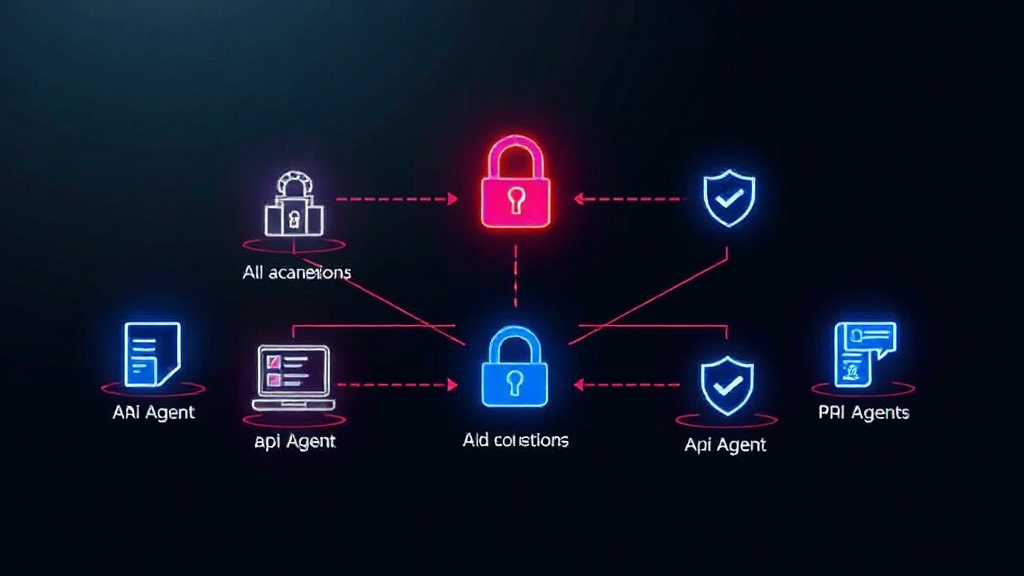
Recognizing this critical vulnerability, one developer, identified as the author of the original post, took it upon themselves to engineer a solution. The result is a security layer designed to augment existing MCP servers, providing the much-needed authentication, authorization, and audit trail capabilities that the protocol lacks. This solution acts as an intermediary, intercepting requests from the AI client before they reach the individual tool servers.
The core components of this security layer are:
- Authentication: Verifying the identity of the AI client making the request. This ensures that only authorized agents can interact with the tool server. It moves beyond the implicit trust model of the current MCP implementation.
- Authorization: Defining and enforcing granular permissions for which tools an authenticated client can call, and what specific actions or endpoints within those tools are permissible. This prevents an AI from accessing or manipulating data or functions it is not intended to interact with.
- Auditing: Logging all requests and actions taken by the AI agent. This provides a crucial audit trail for security monitoring, incident investigation, and compliance purposes. Knowing what happened, when, and by whom (or what AI) is essential for maintaining system integrity.
This approach doesn't require a complete overhaul of existing MCP servers. Instead, it provides a protective wrapper. Developers can integrate this security layer into their existing infrastructure, effectively retrofitting security onto an otherwise insecure protocol. The implementation typically involves setting up a central security service that all MCP requests must pass through. This service would handle the authentication of the AI client (perhaps using API keys, tokens, or even more sophisticated methods) and then check its internal ruleset to determine if the requested tool call is permitted. Only then is the request forwarded to the actual tool server.
The Broader Implications for AI Development
The absence of built-in security in MCP is emblematic of a broader challenge in the rapid development of AI integration technologies. As AI agents become more capable and are granted access to increasingly sensitive systems, the security of the protocols and frameworks that enable these connections becomes paramount. Relying on developers to manually implement security for every integration point is not scalable or robust.
What remains to be seen is whether the MCP community will adopt a standardized security model or if this problem will persist, leading to a fragmented landscape of ad-hoc security solutions. The initiative taken by the developer to build and share their solution is a vital step, but for widespread adoption and true security, a more formal integration into the MCP specification or a widely accepted middleware solution will be necessary. This situation highlights the ongoing tension between rapid innovation and the essential need for robust security practices in emerging technological fields. Developers building AI-powered applications that interact with external tools must now actively consider and implement security measures, moving beyond the convenience of simple integrations to safeguard their systems and data.