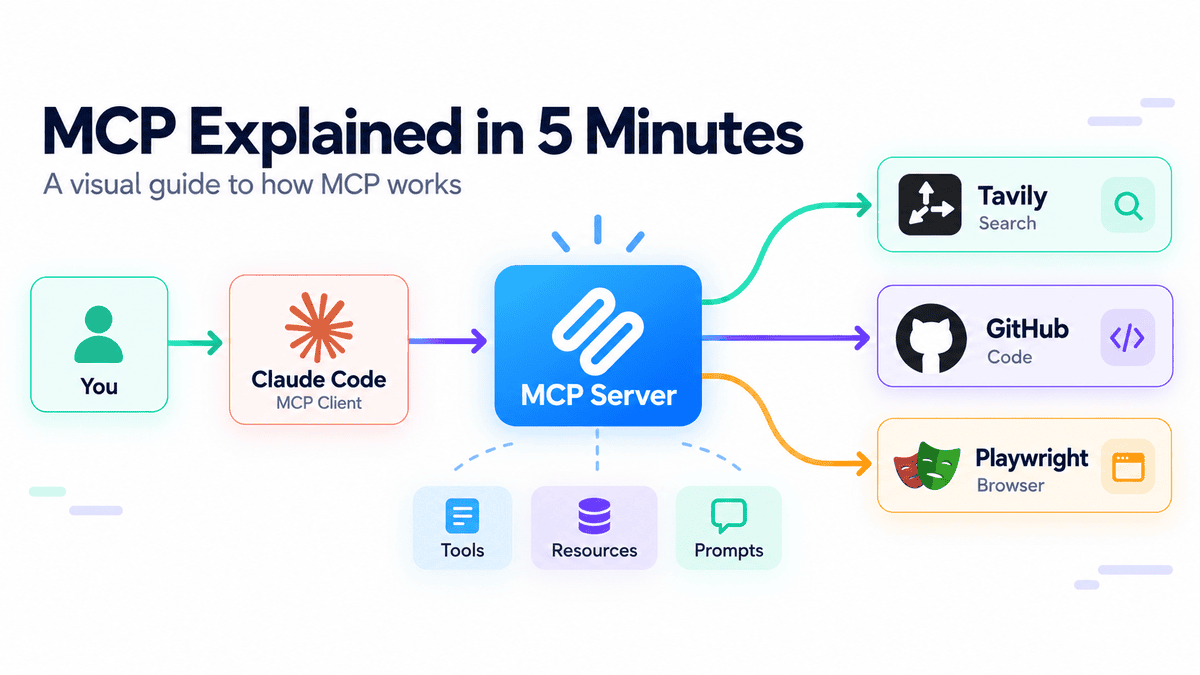
What is MCP? The Core Concept
MCP, which stands for Multi-Claude Orchestration Protocol, is a novel framework designed to enhance the capabilities of large language models (LLMs) like Claude by enabling them to collaborate and execute complex tasks that would typically be beyond the scope of a single LLM instance. Think of it less like a single, highly intelligent assistant and more like a project manager with a team of specialized agents. Each agent, powered by Claude, can tackle a specific part of a larger problem, and MCP provides the structure for them to communicate, delegate, and synthesize their findings.
The fundamental challenge MCP addresses is the inherent limitation of a single LLM's context window and its ability to maintain state and perform multi-step reasoning across diverse domains. By breaking down a complex problem into smaller, manageable sub-tasks, MCP allows different Claude instances to focus on their respective areas of expertise. This modular approach not only improves efficiency but also allows for greater accuracy and robustness in problem-solving. For instance, one Claude instance might be tasked with retrieving information from the web, another with analyzing code, and a third with generating documentation, all coordinated by MCP.
How MCP Works: The Orchestration Flow
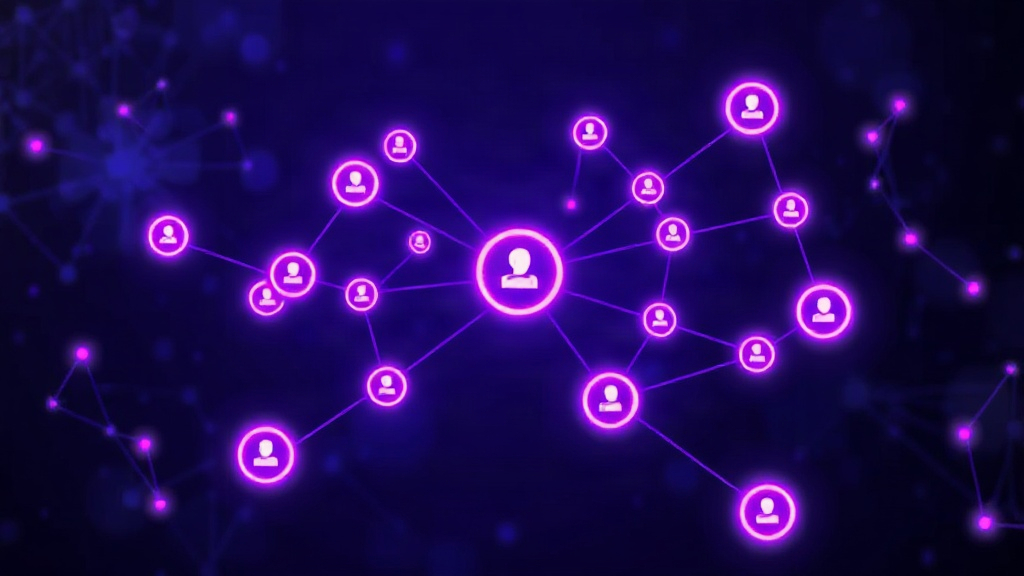
At its heart, MCP operates on a system of message passing and role assignment. A central orchestrator, often another Claude instance or a custom script, manages the workflow. It receives the initial request and then dispatches sub-tasks to specialized Claude agents. These agents are prompted with specific instructions tailored to their role, enabling them to perform their designated function effectively. For example, an agent designed for web searching would receive a prompt that guides it to use a tool like Tavily Search, while a code analysis agent would be prompted to analyze provided code snippets.
The key to MCP's effectiveness lies in its ability to handle tool usage and state management. Claude models can be integrated with external tools, such as search engines, code interpreters, or APIs. MCP defines how these tools are invoked, how their outputs are processed, and how this information is fed back into the system. When an agent needs to use a tool, the orchestrator facilitates this interaction, ensuring that the tool's output is correctly interpreted and passed to the appropriate agent or back to the orchestrator for further processing. This dynamic interaction allows for a level of sophistication previously difficult to achieve with single-prompt LLM interactions.
Integrating MCP with Essential Development Tools
MCP is designed with developers in mind, offering seamless integration with tools crucial for modern software development. One of the primary integrations is with GitHub. MCP can be used to automate tasks like code review, issue summarization, or even generating pull request descriptions. An MCP-powered system could, for instance, analyze changes in a pull request, check for common style violations, and then generate a concise summary for human reviewers. This significantly reduces the manual effort involved in code management and improves the quality of contributions.
Another critical integration is with Playwright, a powerful end-to-end testing framework. MCP can orchestrate Playwright to perform automated browser testing. Imagine a scenario where MCP receives a bug report. It can then instruct a Playwright agent to navigate to the reported URL, perform specific actions that replicate the bug, capture screenshots or videos, and then use another Claude agent to analyze the results and provide a detailed diagnostic report. This combination allows for highly sophisticated automated testing and debugging workflows.
The integration with Tavily Search is equally important for information retrieval. When a task requires up-to-date information or data from the web, MCP can leverage Tavily to perform targeted searches. The search results are then processed by Claude agents, who can summarize the information, extract key data points, or use it to inform subsequent actions. This ensures that the LLM's responses and actions are based on current and relevant external data, overcoming the limitations of static training data.

Use Cases and Practical Applications of MCP
The applications for MCP are vast and span across various domains of software development and beyond. For developers, it can streamline repetitive tasks, automate complex debugging processes, and enhance code quality through intelligent reviews. For instance, MCP can be used to set up an automated system that monitors a codebase, flags potential security vulnerabilities, and even suggests fixes. This proactive approach to security and maintenance is invaluable for large or rapidly evolving projects.
Beyond direct code manipulation, MCP can also be instrumental in knowledge management and documentation. Imagine an MCP system tasked with maintaining a comprehensive knowledge base for a complex software project. It could continuously ingest new documentation, code changes, and issue reports, automatically updating and cross-referencing information. This ensures that documentation remains accurate and up-to-date, a perennial challenge in fast-paced development environments. The ability to synthesize information from multiple sources—code, issues, external web data—makes MCP a powerful tool for building and maintaining living documentation.
Another compelling use case is in the realm of AI-assisted content creation and analysis. For tasks that require gathering information from diverse sources, synthesizing it, and then producing a structured output, MCP excels. This could range from generating detailed market research reports by querying multiple APIs and web sources to creating complex educational materials that require curated information from various domains. The orchestrator can manage the entire process, from initial data gathering to final output generation, ensuring consistency and accuracy throughout.
What’s New and the Future of MCP
The ongoing development of MCP focuses on refining its agent capabilities, improving its error handling, and expanding its integration ecosystem. Future versions are likely to introduce more sophisticated agent specialization, allowing for even finer-grained task delegation. This could include agents specifically trained for performance optimization, security auditing, or even user interface design analysis. The goal is to create a truly autonomous and adaptable AI workforce capable of tackling increasingly complex challenges.
One of the most exciting prospects is the potential for MCP to enable LLMs to interact with the physical world through robotics and IoT devices. By integrating with control systems, MCP could allow AI agents to perceive their environment, make decisions, and act upon them. This opens up possibilities for advanced automation in manufacturing, logistics, and even personal assistance. The ability to coordinate multiple AI agents, each with specific sensor inputs and actuation capabilities, is a critical step towards more capable and embodied AI systems.
The evolution of MCP also hints at a broader shift in how we interact with AI. Instead of issuing single, often ambiguous commands, users will increasingly define high-level goals, and the AI system, powered by orchestration protocols like MCP, will figure out the optimal way to achieve them. This paradigm shift moves us closer to a future where AI acts as a genuine collaborator, augmenting human capabilities in unprecedented ways.