The MCP C# SDK: A Developer's Best Friend in .NET 9
In the ongoing Model Context Protocol (MCP) deep dive series, Part 12 shifts focus from the overarching concepts to the specific tools and techniques that make building MCP servers a pleasure within the .NET ecosystem. Kirandeep Jassal's detailed exploration highlights the MCP C# SDK as a critical component for developers already invested in C# and .NET. The core premise is that if your backend is already .NET, integrating MCP servers becomes a high-leverage activity, providing a lean, attribute-driven surface over existing domain services.
This installment, building on previous parts that covered server and client construction, authentication, and governance, now examines the "vehicle itself" – the MCP C# SDK. It delves into the attribute-to-schema model, the seamless integration with Dependency Injection (DI), and the two primary hosting models available. Crucially, it also touches upon testing strategies and the performance benefits of Native AOT compilation.
Bridging the Gap: From JSON-RPC to SDK Simplicity
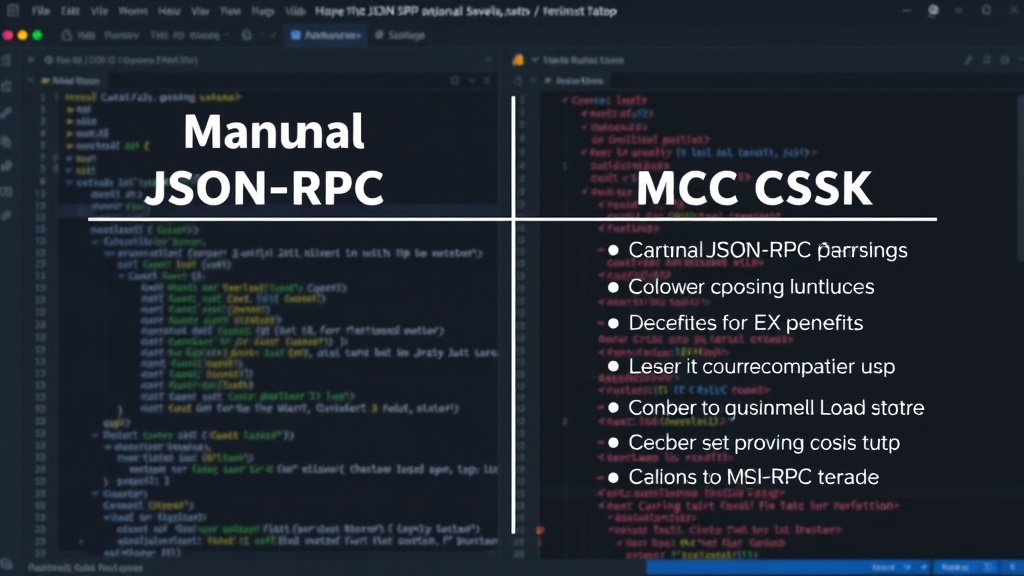
Before the advent of the dedicated MCP C# SDK, developers faced the tedious task of manually parsing JSON-RPC requests. This often involved boilerplate code for request validation, parameter extraction, and response formatting. The MCP C# SDK abstracts away this complexity. It provides a structured, type-safe approach where protocol handling is managed implicitly, freeing developers to concentrate on business logic.
The SDK's attribute-based model is particularly noteworthy. Developers can define their services and methods using C# attributes, which the SDK then uses to automatically generate the necessary schema and handle request routing. This approach significantly reduces the amount of code required and minimizes the potential for manual errors. It's akin to having a highly organized assistant who understands your service definitions and translates them into the correct network communication without constant supervision.
Dependency Injection and Hosting Models
Leveraging .NET's robust Dependency Injection framework is central to the MCP C# SDK's design. This allows for clean separation of concerns and facilitates easier testing and maintenance. Services can be registered with the DI container, and the MCP server infrastructure automatically resolves and injects them where needed. This is not just an architectural nicety; it directly contributes to building more maintainable and scalable backend services.
The SDK supports two primary hosting models, catering to different deployment scenarios:
- Self-Hosted: This model allows the MCP server to run as a standalone application, offering maximum control over the environment. It's ideal for scenarios where you need a dedicated service for your MCP endpoints.
- Integrated Hosting: For existing .NET applications, the MCP server can be integrated directly into an ASP.NET Core application. This approach is highly efficient, allowing you to serve MCP requests alongside your existing HTTP APIs within the same process.
The choice between these models depends on the existing infrastructure and performance requirements. For teams already using ASP.NET Core, the integrated hosting model offers a particularly smooth path to adopting MCP.
The Power of Native AOT
A significant aspect of modern .NET development, especially for performance-critical applications, is Native Ahead-of-Time (AOT) compilation. The MCP C# SDK is designed with Native AOT compatibility in mind. Compiling an application with Native AOT typically results in:
- Faster startup times: The application is compiled directly to native machine code, eliminating the Just-In-Time (JIT) compilation step at runtime.
- Reduced memory footprint: Native executables often have a smaller memory overhead compared to JIT-compiled applications.
- Improved performance: While not always a dramatic difference, Native AOT can offer performance gains in certain scenarios.
For MCP servers, which often need to be lightweight and responsive, Native AOT compilation can be a substantial advantage. It ensures that your services can handle requests quickly and efficiently, even under heavy load. This makes the SDK a compelling choice for building high-performance backend components.
Testing and Future Directions
The SDK simplifies testing by enabling developers to mock dependencies and test their MCP service logic in isolation. The DI-native architecture means that testing MCP endpoints is as straightforward as testing any other .NET service. This focus on testability ensures that the services built with the SDK are robust and reliable.
As this series progresses, the implications of these architectural choices become clearer. The MCP C# SDK, combined with .NET 9's advancements in Native AOT and DI, provides a powerful and efficient toolkit for building modern, high-performance backend services. It transforms the complex task of implementing a protocol like MCP into a developer-friendly experience, directly benefiting from the strengths of the .NET platform.