The Assistant's Missing Context: Beyond REST Endpoints
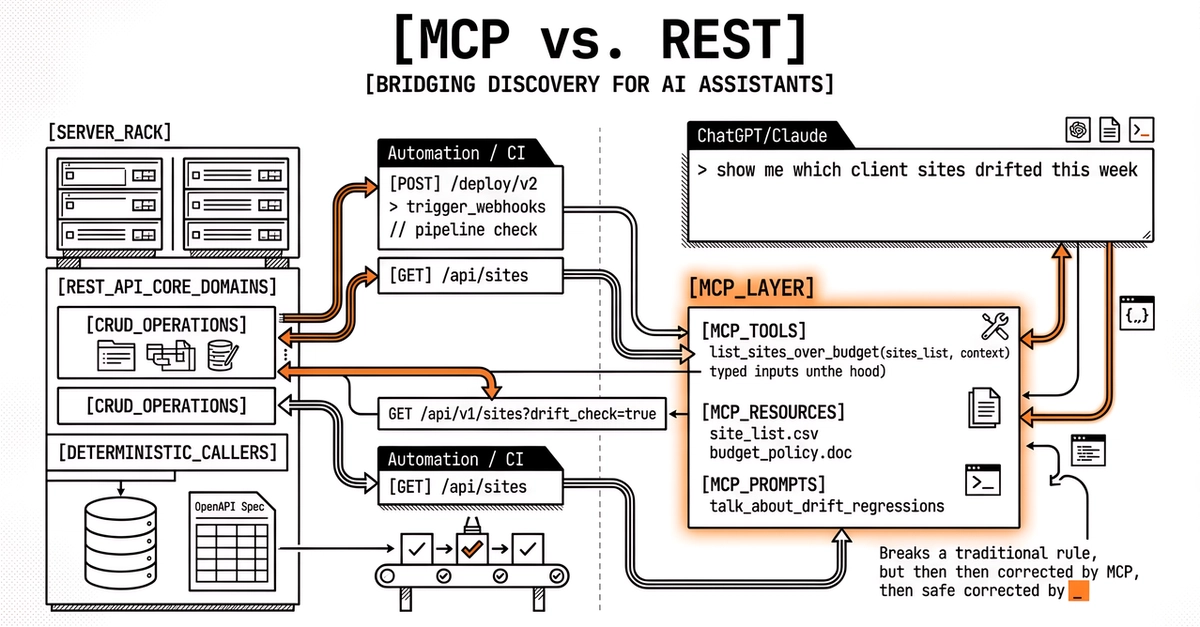
Product managers and developers often face a common question when integrating AI assistants with their services: "Can't it just call our API like a deploy script?" The straightforward answer is typically no. While a REST endpoint reliably returns JSON when provided with the correct path, headers, and body, an AI assistant operates on a fundamentally different set of requirements. It doesn't just need data; it needs to understand *what* data to retrieve, *when* to retrieve it, and *how* to interpret it within a conversational context.
A deploy script, for instance, is a deterministic caller. It knows the exact endpoint, the precise parameters, and the expected output structure. It executes a predefined sequence of actions. An AI assistant, however, is designed for more fluid, context-aware interactions. It needs to understand the user's intent, which often requires more than just a URL and a payload. This is where the Model Context Protocol (MCP) emerges as a critical intermediary.
MCP is not a replacement for your existing APIs; it's an enhancement that makes them accessible and understandable to AI models. Think of MCP less like a direct API call and more like a highly organized personal assistant who knows your capabilities, when to use them, and how to explain them to others. Your API remains the engine, but MCP provides the user manual and the decision-making framework for the AI.
What Assistants Need That APIs Don't Explicitly State
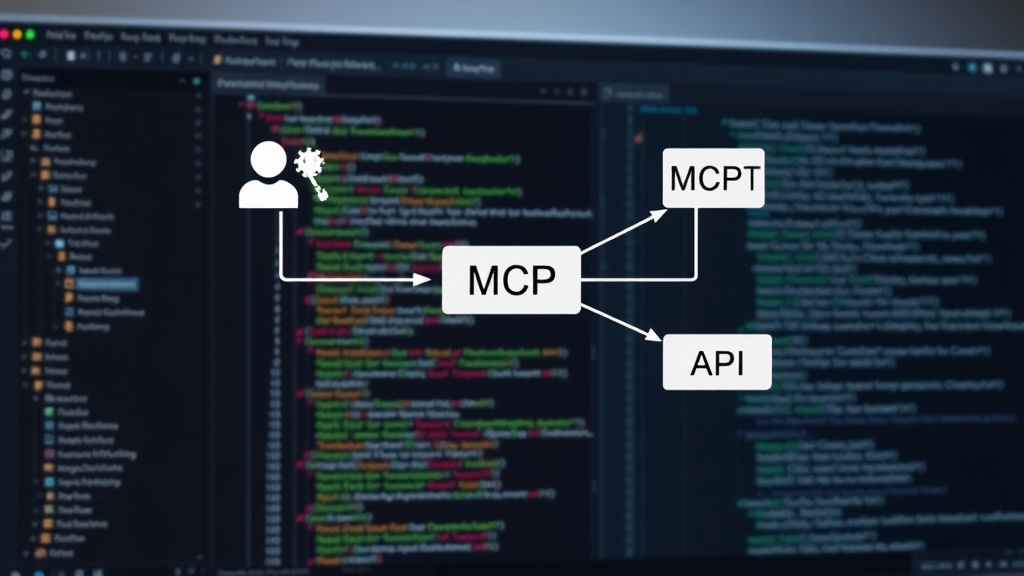
The core problem lies in the disconnect between the structured, machine-to-machine nature of REST APIs and the natural language, intent-driven world of AI assistants. An API endpoint typically exposes functionality through its URL path, HTTP methods (GET, POST, PUT, DELETE), and expected request/response formats (usually JSON). This is perfectly adequate for programmatic clients that know exactly what they want.
AI assistants, on the other hand, require a richer set of metadata to function effectively. This includes:
- Named Capabilities: The AI needs to understand that a specific function exists and what it's called. For example, instead of just knowing a `/users/{id}` endpoint, it needs to know there's a capability called "GetUserProfile".
- Short Descriptions: A concise explanation of when and why to use a particular capability is essential. This helps the assistant disambiguate between similar functions and choose the most appropriate one based on user input. For instance, "Use this to retrieve a user's current subscription status" is far more useful than a generic endpoint name.
- Argument Schemas: While APIs define request bodies and parameters, MCP formalizes these into schemas that assistants can parse and use to prompt users for missing information or validate provided arguments. This goes beyond simple type validation to include descriptions of each argument and their expected formats or acceptable values.
- Permission Boundaries: A crucial aspect for secure AI interaction is defining what actions an assistant is allowed to perform on behalf of a user. MCP specifies these permission boundaries, ensuring that an assistant doesn't inadvertently execute actions that violate a user's access controls or data privacy settings. This is vital for preventing unintended data exposure or unauthorized operations.
- Multi-turn Chat Survival: Assistants operate in conversational flows. They need to maintain context across multiple turns, remembering previous interactions and the state of ongoing tasks. MCP helps define how capabilities and their arguments persist across these turns, allowing for more complex, multi-step operations.
Without these elements, an AI assistant might receive a JSON response from an API but lack the understanding to interpret it correctly, ask clarifying questions, or even know if calling that API was the right decision in the first place. It's like giving a chef a list of ingredients but no recipe or explanation of what dish to make.
MCP as the Contract for AI Assistants
MCP acts as the bridge, translating the raw functionality of REST APIs into a format that AI models can consume and leverage. It defines a contract that the assistant reads first. This contract details each exposed capability, its purpose, its arguments, and its permissions. When a user interacts with the assistant, the AI analyzes the request, consults its MCP knowledge, and determines which capabilities are relevant. It then constructs the appropriate API call, potentially prompting the user for any missing information based on the defined argument schemas.
Consider a scenario where a user asks, "What's my current subscription level and when does it renew?" A REST API might have separate endpoints for subscription status (`/user/subscription`) and renewal date (`/user/subscription/renewal`). An assistant, guided by MCP, would identify a single, more comprehensive capability like "GetUserSubscriptionDetails" which has arguments for `user_id` and potentially flags for specific information requested. The MCP contract would describe this capability, explaining that it returns subscription status and renewal date. The assistant would then use this information to make a single, targeted API call (or perhaps two, depending on how the API is structured and how MCP exposes it) and present the consolidated information to the user.
Security and Tenant Isolation with MCP
The companion piece on MCP for SaaS and secure assistant access highlights its importance from a security and tenant isolation perspective. When dealing with AI assistants that access user data, robust security measures are paramount. MCP facilitates this by enabling granular control over what data and actions an assistant can access. Features like CSV paste for data ingestion, defining specific scopes for capabilities, and implementing revocation mechanisms for assistant access are all crucial components that MCP helps manage.
This layered approach—MCP defining the contract and permissions, and the underlying APIs handling the data operations—ensures that AI integrations are not only functional but also secure. Without MCP, exposing sensitive API endpoints directly to an AI model, without clear boundaries and descriptions, would create significant security vulnerabilities. It would be like giving a new employee the keys to the entire company database without any access controls or training on what data they are permitted to view or modify.
The Developer's Perspective: Testing and Integration
For developers, understanding MCP means a shift in how they expose functionality to AI. Instead of just documenting API endpoints, they need to think about how to describe those endpoints' capabilities in a way an AI can understand. This involves defining clear, actionable names, user-friendly descriptions, and structured argument definitions.
Tools and frameworks that support MCP will streamline this process. For developers already familiar with API testing, concepts like schema validation and parameter handling will be intuitive. However, the added layer of natural language descriptions and capability-based access requires a new way of thinking about API design for AI consumption. Testing MCP-enabled APIs will involve not just verifying JSON responses but also ensuring that the descriptive metadata is accurate and that permission boundaries are correctly enforced during conversational interactions.
The challenge for developers is to build APIs that are not only robust and efficient but also intelligent enough to be governed by an AI assistant. This requires a deeper understanding of how AI models process information and make decisions, moving beyond purely programmatic interfaces to interfaces that are also semantically rich.