MCP 2026: A Cleaner Protocol, Familiar Problems
The latest iteration of the MCP protocol, released on July 28, 2026, brings a significant overhaul. The most notable changes include the removal of session-based initialization and the deprecation of the Mcp-Session-Id header from Streamable HTTP. In its place, essential metadata like protocol version, client information, and capabilities are now consolidated within a _meta field on each request. This architectural shift means any MCP instance can now serve any incoming call, leading to a cleaner, more stateless protocol design. This is the most substantial revision since MCP's inception.
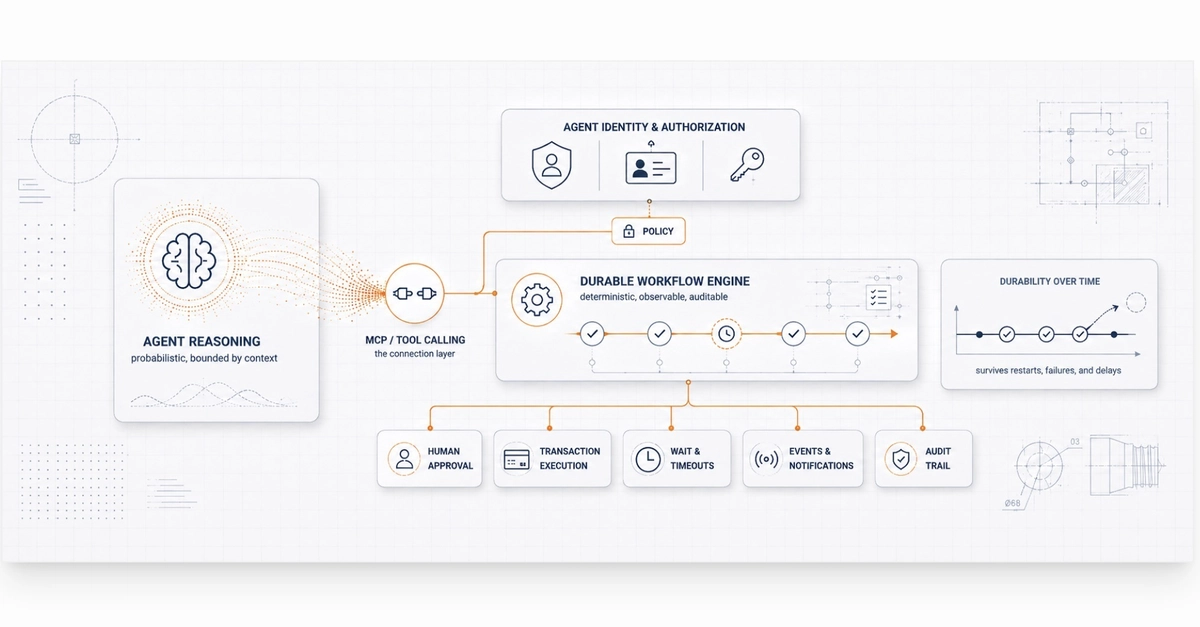
However, this simplification, while welcome for protocol cleanliness, does not address two fundamental roadblocks for enterprise-grade agent deployments: agent identity and durable workflows. These issues remain outside the direct scope of the MCP protocol and are unlikely to be resolved by future revisions. The core questions persist: Who is the agent acting as, and what are its permitted actions? What happens to a process that spans days when the model's immediate context is lost?
The Agent Identity Conundrum
The question of agent identity is paramount in enterprise settings. When an AI agent interacts with an organization's tools and data, it's crucial to establish not just *what* the agent is doing, but *who* it is representing and what its authorized scope of action is. This involves mapping an agent's actions to a specific principal within the organization's identity management system. Without this, auditing, access control, and accountability become nearly impossible. Imagine an agent tasked with generating a financial report; it needs to be clear whether the agent is acting on behalf of the finance department, a specific analyst, or a system administrator, and what level of access to sensitive financial data it has been granted. This is not a simple matter of authentication; it's about authorization and role-based access control for autonomous systems.
AWS, for instance, already possesses components that tackle this. In AgentCore, every Gateway call is evaluated against a principal, an action, and a resource using Cedar policies. The outcome of this evaluation—allow or deny—is logged for audit purposes. This demonstrates that the underlying infrastructure for managing agent identity and permissions exists. The challenge lies in integrating this granular policy enforcement seamlessly into the agent's workflow, especially when agents interact with external tools and services that might not natively support such sophisticated identity frameworks. The MCP protocol, by focusing on model-to-tool communication, does not inherently provide a mechanism to convey or enforce these principal-based policies during the interaction.
Think of it like a highly skilled intern who can operate complex machinery. You need to know not just that they *can* operate it, but *who* authorized them to do so, *what specific tasks* they are allowed to perform with it, and *which areas* of the factory they have permission to access. MCP ensures the intern can communicate with the machinery, but it doesn't handle the HR paperwork or security clearances.
The Durability Problem for Long-Running Workflows
The second major hurdle is workflow durability. AI agents are increasingly being tasked with complex, multi-step processes that can take hours, days, or even longer to complete. These workflows often involve sequential operations, conditional logic, and interactions with various tools and data sources. A critical challenge arises when the execution context—the information held in the model's memory about the current state of the workflow—is lost. This can happen due to timeouts, service restarts, network interruptions, or simply the inherent statelessness of many HTTP-based communication protocols.
When a workflow falters mid-execution due to a lost context, the agent must either restart the entire process from scratch or attempt a complex recovery mechanism. Restarting is inefficient and can lead to wasted computational resources. Complex recovery requires sophisticated state management, checkpointing, and rollback capabilities. For enterprise applications, where reliability and predictable execution are non-negotiable, this lack of built-in durability is a significant impediment. Imagine a financial transaction that requires multiple approvals across different departments, each involving an agent interaction. If the agent loses context after the first approval, the entire transaction could fail, requiring manual intervention and potentially causing significant delays and financial loss.
Temporal, a popular open-source orchestration platform, offers solutions for durable workflows. Its approach involves persisting workflow state to a reliable datastore, allowing execution to resume seamlessly even after disruptions. This is achieved through a combination of event sourcing and state management techniques. While Temporal provides a robust framework for building durable workflows, its integration with agent execution frameworks and protocols like MCP is not a standardized feature. The MCP protocol itself, with its emphasis on direct, request-response style interactions for model-to-tool communication, does not inherently support the long-lived, stateful nature of durable workflows. It standardizes the handshake, but not the marathon.
The Path Forward
The MCP 2026 update is a positive step toward a more streamlined and efficient core protocol. By removing session state and centralizing metadata, it simplifies agent-to-tool communication and enhances scalability. However, the fundamental challenges of agent identity and workflow durability remain unaddressed by the protocol itself. These are not trivial issues; they are critical requirements for deploying AI agents in secure, reliable, and auditable enterprise environments.
Organizations looking to deploy agents at scale will need to integrate external solutions for identity management (like AWS IAM with Cedar policies) and workflow orchestration (like Temporal). The MCP protocol can serve as the communication layer, but the intelligence for managing *who* is acting and *how* long the process can reliably run must be built around it. The MCP team has clearly defined the boundaries of their protocol; the onus now falls on the broader ecosystem to build the necessary layers of trust and resilience that enterprise adoption demands.