
Imagine needing to search for a specific phrase, like "Hi There," across a petabyte of text. If you tried to do this on a single machine, reading through that much data sequentially would take hours. The input/output (I/O) operations alone would become the primary bottleneck, not to mention the CPU time required to scan every single line of text.
The fundamental solution to this problem is to split the work. Instead of one machine doing everything, you can hand different parts of the data to different machines (workers) so they can process it in parallel. A central coordinator manages this process: it assigns tasks, monitors their progress, and crucially, reassigns any tasks that fail.
This core concept—split, distribute, collect—is the essence of MapReduce. It's a programming model and processing technique designed for handling massive datasets by parallelizing computation across a cluster of machines.
The MapReduce Paradigm: A Two-Phase Approach
MapReduce operates in two primary phases: the Map phase and the Reduce phase. These phases are orchestrated by a master or coordinator node.
The Map Phase
In the Map phase, the input data is divided into smaller chunks. Each worker machine is assigned one or more of these chunks. A user-defined Map function is applied to each chunk. This function processes the input data and emits a set of intermediate key-value pairs. For instance, if the task is to count word frequencies, the Map function might take a line of text, split it into words, and output pairs like `("word", 1)` for each word.
The key here is that the Map function is designed to be highly parallelizable. Each worker operates on its data chunk independently, significantly speeding up the initial processing. The framework handles the distribution of data and the execution of the Map tasks across the available workers.
The Shuffle and Sort Phase (Implicit)
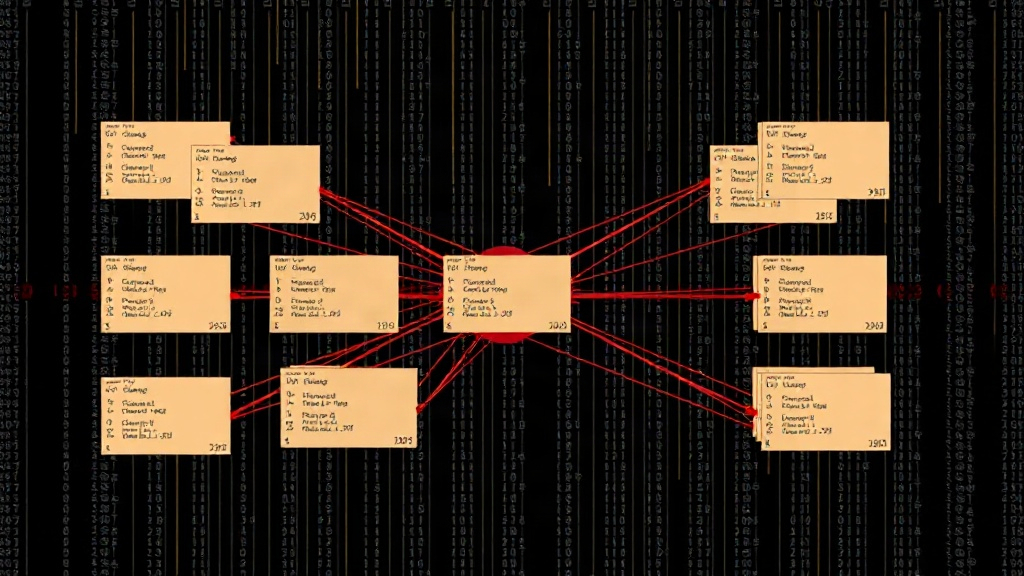
Between the Map and Reduce phases, an intermediate step occurs, often referred to as the shuffle and sort. The MapReduce framework automatically collects all intermediate key-value pairs emitted by the Map tasks. It then groups these pairs by key. All values associated with the same key are brought together onto a single worker machine that will execute the Reduce task for that key.
This aggregation is crucial. It ensures that all data relevant to a specific key is processed by a single Reduce task, preventing redundant computations and enabling aggregation or summarization.
The Reduce Phase
In the Reduce phase, a user-defined Reduce function is applied to the aggregated intermediate data. For each unique key, the Reduce function receives a list of all values associated with that key. It then processes these values and emits the final output. Continuing the word count example, the Reduce function would receive a key (a word) and a list of all the `1`s emitted by the Map tasks for that word. It would then sum these `1`s to produce the final count for that word, outputting a pair like `("word", total_count)`.
Like the Map phase, the Reduce phase can also be parallelized. Different keys can be processed by different Reduce tasks concurrently on various worker machines. The coordinator assigns Reduce tasks for different key ranges to available workers.
Fault Tolerance and Distribution
A critical aspect of MapReduce is its built-in fault tolerance. The coordinator plays a vital role here. It continuously monitors the status of worker machines. If a worker machine fails during a Map or Reduce task, the coordinator detects this failure. It then reassigns the failed task to another available worker. The input data for the failed task is not lost; it's simply processed again by a different machine. This ensures that the entire job completes successfully, even in the presence of hardware failures, which are common in large-scale distributed systems.
The distribution aspect is managed by the framework itself. It handles partitioning the input data, scheduling Map and Reduce tasks, and moving intermediate data between machines. This abstracts away much of the complexity of distributed computing from the developer, allowing them to focus on defining the Map and Reduce functions. The entire process can be visualized as a pipeline: Input -> Map -> Shuffle & Sort -> Reduce -> Output.
Use Cases and Benefits
MapReduce is particularly well-suited for tasks that can be broken down into independent sub-problems and then aggregated. Common use cases include:
- Log Processing and Analysis: Aggregating data from millions of web server logs to understand traffic patterns, identify errors, or track user behavior.
- Data Indexing: Building search engine indexes by processing vast amounts of text data.
- Machine Learning: Training machine learning models that require processing large datasets, such as calculating statistics for model parameters.
- Data Warehousing: Performing complex aggregations and transformations on large volumes of structured and unstructured data.
The primary benefit of MapReduce is its ability to scale to handle datasets that far exceed the capacity of a single machine. By distributing the workload across hundreds or thousands of machines, it can process petabytes of data in a reasonable timeframe. This parallel processing capability dramatically reduces execution times compared to traditional single-machine approaches. Furthermore, its inherent fault tolerance makes it robust for long-running, large-scale jobs.
The Underlying Mechanics: A Deeper Look
While the conceptual model is straightforward, the actual implementation involves sophisticated coordination. The master node is responsible for:
- Task Scheduling: Deciding which worker runs which Map or Reduce task and when. It aims to optimize for data locality, meaning it tries to run tasks on machines that already have the relevant input data stored locally to minimize network transfer.
- Worker Monitoring: Keeping track of active workers and detecting failures.
- Rendezvous Points: Coordinating the transition from the Map phase to the Reduce phase once a sufficient number of Map tasks have completed.
Worker nodes, on the other hand, execute the assigned Map or Reduce tasks. They communicate their progress and results back to the master. If a worker becomes unresponsive, the master can reassign its work. Intermediate data produced by Map workers is written to local disk and made available to Reduce workers via RPC (Remote Procedure Call) or similar network protocols.
The entire system is designed to be highly available and scalable. As the dataset grows, more worker nodes can be added to the cluster to handle the increased load. This elasticity is a hallmark of modern big data processing frameworks.
Beyond the Basics: Limitations and Evolution
While powerful, the MapReduce model has limitations. Its rigid two-phase structure can be inefficient for iterative algorithms, where the output of one Reduce phase needs to be immediately fed back into another Map phase. For such cases, frameworks like Apache Spark, which offer in-memory processing and more flexible computation graphs, have become popular alternatives. Spark can often perform computations orders of magnitude faster than MapReduce for iterative tasks.
However, MapReduce laid the foundation for much of the distributed data processing we see today. Its principles of parallelization, fault tolerance, and abstraction of distributed complexity are still highly relevant. Understanding MapReduce is essential for grasping the evolution of big data technologies and the challenges they aim to solve.