The Rise of Local AI for Sensitive Data
Privacy is no longer a mere feature; it is a fundamental human right, particularly when it comes to mental health. The concept of a Cognitive Behavioral Therapy (CBT) assistant that operates entirely within your browser, never transmitting a single byte of your conversation to a remote server, and delivering lightning-fast responses, is now within reach. This is thanks to the rapid advancements in Edge AI and the maturing WebGPU standard. This article explores the construction of a high-performance, offline-capable mental health assistant using WebLLM, TVM Unity, and React. By embracing WebLLM and local-first AI principles, we can achieve low-latency support while ensuring sensitive user data remains precisely where it belongs: on the user's device.
The sensitivity of mental health data necessitates a re-evaluation of how we handle user information. Traditional LLM APIs, such as those offered by OpenAI or Google, often involve sending user data to external servers for processing. This model presents significant privacy concerns for individuals seeking support for mental health challenges. A local-first approach circumvents these issues entirely. By running the AI model directly on the user's machine, sensitive conversations are never exposed to the internet, offering a secure and private environment for users to explore their thoughts and feelings.
Why Local AI for Mental Health?
Mental health data is among the most sensitive personal information. Using traditional LLM APIs presents inherent privacy risks, as conversations are transmitted to and processed by remote servers. For individuals seeking support for conditions like anxiety or depression, this can be a significant barrier to entry. A local-first AI assistant addresses this directly by keeping all data processing on the user's device. This not only ensures privacy but also significantly reduces latency. Without the need to send data back and forth to a server, responses can be near-instantaneous, creating a more fluid and responsive user experience. This immediacy is crucial for therapeutic applications where maintaining conversational flow is paramount.
The technical underpinnings of this local-first approach are robust. WebLLM provides a JavaScript API for running large language models directly in the browser. It leverages WebGPU, a modern web API that grants web applications access to the graphics processing unit (GPU) of the user's device. GPUs are exceptionally well-suited for the parallel computations required by neural networks, enabling LLMs to run efficiently client-side. TVM Unity, an open-source deep learning compiler stack, plays a vital role in optimizing these models for various hardware targets, including those accessible via WebGPU.
Building the Mental Health Assistant
The development process involves several key components. First, a suitable LLM needs to be selected and potentially quantized to reduce its size and computational requirements for browser execution. Models like Llama 2 or Mistral, when optimized, can perform admirably on modern hardware. TVM Unity is instrumental here, compiling these models into a format that WebAssembly can execute and that WebGPU can accelerate.
React is an excellent choice for building the user interface. Its component-based architecture allows for the creation of a clean, interactive, and responsive front-end. The core logic will involve managing the state of the conversation, sending user input to the local WebLLM model, and rendering the model's output. Error handling and user feedback mechanisms are also critical to ensure a smooth experience, especially when dealing with the nuances of client-side model loading and execution.
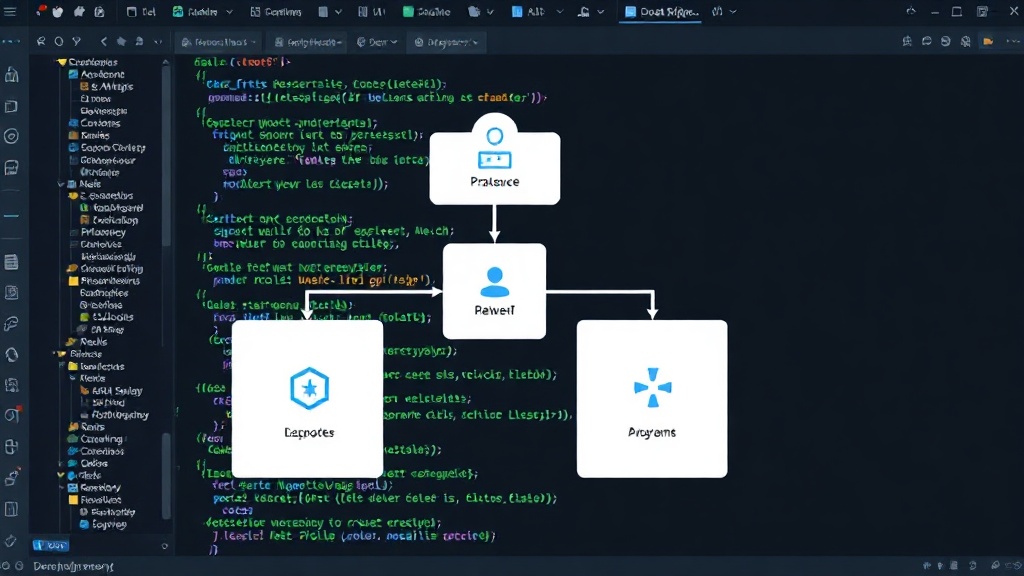
The workflow for a user interaction would typically look like this:
- The user types a message into the React interface.
- The application sends this message to the WebLLM runtime.
- WebLLM, utilizing WebGPU, processes the input with the loaded LLM.
- The LLM generates a response.
- The response is returned to the React application and displayed to the user.
Crucially, at no point is this data sent over the network. This architecture ensures that sensitive therapeutic dialogues remain private and secure.
The Power of WebGPU and WebLLM
WebGPU is the game-changer here. It unlocks the parallel processing power of the user's GPU, which is essential for running large neural networks efficiently in a web browser. Previously, running LLMs client-side was often a slow, CPU-bound process, making it impractical for real-time applications. WebGPU, however, allows for significantly faster inference speeds, bringing the performance closer to native applications. This is like upgrading from a bicycle to a sports car for data processing – the difference in speed and capability is immense.
WebLLM acts as the bridge, simplifying the integration of these powerful local models into web applications. It abstracts away much of the complexity of loading and running models, allowing developers to focus on the application logic. By providing a standardized JavaScript API, WebLLM makes it feasible to deploy sophisticated AI capabilities directly to end-users without requiring them to install separate software or rely on cloud services.
Broader Implications and Future Directions
The success of building a local-first mental health assistant has far-reaching implications. It demonstrates that privacy-preserving AI is not just a theoretical concept but a practical reality. This approach can be extended to other sensitive domains, such as personal finance, legal advice, or healthcare record management. The ability to run powerful AI models locally reduces reliance on third-party providers, potentially lowering costs and increasing data security for businesses and individuals alike.
One of the key challenges moving forward will be optimizing model performance across a wide range of user hardware. While WebGPU offers significant acceleration, the variability in GPU capabilities means that developers must carefully consider model quantization and optimization strategies. Furthermore, the ethical considerations of deploying AI in mental health contexts, even locally, require ongoing attention. Ensuring responsible AI development, including addressing potential biases in models and providing clear guidance to users, remains paramount.
What nobody has fully addressed yet is the long-term impact on user data ownership and portability when sophisticated AI models are entirely contained within a user's browser environment. As these local assistants become more capable, understanding how users can back up, migrate, or audit their AI-generated insights will become increasingly important.