
The Rise of the AI Pair Programmer
Large Language Models (LLMs) like GitHub Copilot and ChatGPT are rapidly changing the software development landscape. They can generate code, suggest completions, explain complex snippets, and even debug. For many, this feels like a fundamental shift, raising questions about the future of programming and, more importantly, whether the inherent joy of coding will survive.
The immediate impact is undeniable. Tasks that once consumed hours—writing boilerplate, searching for obscure syntax, or understanding legacy code—can now be expedited with a few prompts. This efficiency boost is liberating, allowing developers to focus on higher-level problems. However, it also introduces a new set of challenges and anxieties. What happens to the satisfaction derived from mastering a difficult algorithm or the thrill of building something intricate from scratch? Will programming devolve into mere prompt engineering?
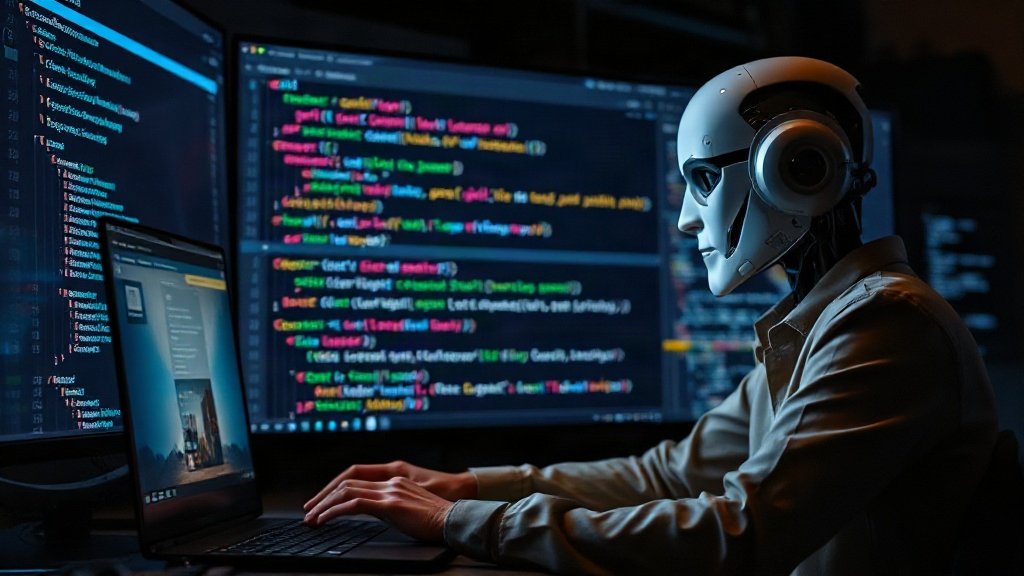
The core of programming enjoyment, many argue, lies not just in the act of typing code, but in the cognitive process behind it: the problem-solving, the architectural design, the creative synthesis of ideas into functional systems. LLMs are powerful tools that can augment this process, not replace it. Think of LLMs less as a replacement for developers and more like an incredibly knowledgeable, lightning-fast junior assistant who can handle the grunt work, freeing up the senior developer (you) for strategic thinking.
Refocusing on the Human Element of Coding
The skills that will become paramount in this new era are those that LLMs struggle to replicate: creativity, critical thinking, architectural vision, and understanding the nuanced requirements of users. The ability to break down a complex business problem into a series of logical, elegant software solutions remains a deeply human endeavor. LLMs can suggest code, but they cannot intrinsically understand the business context, the long-term maintainability goals, or the subtle user experience nuances that a seasoned developer brings.
Enjoyment in programming often stems from the feeling of mastery and accomplishment. When an LLM automates large swathes of coding, this sense of accomplishment might shift. Instead of celebrating writing a perfect loop, developers might find satisfaction in designing a system architecture that leverages AI tools effectively, or in crafting the precise prompts that elicit optimal code generation. The challenge becomes about directing the AI, validating its output, and integrating it seamlessly into a larger, human-conceived design.
Furthermore, the collaborative aspect of programming remains vital. While LLMs can act as solitary assistants, the synergy of working with other developers, pair programming, and engaging in code reviews fosters learning, innovation, and a shared sense of purpose. These human interactions, the debates over design choices, the shared debugging sessions, are sources of enjoyment that AI cannot fully replicate. The social and communicative aspects of software development will likely become even more critical as the technical generation of code becomes more automated.
Embracing LLMs as Creative Partners
The key to maintaining enjoyment is to view LLMs not as a threat, but as a powerful new tool in the developer’s toolkit. Just as compilers, IDEs, and version control systems revolutionized programming by abstracting away lower-level complexities, LLMs offer a new layer of abstraction. They can handle the tedious, repetitive aspects of coding, allowing developers to focus on the more engaging, creative, and strategic parts of their job.
Consider the analogy of a sculptor. A sculptor doesn't lament the invention of power tools that can quickly rough out a shape, arguing it diminishes the craft. Instead, they embrace these tools to achieve more complex forms faster, dedicating more time to the fine details, the artistic intent, and the polishing that defines their unique style. Similarly, developers can use LLMs to accelerate the initial drafting of code, freeing up mental bandwidth for architectural design, algorithmic innovation, and ensuring the software truly meets human needs.
The process of learning and growth is also central to programming enjoyment. LLMs can be incredible learning aids. Developers can ask them to explain concepts, demonstrate different approaches to a problem, or even generate code in unfamiliar languages or frameworks, providing instant examples and explanations. This can democratize learning and accelerate skill acquisition, allowing developers to explore new domains and tackle more ambitious projects.
The Unanswered Question: Navigating the New Skill Landscape
What remains to be seen is how educational institutions and professional development programs will adapt. Will curricula shift to emphasize prompt engineering, AI system design, and ethical AI integration alongside traditional computer science fundamentals? The ability to effectively harness AI tools might soon become as critical as knowing a specific programming language. Developers who can master this new paradigm will not only retain their enjoyment but will likely find new avenues for creativity and impact.
Ultimately, the enjoyment of programming is deeply personal. For many, it’s the intellectual puzzle, the satisfaction of building something tangible, the continuous learning, and the creative expression. LLMs don't fundamentally alter these core aspects; they change the *way* we engage with them. By adapting our perspective and embracing these tools as collaborators, developers can continue to find profound satisfaction and joy in the art and science of software creation.