The LLM as a Knowledge Base, Not an Actor
Large Language Models (LLMs) have demonstrated an astonishing ability to process, understand, and generate human-like text. They can answer complex questions, summarize documents, translate languages, and even write code. However, their inherent nature is that of a sophisticated knowledge base or a brilliant conversationalist. They can tell you how to book a flight, but they cannot, by themselves, access an airline API to actually make the reservation.
This limitation is akin to a digital phone book. The phone book contains all the numbers you might need, but it cannot dial them for you. To make a call, you need a separate tool – a phone. Similarly, LLMs need external mechanisms to translate their understanding and intentions into actionable commands in the real world or digital systems.
The core challenge lies in bridging the gap between the LLM's abstract reasoning capabilities and the concrete execution required by software systems. This is where the concept of 'tool calling' becomes critical for developing more capable and autonomous AI agents.
What is Tool Calling?
Tool calling, in the context of LLMs, refers to the process by which an LLM can identify when an external function or tool is needed to fulfill a user's request, and then generate the necessary parameters to invoke that tool.
Think of it like this: you ask your incredibly knowledgeable assistant to "Find me the weather in London tomorrow and tell me if I need an umbrella." The assistant (the LLM) knows what weather is, knows how to interpret "tomorrow" and "London," and understands what an umbrella is for. However, it doesn't have a built-in weather sensor or a direct connection to meteorological data. To answer your question accurately, the assistant needs to delegate a sub-task to another specialized tool – a weather API.
The LLM's role is to:
- Understand the user's intent, even if it requires external data or actions.
- Recognize that a specific tool (e.g., a weather API, a calculator, a database query function) is necessary to fulfill that intent.
- Determine the correct parameters to pass to that tool. For instance, for a weather API, the parameters might be `location='London'` and `date='tomorrow'`.
- Output these parameters in a structured format that an external system can interpret and use to execute the tool.
The external system then executes the tool with the provided parameters. The result from the tool (e.g., the weather forecast data) is then fed back to the LLM, which uses it to formulate a final, coherent response to the user.
The Architecture of Tool-Enabled LLMs
Implementing tool calling requires a specific architectural pattern that involves the LLM, a set of defined tools, and an execution engine.
1. Defining Tools
Developers must define the available tools for the LLM. Each tool is essentially a function with a clear description of what it does, its purpose, and the arguments it accepts, including their types and whether they are required. This definition is typically provided to the LLM in a structured format, often JSON schema, during the prompt engineering phase or as part of the model's configuration.
For example, a `get_weather` tool might be defined as:
{
  "name": "get_weather",
  "description": "Get the current weather in a given location",
  "parameters": {
    "type": "object",
    "properties": {
      "location": {
        "type": "string",
        "description": "The city and state, e.g. San Francisco, CA"
      },
      "unit": {
        "type": "string",
        "enum": ["celsius", "fahrenheit"],
        "description": "The temperature unit to use"
      }
    },
    "required": ["location"]
  }
}
2. LLM Inference and Tool Selection
When a user query is sent to the LLM, the model processes it alongside the definitions of available tools. The LLM's task is to decide if any of the provided tools can help answer the query. If it determines a tool is needed, it will output a structured request specifying which tool to use and with what arguments.
A common output format might look like this:
{
  "tool_calls": [
    {
      "id": "call_abc123",
      "type": "function",
      "function": {
        "name": "get_weather",
        "arguments": "{\"location\": \"Paris, France\", \"unit\": \"celsius\"}"
      }
    }
  ]
}
3. Tool Execution
An external application or framework (often called a function calling agent or executor) intercepts this output. It parses the LLM's request, identifies the specified tool, and executes the corresponding function with the provided arguments. This execution happens outside the LLM itself.
4. Feedback Loop
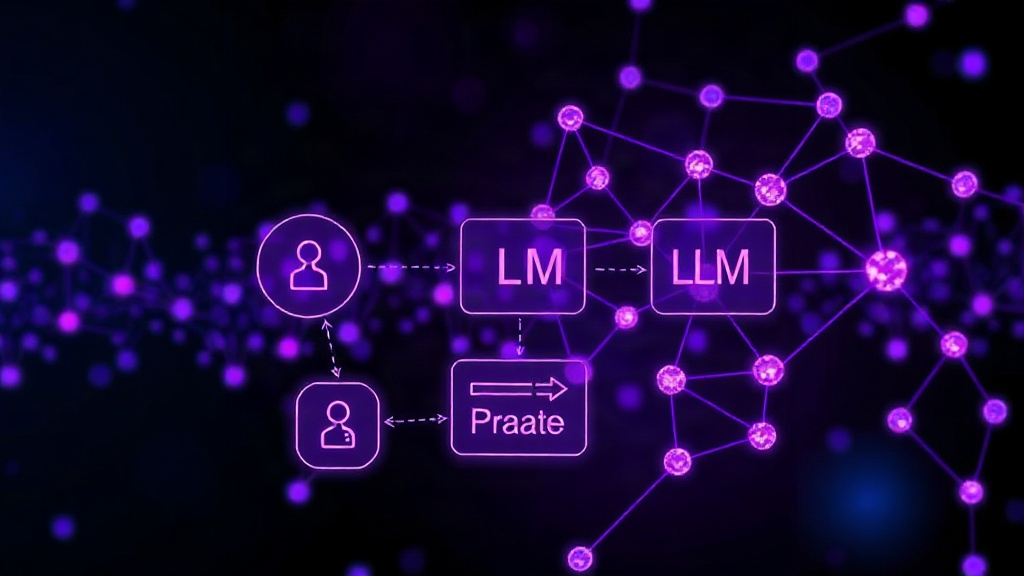
The result of the tool execution (e.g., the weather data, the calculation result, the database record) is then sent back to the LLM. The LLM uses this information to generate the final, natural language response to the user. This creates a cycle: User Query -> LLM (Tool Call Identification) -> Executor (Tool Execution) -> LLM (Response Generation) -> User.
Why Tool Calling Matters
Tool calling is a foundational capability for creating sophisticated AI agents that can perform tasks beyond simple information retrieval. It enables LLMs to interact with the world in meaningful ways:
- Automation: Automate routine tasks like scheduling meetings, sending emails, or managing calendars.
- Data Interaction: Query databases, call APIs, or interact with cloud services to fetch and manipulate real-time data.
- Complex Reasoning: Break down complex problems into smaller, manageable steps, each potentially requiring a different tool.
- Personalized Experiences: Tailor user experiences by integrating with user-specific data or services.
Without tool calling, LLMs are largely passive entities. With it, they become active participants, capable of initiating actions and integrating with the digital ecosystem. This shift is crucial for the development of truly intelligent agents that can augment human capabilities across a wide range of applications.