The SIEM Alert Fatigue Crisis
Security Information and Event Management (SIEM) systems are indispensable tools for modern cybersecurity operations. However, they are notoriously noisy. A typical Tuesday night might see a SIEM generate 3,000 alerts. In many organizations, the on-call analyst can only realistically acknowledge and investigate a fraction of these, perhaps 40. The remaining 2,960 alerts are predominantly noise, leading to alert fatigue. This problem exacerbates as IT environments scale, overwhelming security teams and potentially causing critical threats to be missed.
Traditional SIEM alert generation often relies on threshold-based rules. For instance, if more than N failed login attempts originate from the same IP address within M minutes, an alert is triggered. While effective for identifying well-known attack patterns, this approach suffers from two significant failure modes at scale: a flood of false positives and missed sophisticated attacks. Legitimate activities such as automated scanning, misconfigured services, or even robust but chatty applications can easily trip these static thresholds, drowning out genuine threats.
LLMs as a First-Pass Triage Solution
The introduction of Large Language Models (LLMs) offers a promising path to automate the initial triage process, a task that currently consumes significant analyst hours. Unlike traditional filtering layers that might add complexity without solving the noise problem, LLMs can process alerts with a deeper understanding of context. This allows for more intelligent prioritization, distinguishing between benign anomalies and actionable threats.
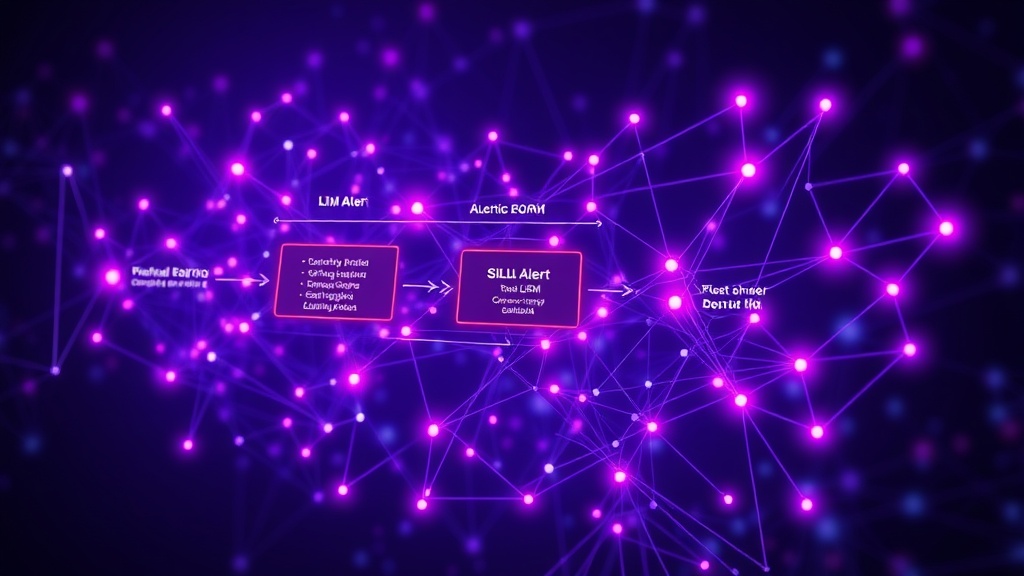
A practical Python implementation demonstrates this capability. The workflow involves feeding SIEM alerts directly to an LLM. Crucially, these alerts are enriched with external threat intelligence context before being processed by the model. This enrichment step provides the LLM with broader situational awareness, enabling it to make more informed decisions about alert relevance and severity. The output is a prioritized triage report, significantly reducing the volume of alerts that require direct human investigation.
Enrichment: The Key to Contextual Triage
The effectiveness of LLM-powered SIEM triage hinges on providing the model with sufficient context. Simply passing raw alert data is insufficient. The proposed implementation emphasizes enriching each alert with relevant threat intelligence. This can include:
- IP Reputation: Checking if the source IP address is associated with known malicious activity (botnets, command-and-control servers, phishing campaigns).
- Domain/URL Reputation: Assessing the risk associated with any domains or URLs present in the alert data.
- Vulnerability Databases: Correlating any mentioned assets or indicators with known vulnerabilities.
- Threat Actor Profiles: Linking observed tactics, techniques, and procedures (TTPs) to known threat actor groups.
By integrating these data sources, the LLM gains a more comprehensive view of the potential threat landscape surrounding each alert. This contextual awareness is what allows it to differentiate between a simple threshold breach and a targeted attack leveraging known malicious infrastructure or techniques.
Prioritization and Reporting
Once enriched, the alert data is fed to the LLM. The model is prompted to analyze the information and generate a concise summary, assign a priority level (e.g., Critical, High, Medium, Low), and provide a justification for its assessment. This output forms the prioritized triage report. An analyst reviewing this report can quickly grasp the essence of each high-priority alert, understand why it was flagged as significant, and determine the appropriate next steps for investigation or response.
The goal is not to replace human analysts entirely but to augment their capabilities. By automating the tedious and time-consuming process of sifting through low-fidelity alerts, security teams can redirect their expertise towards proactive threat hunting, incident response, and strategic security improvements. The reported 80% reduction in noise means analysts can focus their efforts on the 20% of alerts that truly matter, leading to faster detection and remediation of actual security incidents.
Implementation Considerations
Building such a system requires careful consideration of several factors:
- LLM Choice: Selecting an LLM that balances performance, cost, and data privacy is crucial. Models like GPT-4, Claude, or open-source alternatives each have trade-offs.
- Prompt Engineering: Crafting effective prompts is key to eliciting accurate and useful responses from the LLM. This involves clearly defining the task, the input format, and the desired output structure.
- Data Integration: Seamless integration with SIEM platforms and threat intelligence feeds is essential for real-time processing.
- False Negative Management: While reducing false positives, it's critical to monitor for an increase in false negatives. The system must be tuned to avoid missing genuine threats.
- Scalability and Performance: The system must be able to handle the volume of alerts generated by the SIEM without introducing significant latency.
The Python implementation serves as a blueprint. It leverages libraries for data processing, API interactions with LLMs, and threat intelligence lookups. The core logic involves a loop that ingests alerts, performs enrichment, queries the LLM, and outputs the structured report. This approach provides a tangible pathway for organizations struggling with SIEM alert overload to significantly improve their security operations efficiency.