
The Rise of Biological Processors
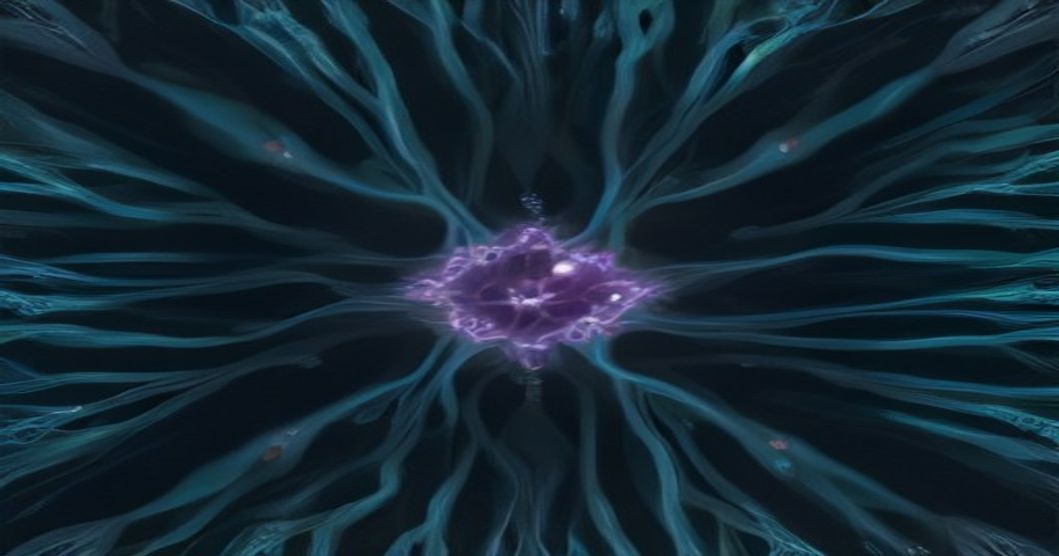
The concept of computers powered by living human brain cells has moved from science fiction to laboratory reality. Researchers are now cultivating human neurons in vitro and interfacing them with computing systems, marking a significant stride in the field of bio-computing. This approach leverages the inherent capabilities of biological neural networks – their adaptability, self-organization, and parallel processing power – to perform computational tasks, mimicking the efficiency and complexity of the human brain.
Unlike traditional silicon-based chips, which are static in their architecture, neurons possess the remarkable ability to form and modify connections over time. This plasticity means that biological processors can, in essence, "learn" and adapt to new information and tasks. This intrinsic learning capability offers a potential pathway to more intelligent and flexible computing systems. Furthermore, biological systems are notoriously energy-efficient. As data centers consume ever-increasing amounts of power, the prospect of computation that requires a fraction of the energy of current hardware is incredibly compelling. Think of it less like swapping out your CPU for a faster one, and more like replacing your entire motherboard with a self-organizing, energy-sipping biological network.
Bridging the Gap: From Lab to Logic Gates
The integration of living neurons into computing systems involves intricate bio-engineering and interface technologies. Researchers are developing methods to culture neurons in specialized environments that support their growth and function, often on multi-electrode arrays (MEAs). These MEAs act as both sensors and stimulators, allowing for the recording of neural activity and the delivery of electrical signals to influence the network's behavior. This two-way communication is crucial for training the biological components and extracting computational results.
One of the primary challenges is establishing a stable and scalable interface between the organic neurons and the inorganic computing hardware. This involves overcoming issues related to signal transduction, biocompatibility, and the sheer complexity of neural communication. Early experiments have focused on demonstrating basic computational functions, such as pattern recognition or simple learning tasks, by observing how the neural network responds to various stimuli and how its activity patterns evolve. The goal is to move beyond simple signal recording to active, directed computation. This is not about creating a conscious entity, but about harnessing the raw processing power and learning potential of biological matter for specific computational purposes.
The Promise and Peril of Biological Computation
The implications of successful bio-computing are vast. For artificial general intelligence (AGI), this could represent a paradigm shift. Instead of trying to simulate intelligence on silicon, researchers might be able to cultivate and direct it. The energy efficiency alone could revolutionize computing, making high-performance computation accessible in environments where power is scarce or costly. Imagine supercomputers that require no more energy than a few watts, or implantable medical devices powered by the body's own biological processes.
However, significant ethical and technical hurdles remain. The long-term stability and reliability of cultured neurons in a computational setting are still under investigation. Questions about data security and the potential for unintended biological consequences also loom large. What happens to the neural network when the experiment ends? How do we ensure the integrity of the biological components? Furthermore, the very idea of using living human brain cells, even when cultured in a lab, raises profound ethical considerations that will need careful navigation as the technology matures. The surprising detail here is not the technical feasibility, but the speed at which these early-stage experiments are progressing, pushing the boundaries of what we consider possible in computing hardware.
Future Directions and Unanswered Questions
The field of bio-computing is still in its nascent stages, but the potential is undeniable. Future research will likely focus on increasing the scale and complexity of these neural networks, improving the interface technology, and developing standardized methods for training and evaluating bio-computational systems. Researchers are exploring different types of neurons and co-culturing them with other cell types to create more robust and functional biological circuits.
What nobody has addressed yet is the long-term societal impact if this technology becomes widespread. If we can outsource complex cognitive tasks to biological processors, what does that mean for human employment and the definition of intellectual labor? Will we see a future where custom-designed neural organoids are sold as off-the-shelf computing components? These are questions that extend far beyond the laboratory bench and into the fabric of our future society. The journey from a petri dish to a functional bio-computer is long, but the first steps are being taken, opening up a frontier where biology and computation merge in ways previously confined to imagination.