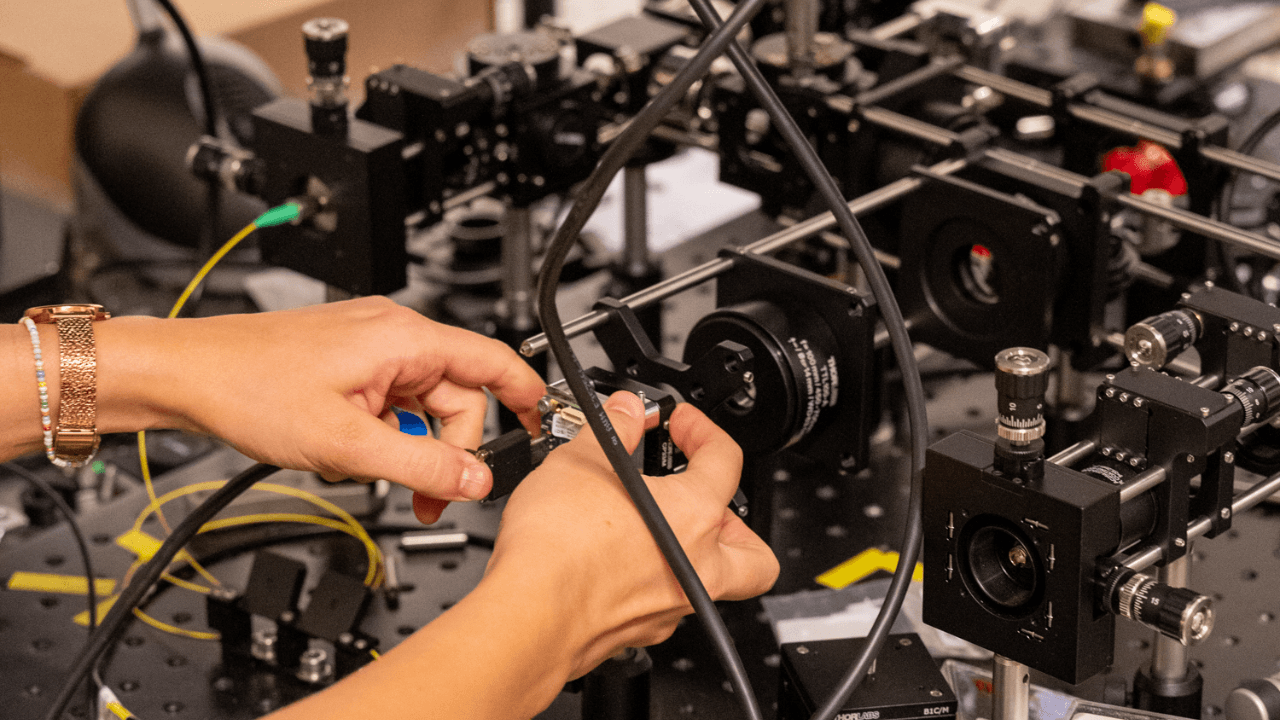
Lightspring's Mission: Unlocking Photonic Chip Potential
Lightspring, a French startup, has successfully closed a €3.5 million seed funding round. The investment was led by Atlantic and OVNI Capital, with significant participation from Concept Ventures, Ixcore, Plug and Play Ventures, and other industry investors. This funding marks a crucial step for the company as it aims to tackle the persistent manufacturing bottlenecks that have hindered the broader adoption of photonic chips.
Photonic chips, which use light instead of electrons to transmit data, promise a future of faster, more energy-efficient computing. They are poised to revolutionize everything from telecommunications and artificial intelligence to medical imaging and autonomous driving. However, their widespread deployment has been significantly hampered by the complex and costly manufacturing processes required. Traditional semiconductor foundries are not always equipped to handle the unique demands of photonic integration, leading to high costs, long lead times, and limited scalability. Lightspring's core mission is to bridge this gap, providing solutions that streamline and optimize the production of these advanced optical circuits.
Addressing the Manufacturing Hurdle
The crux of Lightspring's strategy lies in its innovative approach to photonic chip manufacturing. While the exact technical details remain proprietary, the company's focus is on developing and implementing advanced processes that overcome the current limitations. This includes enhancing yield, improving precision, and reducing the overall cost of producing integrated photonic circuits. The €3.5 million seed capital will be instrumental in scaling up Lightspring's operations, investing in state-of-the-art manufacturing equipment, and expanding its research and development team.
The demand for photonic chips is accelerating, driven by the insatiable appetite for higher bandwidth and lower power consumption in data centers, high-performance computing, and advanced sensor technologies. Companies are increasingly looking for solutions that can deliver these performance gains without the prohibitive costs associated with current manufacturing methods. Lightspring's ambition is to become a key enabler in this transition, offering a more accessible and efficient path to photonic chip production. This funding round validates the market's recognition of this critical need and Lightspring's potential to meet it.

The Investors' Vision
The lead investors, Atlantic and OVNI Capital, highlighted the strategic importance of Lightspring's work. Their decision to back the company underscores a belief in the transformative potential of photonics and the capability of Lightspring's team to execute its vision. The participation of other venture capital firms and industry players further solidifies the confidence in the company's technology and market strategy.
For founders and investors alike, this funding round signals a growing trend: the increasing focus on enabling technologies that underpin the next wave of technological advancement. While AI models and new software platforms often capture headlines, the underlying hardware – in this case, advanced photonic chips – is equally critical. Lightspring is positioning itself at the forefront of this hardware revolution. The investment is not just a financial injection but also a strategic partnership, bringing valuable expertise and networks to help Lightspring navigate the complex landscape of semiconductor manufacturing and market penetration.
What This Means for the Future of Computing
The successful funding of Lightspring is more than just a win for a single startup; it's a positive development for the entire technology ecosystem. By addressing the manufacturing bottlenecks, Lightspring aims to accelerate the transition from electronic to photonic computing. This shift could lead to significant improvements in data transfer speeds, energy efficiency, and computational power. Imagine data centers that consume a fraction of the energy, or AI training that completes in hours instead of days. These are the kinds of outcomes that advancements in photonic chip manufacturing can enable.
The company's focus on making photonic chip production more accessible could democratize the technology, allowing a broader range of companies and researchers to leverage its benefits. This could spur innovation across numerous sectors, from developing more sophisticated sensors for autonomous vehicles to creating faster, more responsive communication networks. The €3.5 million will be crucial for Lightspring to move from its current stage to a more mature manufacturing and supply chain operation, paving the way for wider commercialization of photonic technologies.
The journey ahead for Lightspring will involve scaling its production capabilities, forging strategic partnerships with chip designers and foundries, and demonstrating the reliability and cost-effectiveness of its manufacturing solutions. The company’s success could set a precedent for how future advanced semiconductor technologies are brought to market, emphasizing the critical role of manufacturing innovation in realizing technological breakthroughs.