
Lemonade 11.5: A Leap in Local AI Inference
AMD has released Lemonade version 11.5, a significant update to its open-source AI server software. This release marks the completion of the Lemonade Router, a key component designed to streamline the process of serving AI models locally. The Lemonade project, aimed at providing a robust and accessible platform for AI inference on local hardware, has been steadily evolving, and this version represents a crucial milestone in its development.
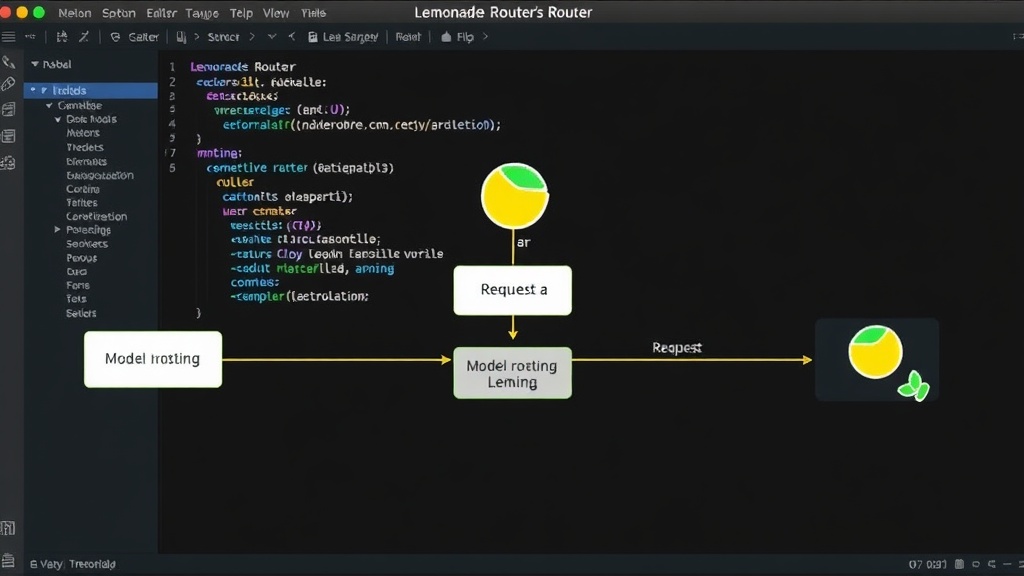
The Lemonade Router, now fully implemented, acts as the central nervous system for local AI deployments. Its primary function is to manage incoming requests, route them to the appropriate AI models, and return the results efficiently. This is particularly important for users who want to run complex AI models without relying on cloud infrastructure, offering greater control, privacy, and potentially lower costs. The completion of this component means that Lemonade 11.5 is better equipped than ever to handle multi-model serving scenarios and complex inference workflows.
Key Features and Improvements in Lemonade 11.5
While the headline feature is the completed Lemonade Router, version 11.5 brings several other enhancements. The development team has focused on improving performance, stability, and ease of use. These improvements are critical for developers and researchers who depend on reliable and fast inference for their applications and experiments.
The Lemonade Router's architecture is designed to be modular and extensible. This allows for easy integration of new models and inference backends. Developers can configure the router to optimize for specific hardware configurations, such as AMD's own Instinct accelerators or even consumer-grade GPUs. The routing logic can be customized to support various deployment patterns, including load balancing across multiple model instances, A/B testing of different model versions, and canary deployments for gradual rollouts.
Beyond the router, Lemonade 11.5 includes updated support for a wider range of AI model formats and frameworks. This ensures that users can leverage the latest advancements in AI research and development without being locked into specific ecosystems. The team has also worked on enhancing the server's ability to manage model lifecycles, including loading, unloading, and updating models dynamically without requiring a full server restart. This dynamic management is essential for environments where models need to be updated frequently or where resources are constrained.
The Significance of Local AI Inference
The push towards local AI inference, championed by projects like Lemonade, is driven by several factors. For businesses, running AI models on-premises can offer significant advantages in terms of data security and compliance, especially for sensitive information. It also mitigates the risks associated with network latency and dependency on third-party cloud providers. For individual developers and researchers, local inference democratizes access to powerful AI capabilities, enabling experimentation and development on personal hardware.
AMD's commitment to open-source AI infrastructure is a strategic move. By providing robust tools like Lemonade, the company aims to foster a broader ecosystem around its hardware, encouraging developers to build and deploy AI applications that can take full advantage of AMD's processing power. This contrasts with some other hardware vendors who tend to focus on proprietary software stacks. The open-source nature of Lemonade ensures transparency and allows the community to contribute to its development, fostering innovation and faster bug fixes.
The completion of the Lemonade Router is not just a technical achievement; it signals a maturing of the platform's capabilities. It moves Lemonade from a collection of tools to a more cohesive and production-ready AI serving solution. This is important for attracting more users and for enabling more sophisticated use cases. Imagine a scenario where a company wants to run multiple specialized AI models – one for natural language processing, another for image recognition, and a third for anomaly detection – all on a single local server. The Lemonade Router in version 11.5 is designed precisely for such complex orchestration.
Future Implications and Community Impact
With Lemonade 11.5 and the finalized router, AMD is positioning itself as a serious contender in the AI hardware and software space. The availability of a capable, open-source local AI server could sway developers and organizations considering their AI infrastructure strategy. The ability to fine-tune models locally and serve them with low latency is becoming increasingly critical for applications ranging from edge computing to real-time data analysis.
What remains to be seen is how quickly the community will adopt Lemonade 11.5 and contribute to its ecosystem. While the core functionality is now robust, the true power of open-source software often lies in the breadth of integrations and community-driven extensions. As more developers begin to use the completed Lemonade Router, we can expect to see a proliferation of custom configurations, optimized model deployments, and perhaps even new features that the core team hadn't initially envisioned. This collaborative development model is the engine of innovation in the open-source world, and Lemonade is now better equipped to harness it.
The release also prompts consideration of how this impacts the broader AI inference market. Companies that offer cloud-based AI serving solutions might face increased competition from highly capable local deployments, especially in sectors where data privacy and control are paramount. For developers, it means another powerful, open option to consider when planning their AI projects, offering a viable alternative to proprietary solutions or more complex self-managed infrastructure.