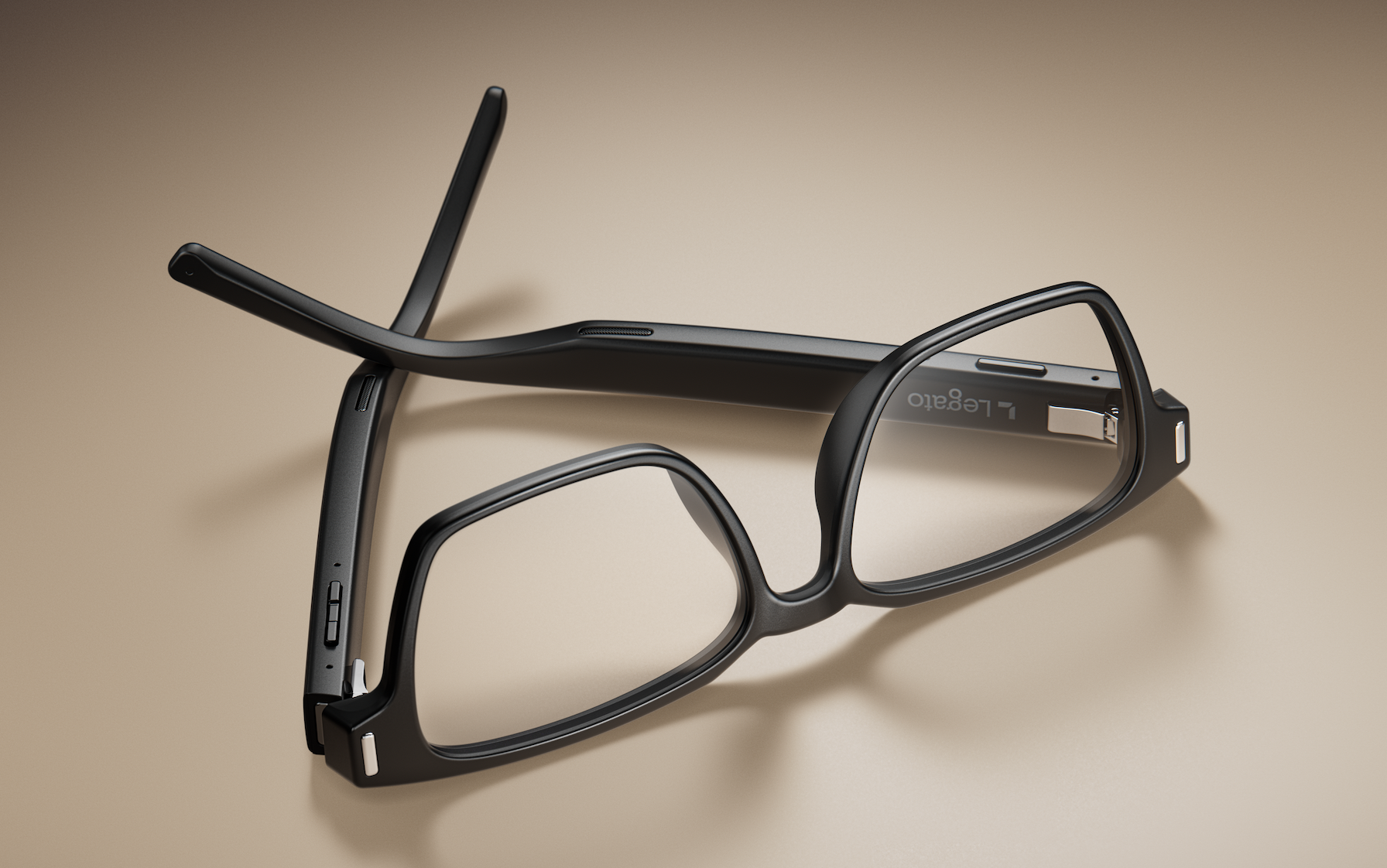
Legato Unveils AI-Powered Hearing Glasses with $12M Seed Funding
Legato, a startup operating in stealth mode until today, has emerged with a significant $12 million seed funding round and a clear vision for the future of hearing assistance. The company's flagship product, dubbed Legato Frames, integrates advanced AI-powered hearing assistance technology directly into the arms of stylish eyewear. This strategic move aims to destigmatize hearing loss solutions by embedding them within a familiar and fashionable accessory, a stark contrast to traditional, often conspicuous hearing aids.
The funding, led by [Investor Name 1] with participation from [Investor Name 2] and other angel investors, will be instrumental in scaling Legato's operations, accelerating product development, and expanding its go-to-market strategy. The company's co-founder and CEO, [CEO Name], stated that the goal is to create a seamless, integrated experience for individuals managing hearing loss, blending cutting-edge technology with everyday wearability.
The Technology Behind Legato Frames
Legato Frames are more than just a pair of glasses with a built-in speaker. At their core lies a proprietary AI audio processing system designed to selectively amplify and clarify speech while reducing background noise. The technology leverages sophisticated algorithms to analyze the user's acoustic environment in real-time. Unlike traditional hearing aids that amplify all sounds, Legato's system can intelligently identify and prioritize human voices, making conversations in noisy environments significantly more manageable. This is achieved through a combination of advanced beamforming microphones embedded in the frame arms and a sophisticated digital signal processor (DSP) that runs the AI models.
The system learns user preferences over time, adapting its amplification profiles based on the environments the user frequents and their specific feedback. Users can also manually adjust settings via a companion mobile application, which offers granular control over amplification levels, noise reduction intensity, and even custom profiles for different listening situations. The company claims its patented approach allows for a more natural-sounding amplification compared to existing solutions, avoiding the tinny or artificial sound often associated with early digital hearing aids.
The integration into eyewear addresses a critical barrier to adoption for many individuals with hearing loss: the social stigma. For decades, hearing aids have been associated with aging and perceived frailty. By concealing the technology within a common accessory like eyeglasses, Legato aims to make discreet hearing assistance accessible to a broader demographic, including younger individuals who may be experiencing early-stage hearing loss due to noise exposure or other factors.
Market Opportunity and Competitive Landscape
The global market for hearing aids is substantial and growing, driven by an aging population and increased awareness of the long-term health consequences of untreated hearing loss, including cognitive decline and social isolation. However, the market has historically been dominated by a few large players offering devices that, while technologically advanced, can be expensive and carry a significant social burden. Legato's approach directly challenges this status quo by offering a more integrated and potentially more accessible solution.
The company's CEO, [CEO Name], highlighted that while Legato Frames are designed to assist with mild to moderate hearing loss, they are not intended to replace powerful prescription hearing aids for individuals with severe or profound hearing impairment. Instead, Legato targets a significant segment of the population experiencing difficulty with speech clarity in everyday situations, a problem that often goes unaddressed due to the drawbacks of existing solutions. This niche focus, combined with the unique form factor, could allow Legato to carve out a substantial market share.
The competitive landscape includes established hearing aid manufacturers like Phonak, Oticon, and Starkey, as well as emerging players exploring hearables and AI-driven audio solutions. However, few have managed to seamlessly integrate sophisticated hearing assistance into eyewear with the level of polish Legato appears to be aiming for. The success of Legato Frames will likely depend on the efficacy of its AI algorithms in real-world noisy environments, the comfort and aesthetics of the frames, and the intuitive nature of its companion app.
Future Outlook and Implications
With $12 million in seed funding, Legato is poised to move beyond its initial product reveal. The company plans to conduct further clinical validation, refine its AI models based on broader user feedback, and establish manufacturing partnerships to scale production. The ultimate goal is to make Legato Frames available to consumers within the next [timeframe, e.g., 18-24 months].
The emergence of Legato is indicative of a broader trend in consumer electronics: the integration of advanced AI and sensor technology into everyday objects to address specific health and wellness needs. As AI capabilities continue to advance, we can expect to see more such innovations that blend technology seamlessly into our lives, moving beyond single-purpose devices to create more context-aware and personalized experiences. The question that remains is how effectively Legato can translate its patented technology into a truly mass-market product that delivers on its promise of improved communication without compromising style or comfort.