The Problem: Reinventing the Wheel for Every Angular Mobile App
Developing modern mobile applications with Angular, Ionic, and Capacitor often involves a repetitive setup process. Ali Ghaith, a developer frustrated by this recurring task, identified a common set of foundational elements that are rebuilt from scratch for nearly every new project. This includes critical but boilerplate components like authentication, secure storage, offline data handling, push notifications, biometric integration, internationalization (translations and RTL support), dark mode, and API integration. The time spent on this initial scaffolding detracts from the core business logic that truly differentiates an application.
Ghaith's solution, LaunchKit Mobile, aims to eliminate this redundant effort. It provides a production-ready starter template that includes these essential infrastructure pieces out-of-the-box. The goal is to allow developers to begin building unique application features immediately, rather than spending the first hours or days configuring basic but necessary systems.
LaunchKit Mobile: A Production-Ready Foundation
LaunchKit Mobile is built on Angular 22, leveraging the capabilities of Ionic for UI components and Capacitor for native device access. The starter kit is designed to deliver the production plumbing required for robust mobile applications. This means developers can bypass the initial setup phase and focus directly on implementing the application's specific business logic and user experience.
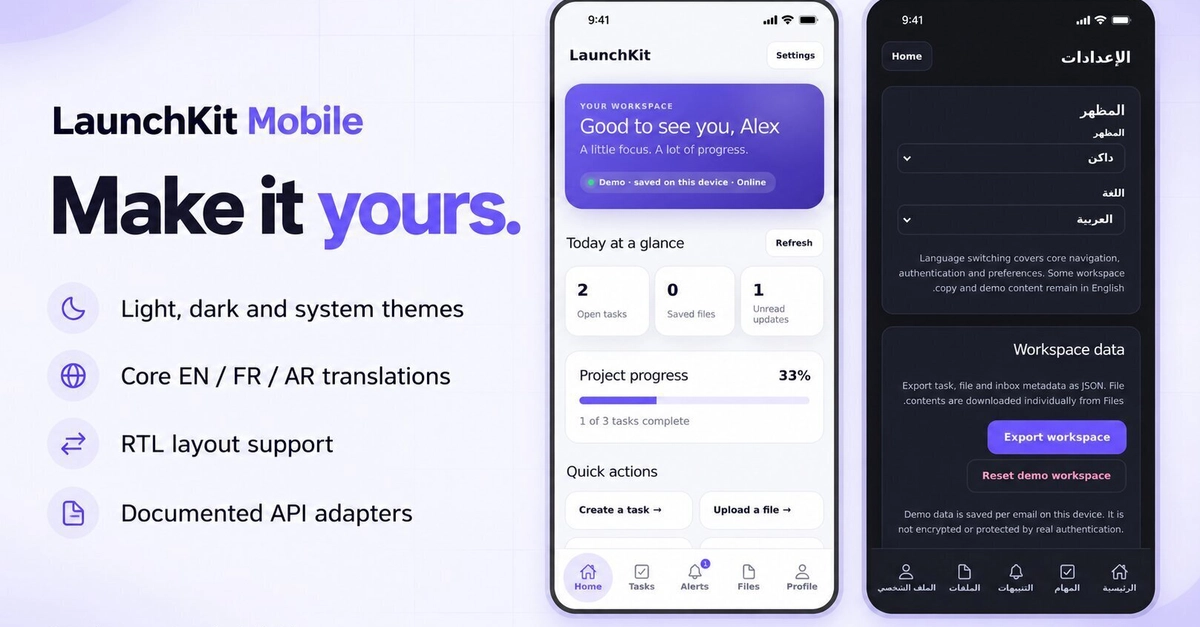
Key features included in the LaunchKit Mobile starter are:
- Authentication and Refresh Token Handling: Securely manages user login and token renewal, a fundamental aspect of most authenticated applications.
- Secure Storage: Implements mechanisms for securely storing sensitive user data or application preferences on the device.
- Offline Handling: Provides strategies for managing data and application state when the device is not connected to the internet, ensuring a smoother user experience.
- Push Notifications: Integrates the necessary services to enable the app to receive and display push notifications.
- Biometrics: Offers support for biometric authentication (e.g., fingerprint, face unlock) to enhance security and user convenience.
- Translations: Sets up an internationalization framework to support multiple languages, crucial for global applications.
- Right-to-Left (RTL) Support: Includes configurations for proper layout and text direction in languages that read from right to left.
- Dark Mode: Implements a dark mode theme, catering to user preferences and improving readability in low-light conditions.
- API Integration: Provides a structured approach to integrating with backend APIs, simplifying data fetching and management.
By offering these components as part of the initial project structure, LaunchKit Mobile significantly reduces the development overhead associated with starting a new Angular-based mobile application. This allows development teams to iterate faster and bring their unique features to market more quickly.
The Developer Experience: Focus on Value, Not Boilerplate
The core value proposition of LaunchKit Mobile lies in its ability to shift developer focus. Instead of spending valuable time configuring authentication flows, setting up secure local storage, or integrating a push notification service, developers can start with these systems already operational. This is akin to a chef receiving pre-prepped ingredients for a complex dish; the focus shifts from chopping vegetables to perfecting the sauce and presentation.
For development teams, this translates to potentially shorter project timelines and reduced development costs. The starter kit acts as a well-tested foundation, minimizing the risk of introducing bugs or security vulnerabilities in the initial setup phase. Teams can be more confident in the stability of their application's core infrastructure, allowing them to concentrate on innovation and delivering business value through unique features.
The decision to build LaunchKit Mobile stems from a common pain point in the mobile development landscape. Many developers face the same initial setup challenges repeatedly. By consolidating these common requirements into a single, reusable package, Ghaith has created a tool that addresses this widespread inefficiency. This approach not only benefits individual developers but also offers a standardized starting point for teams, promoting consistency across projects.
The underlying technologies—Angular 22, Ionic, and Capacitor—represent a powerful stack for building cross-platform mobile applications. LaunchKit Mobile leverages these tools to provide a robust and maintainable foundation. Developers familiar with this ecosystem will find the starter kit intuitive and easy to adopt. The inclusion of features like RTL support and dark mode also demonstrates a commitment to building modern, accessible, and user-friendly applications.
Implications for the Angular Mobile Ecosystem
LaunchKit Mobile's emergence highlights a growing trend in software development: the demand for pre-built, production-grade starter kits and frameworks that abstract away common infrastructure concerns. As applications become more complex and user expectations for features like offline support and real-time updates rise, the initial setup phase becomes increasingly critical and time-consuming. Tools like LaunchKit Mobile offer a practical solution to this challenge.
For competitors in the Angular starter kit space, LaunchKit Mobile sets a benchmark for comprehensive foundational features. Its inclusion of a wide array of essential components, from authentication to biometric support, provides a compelling alternative to manually configuring these elements. The focus on production readiness suggests that it is not merely a boilerplate but a tool intended for serious application development.
The success of such starter kits can influence how new Angular mobile projects are initiated. Instead of beginning with a barebones Angular CLI project, developers might increasingly opt for comprehensive starters like LaunchKit Mobile. This could lead to a more standardized approach to building Angular mobile apps, potentially improving code quality and reducing fragmentation in how common features are implemented.
Ultimately, LaunchKit Mobile aims to empower developers by removing the drudgery of repetitive setup tasks. By providing a solid, feature-rich foundation, it allows them to channel their energy into what matters most: building innovative and compelling mobile experiences.