
The Promise of Agentic Automation
LaterOn v2 launches with a bold promise: describe an email job once, and get it done. This isn't just about sending templated replies or forwarding messages. The platform aims to leverage AI agents to tackle complex, multi-step email workflows that typically require human intervention and significant time. Think of it less like a smart inbox and more like a virtual assistant that understands context, executes tasks, and learns from outcomes, all initiated through natural language prompts.
The core innovation lies in its agentic approach. Instead of users meticulously setting up rules or triggers for every possible scenario, LaterOn v2 allows them to articulate the desired outcome. For instance, a user could instruct the platform to "Manage all incoming partnership inquiries by identifying key contact information, categorizing the request, and drafting a personalized response based on our latest product brief, flagging any urgent opportunities for immediate review." This level of delegation is what sets LaterOn v2 apart from traditional email management tools.
Key Features and Functionality
LaterOn v2 is built around the concept of "email jobs." Users define these jobs by describing the task they want accomplished. The platform then breaks down the job into actionable steps, leveraging AI agents to execute them. This includes:
- Intelligent Triage and Categorization: The agents can analyze incoming emails, understand their intent, and sort them into predefined or dynamically created categories. This goes beyond simple keyword filtering, aiming for semantic understanding.
- Automated Response Drafting: Based on the categorized email and user-defined guidelines (like product briefs or company policies), the agents can draft contextually relevant and personalized responses. This feature aims to reduce the time spent on repetitive communication.
- Information Extraction and Summarization: For complex inquiries or lengthy threads, LaterOn v2 can extract key information, summarize the content, and present it to the user in a concise format, saving reading time.
- Task Delegation and Follow-up: The platform can identify actionable items within emails and, if configured, delegate them to other team members or set up automated follow-up reminders, ensuring nothing falls through the cracks.
- Learning and Adaptation: A crucial aspect of agentic systems is their ability to learn. LaterOn v2 is designed to adapt over time, improving its accuracy and efficiency based on user feedback and the outcomes of its executed tasks.
The platform is positioned as a tool for professionals who deal with high volumes of email and need to streamline their communication workflows. This includes sales teams, partnership managers, customer support agents, and even individual founders managing multiple aspects of their business.
The Agentic Advantage
The distinction between an automated system and an agentic one is significant. Traditional automation relies on predefined rules and logic. If an email doesn't match a rule, it's often handled manually. Agentic systems, powered by large language models and sophisticated planning algorithms, can reason, plan, and act in more dynamic and unpredictable environments. They can infer intent, handle ambiguity, and adapt their approach when faced with novel situations.
Consider a scenario where a potential partner sends an email with an unusual request that doesn't fit any standard template. A rule-based system would likely flag this for manual review. An agentic system, however, could potentially analyze the request, consult relevant internal documents (like partnership guidelines), and even draft a preliminary response seeking clarification or proposing alternative solutions, all without explicit pre-programming for that exact scenario.
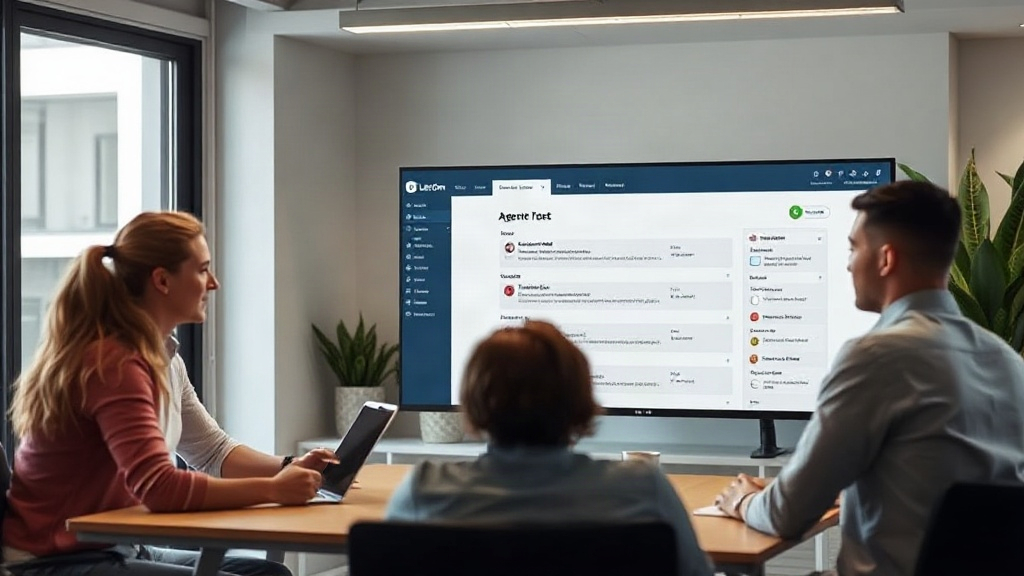
This capability is particularly valuable in the fast-paced world of business communication, where every email can represent a missed opportunity or a critical customer interaction. By offloading complex decision-making and execution to AI agents, LaterOn v2 aims to free up human professionals to focus on higher-value strategic tasks.
Implications for Workflow Management
The introduction of LaterOn v2 signals a shift towards more sophisticated AI integration in everyday productivity tools. For professionals drowning in email, this platform offers a potential lifeline. It moves beyond simple task automation to intelligent workflow orchestration. If the platform delivers on its promise, it could redefine how teams manage communication-intensive roles.
The success of LaterOn v2 will likely hinge on its ability to accurately interpret user intent, reliably execute complex multi-step tasks, and maintain a high degree of trust. Users need to be confident that their AI agents are not only performing tasks correctly but also representing their brand and professional image appropriately. The learning and adaptation mechanisms will be critical here, ensuring the agents evolve with the user's needs and the business's changing landscape.
What remains to be seen is how LaterOn v2 handles edge cases and potential misinterpretations. The complexity of human communication is vast, and even the most advanced AI can falter. The platform's ability to gracefully handle errors, seek human clarification when necessary, and learn from mistakes will be paramount to its long-term adoption and effectiveness. For now, the vision presented by LaterOn v2 offers a compelling glimpse into the future of intelligent email management.