LangGraph Agent Orchestration Patterns: 6 Production-Ready Multi-Agent Architectures
A single LLM agent, while powerful, has inherent limitations. It can struggle with long, complex tasks, forget context across multiple reasoning steps, and become a bottleneck when trying to manage diverse responsibilities. To build robust, production-grade AI systems, we need multiple agents working in concert. The critical challenge then becomes how these agents collaborate effectively. LangGraph addresses this by framing agent orchestration as a state machine, making complex collaboration debuggable, persistent, and observable. This article summarizes the engineering insights from implementing six distinct orchestration patterns within IHUI-AI's apps/ai-service/app/graphs/.
LangGraph vs. LangChain: Graphs Over Chains
Many developers confuse LangChain and LangGraph. LangChain's core abstraction is the Chain, representing a linear sequence of steps. A typical LangChain might look like this:
[Input] → [Prompt Template] → [LLM] → [Output Parser] → [Output]This model is effective for straightforward tasks. However, it falters when the execution flow needs to be dynamic, such as deciding the next step based on intermediate results or looping until a specific condition is met. LangGraph shifts this paradigm by modeling execution as a directed graph.
In LangGraph:
- Nodes: Represent functions that take a state and return a state update.
- Edges: Define transitions between nodes, which can be fixed or conditional.
- State: The shared data that flows between nodes, typically defined using a
TypedDictfor type safety.
This graph-based approach is far more expressive for complex agent interactions. It allows for branching, looping, and parallel execution, all of which are essential for multi-agent systems.
Six Production-Ready Orchestration Patterns
IHUI-AI has deployed six distinct agent orchestration patterns using LangGraph, each tailored for specific use cases. These patterns are not mutually exclusive and can often be combined to create sophisticated systems.
1. Simple Sequential Agent
This is the most basic pattern, akin to a LangChain but implemented within LangGraph's framework. It's useful for tasks where a series of agents must execute in a fixed order. Each agent performs a specific sub-task, and its output becomes the input for the next agent in the sequence. While simple, it benefits from LangGraph's state management and observability.
2. Conditional Branching Agent
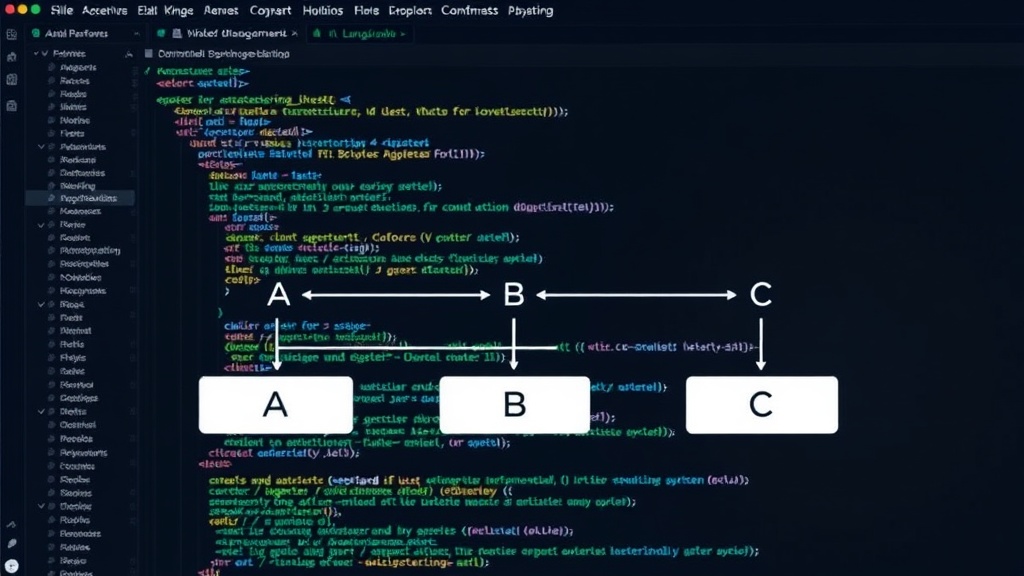
This pattern introduces decision-making. An agent's output or an external condition can trigger different paths in the graph. For example, an agent might analyze a user's query and, based on its classification, route the task to a specialized agent or a different processing pipeline. This is crucial for routing tasks efficiently and applying the right expertise.
Consider a customer support system. An initial agent analyzes the incoming request. If it's a billing question, it routes to the billing agent; if it's a technical issue, it routes to the technical support agent.
3. Agent with State Persistence and Restart
For long-running or interruptible tasks, state persistence is vital. LangGraph's ability to save and load the graph's state allows an agent to pause its execution and resume later, perhaps after a user provides more information or a system resource becomes available. This pattern is essential for user-facing applications where immediate completion isn't always possible or desirable.
Imagine a complex report generation task. The agent might gather initial data, save its state, and then wait for a scheduled job to fetch more extensive datasets. Upon completion, it resumes from its saved state to process the new data.
4. Tool-Using Agent with Dynamic Tool Selection
Agents often need to interact with external tools or APIs. This pattern involves an agent that can dynamically select and use tools based on the current task. LangGraph's graph structure allows for nodes that represent tool execution, with edges that determine which tool to call next based on the agent's reasoning. This pattern is fundamental for agents that need to perform actions in the real world or access external knowledge bases.
An agent tasked with booking travel might first use a flight search tool, then a hotel booking tool, and finally a calendar API to confirm the itinerary. The selection of each tool depends on the preceding step's outcome.
5. Multi-Agent Debate/Collaboration
This pattern enables agents to work together to achieve a consensus or explore different facets of a problem. Agents can