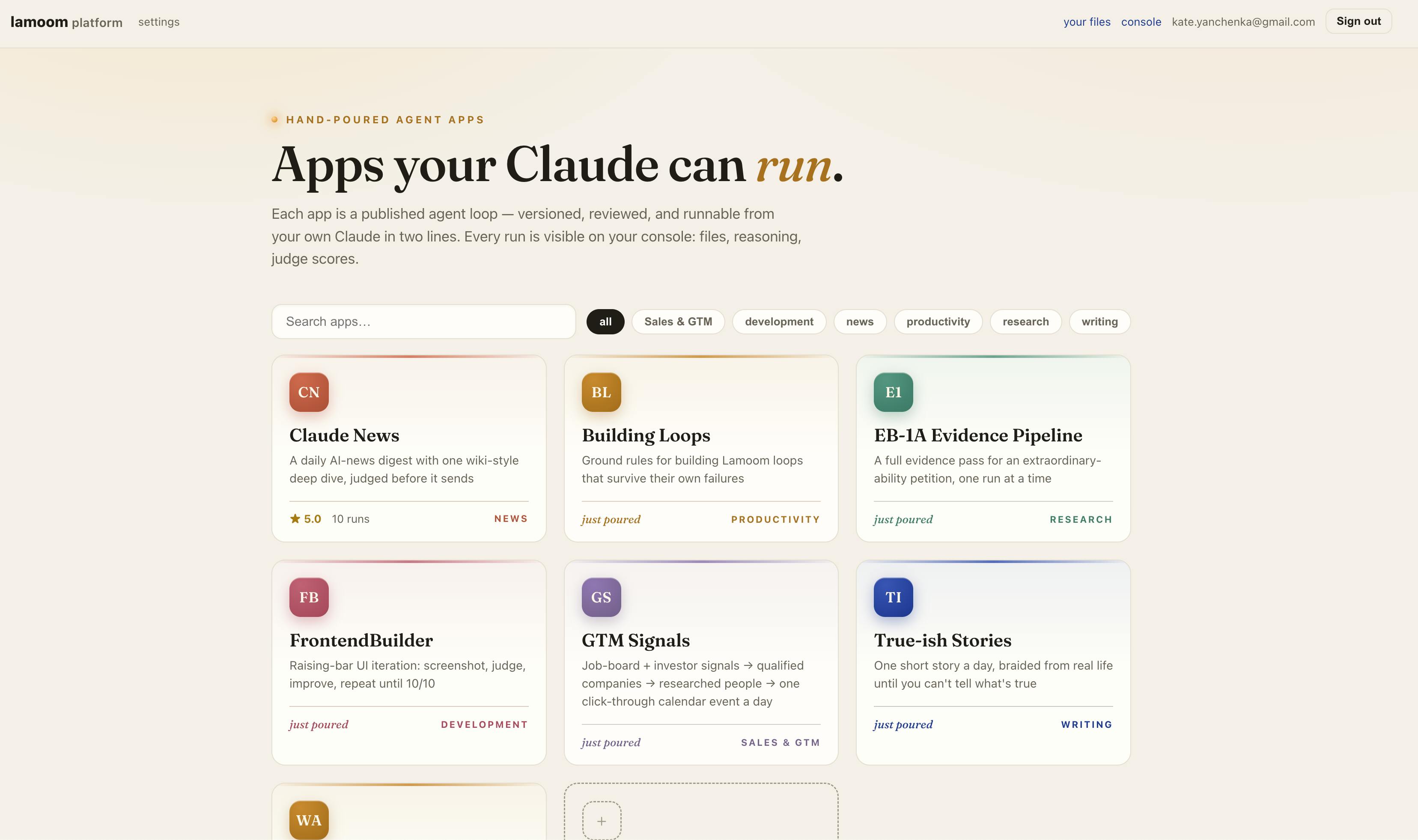
Lamoom: A New Ecosystem for Claude Agent Applications
Lamoom emerges as a novel platform designed to bridge the gap between AI models and practical applications. The service allows users to run existing agent applications directly within the Claude AI environment. More significantly, it provides a marketplace where developers can build, share, and monetize their own AI agent applications for Claude. This initiative aims to foster a more dynamic ecosystem around large language models, moving beyond simple chat interfaces to more specialized, functional tools.
The core concept of Lamoom revolves around the idea of "agent apps." These are essentially specialized programs or workflows that leverage the capabilities of an AI model like Claude to perform specific tasks. Instead of users needing to manually prompt an AI for complex sequences of actions, an agent app encapsulates these steps, making them accessible through a more intuitive interface. This is akin to how mobile app stores revolutionized smartphone utility, transforming them from communication devices into versatile computing platforms.

Empowering Developers and Users
For developers, Lamoom presents an opportunity to tap into the growing market of AI-powered tools. By building agent apps on Lamoom, they can target users of Claude, a prominent large language model. The platform offers the infrastructure to create, test, and distribute these applications, potentially generating revenue through sales or subscriptions. This lowers the barrier to entry for developers who want to create practical AI solutions without needing to manage the underlying AI model infrastructure themselves.
Users, on the other hand, gain access to a curated collection of specialized tools. These agent apps can automate a wide range of tasks, from content generation and data analysis to coding assistance and research. The ability to run these apps directly within Claude simplifies workflows, as users do not need to switch between multiple applications or learn complex new interfaces. The marketplace model also encourages innovation, as a diverse range of applications is likely to emerge, catering to niche needs and advanced use cases.
The Agent App Paradigm Shift
The concept of agent apps is a natural evolution in the AI landscape. As large language models become more powerful and versatile, the demand for structured, task-specific applications built upon them increases. Lamoom is positioning itself as a key enabler of this shift. By abstracting away the complexities of interacting directly with LLMs for intricate tasks, agent apps provide a more predictable and efficient user experience.
Consider the difference between asking Claude to write a blog post outline, then asking it to flesh out each point, then asking it to suggest SEO keywords, and so on, versus simply selecting a "Blog Post Creator" agent app. The latter encapsulates all these steps, potentially with added features like tone adjustment or target audience specification, all initiated with a single command or a few parameters. This is a significant leap in usability and productivity.
Marketplace Dynamics and Future Potential
The marketplace aspect of Lamoom is crucial. It fosters a competitive environment where developers are incentivized to create high-quality, useful applications. This can lead to rapid iteration and the discovery of novel AI use cases. For users, it means a continuously expanding library of tools to enhance their productivity and creativity.
What remains to be seen is how Lamoom will handle issues of app quality, security, and discoverability. As the marketplace grows, ensuring that users can easily find reliable and effective agent apps will be paramount. Furthermore, the platform's success will depend on its ability to attract a critical mass of both developers and users, creating a self-sustaining ecosystem. The monetization models for developers, pricing strategies, and revenue-sharing agreements will also play a significant role in the platform's long-term viability.
Lamoom's approach of running agent apps directly within an existing LLM interface like Claude, coupled with a developer marketplace, represents a pragmatic step towards realizing the full potential of AI agents. It democratizes the creation and distribution of specialized AI tools, potentially accelerating the adoption of AI for a wider array of professional and personal tasks.