Introducing Kiro: A Spec-Driven AI Development Tool
Kiro is emerging as a novel player in the AI-assisted development space, proposing a workflow that contrasts with prevalent tools like GitHub Copilot and ChatGPT. The core differentiator for Kiro lies in its 'spec-driven' approach. Instead of generating code and then refactoring, Kiro emphasizes defining structured instructions and requirements upfront, then automating the generation of technical designs and tasks from these specifications. This methodology aims to solve a common pain point: the desire to establish a clear plan before diving into code generation, a process Kiro seeks to automate.
Early adopters report that Kiro effectively handles the initial planning phase, a crucial step often overlooked or made cumbersome by other AI coding assistants. This transition from requirements to technical design, and finally to actionable tasks, forms the foundation of Kiro's proposed methodology. The tool promises to transform the AI coding workflow by embedding a structured planning layer directly into the development process.
Kiro's Methodology vs. Existing Tools
The current landscape of AI-assisted development is largely dominated by tools that operate on a code-first principle. GitHub Copilot, for instance, suggests code completions and generates snippets based on context and natural language prompts. ChatGPT, while more versatile, often requires iterative prompting and significant manual refinement to produce production-ready code. This typical loop involves writing initial code, identifying areas for improvement, and then using AI to refactor or rewrite sections.
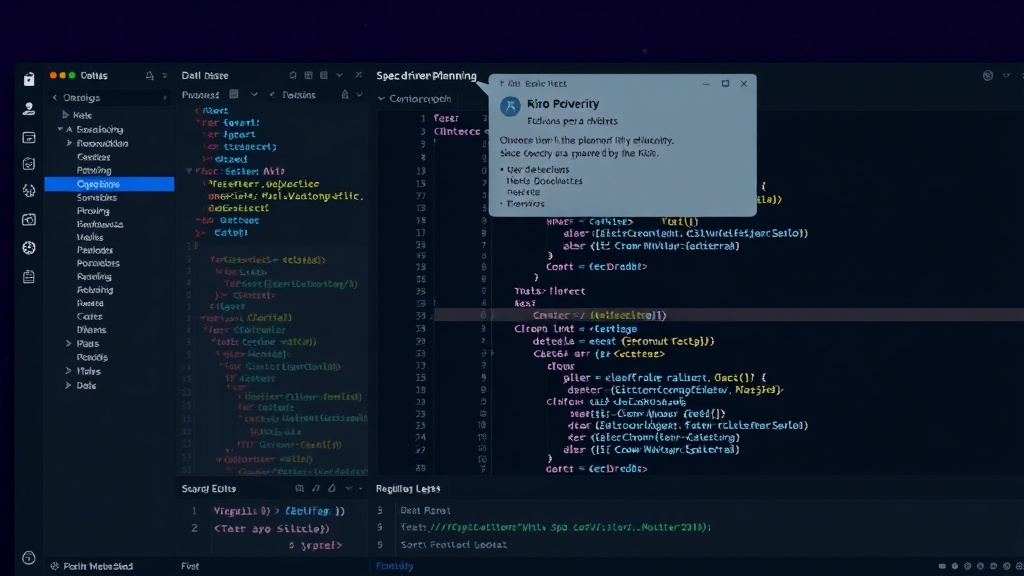
Kiro's spec-driven approach fundamentally alters this paradigm. It positions itself as a tool that first understands the 'what' and the 'why' before tackling the 'how.' This means developers would articulate requirements and desired outcomes in a structured format, which Kiro then interprets to build a technical blueprint. This blueprint would then guide the subsequent code generation. The advantage, according to proponents, is a more predictable and robust development process, reducing the need for extensive post-generation refactoring and potentially improving code quality by ensuring alignment with initial specifications.
Think of it less like a smart autocomplete for code, and more like a project manager who meticulously crafts a detailed project plan before any construction begins. This upfront planning is intended to prevent costly rework down the line, a common issue when development sprints ahead without a solid, AI-generated architectural foundation.
Potential Impact on Development Workflows
The adoption of Kiro could signal a shift in how development teams approach AI integration. By automating the often tedious and error-prone process of translating high-level requirements into detailed technical designs, Kiro could free up developer time for more complex problem-solving and innovation. This is particularly relevant for complex projects where architectural integrity and adherence to specifications are paramount.
For developers accustomed to the immediate code generation of tools like Copilot, Kiro's methodology might require an adjustment period. However, the potential benefits of a more structured and intentional AI-assisted workflow are significant. It suggests a future where AI not only writes code but also actively participates in the architectural and planning stages, ensuring that generated code is not just functional but also well-designed and maintainable.
The challenge for Kiro will be in its ability to accurately interpret diverse and potentially ambiguous natural language requirements, and to generate sound technical designs that are both comprehensive and adaptable. Furthermore, its integration into existing developer toolchains and CI/CD pipelines will be critical for widespread adoption. If Kiro can successfully bridge the gap between abstract requirements and concrete technical specifications, it could indeed redefine the future of AI-assisted development, moving beyond simple code completion to intelligent project planning.
What remains to be seen is how Kiro's spec-driven approach scales to extremely large or rapidly evolving projects, and whether its AI can maintain the nuanced understanding required for complex system designs across various programming paradigms.