%22%20%2F%3E%0A%20%20%3C%2Fsvg%3E)
Kimi K3-256k: A New Paradigm for Contextual Understanding
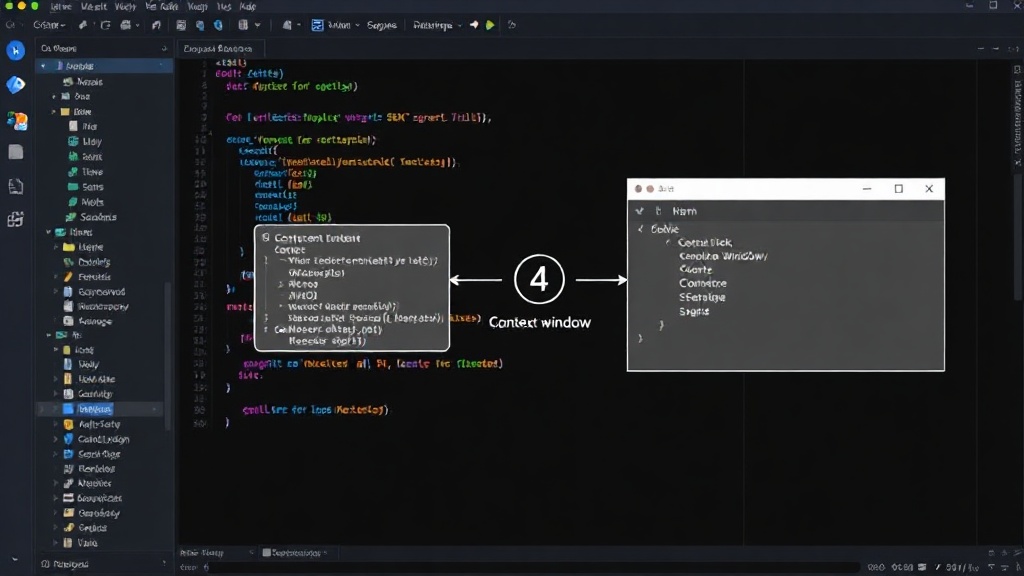
Kimi AI has launched its latest large language model, Kimi K3-256k, a significant leap forward in contextual processing power. The model boasts an unprecedented 256,000 token context window, a figure that redefines the boundaries of what LLMs can process in a single interaction. This expanded context allows the model to ingest and analyze vast amounts of information, from lengthy legal documents and dense research papers to entire code repositories, all within a single prompt. This capability moves beyond simple information retrieval, enabling sophisticated reasoning, summarization, and analysis across expansive datasets that were previously unmanageable for LLMs.
The implications for developers and businesses are profound. Imagine feeding an entire year's worth of financial reports into an LLM and asking for a nuanced analysis of market trends, or uploading a complete software project's documentation and receiving detailed insights into its architecture and potential refactoring opportunities. Kimi K3-256k is engineered to handle these complex tasks with remarkable efficiency and accuracy. The model's architecture is optimized to maintain performance and coherence even as the input size approaches its 256,000 token limit, a feat that has challenged many previous LLM iterations.
Technical Underpinnings and Performance
While specific architectural details remain proprietary, Kimi AI has indicated that K3-256k builds upon their existing Kimi model family, incorporating advanced attention mechanisms and optimizations for long-sequence processing. The 256,000 token context window is not merely a theoretical maximum; early benchmarks suggest the model maintains a high degree of factual recall and logical consistency throughout these extensive inputs. This contrasts with many earlier models where performance would degrade significantly beyond tens of thousands of tokens, leading to 'lost' information or nonsensical outputs.
The practical effect is akin to giving an AI a perfect, photographic memory for any document you provide. Instead of needing to break down complex information into smaller, digestible chunks – a process that often loses nuance and relational context – users can now present the AI with the complete picture. This drastically simplifies workflows for tasks such as legal discovery, scientific literature review, and comprehensive code audits. The ability to process such large contexts also opens doors for new applications, such as AI-powered agents that can maintain deep, long-term memory of interactions and user preferences, leading to more personalized and effective AI assistants.
Applications and Future Potential
The potential applications for Kimi K3-256k span numerous industries. In legal tech, it could revolutionize contract review, discovery processes, and compliance checks by analyzing entire case files or regulatory documents in minutes. For researchers, it offers the ability to synthesize findings from hundreds of research papers simultaneously, accelerating hypothesis generation and literature reviews. Software development teams can leverage it for comprehensive code analysis, bug detection across large codebases, and automated documentation generation that truly reflects the project's state.
The financial sector could see enhanced fraud detection by analyzing vast transaction histories, or sophisticated market analysis by processing extensive analyst reports and news feeds. Even creative fields could benefit, with the model capable of analyzing entire scripts or novels to provide character consistency checks or plot analysis. The key differentiator is the fidelity of information retention and reasoning across these massive inputs, moving LLMs from powerful text generators to sophisticated analytical engines capable of understanding complex, multi-faceted information landscapes.
The Context Window Race
Kimi K3-256k's launch places it at the forefront of the ongoing race to increase LLM context windows. Competitors have been steadily pushing these limits, with models offering context windows ranging from tens of thousands to several hundred thousand tokens. However, Kimi's achievement of a stable and performant 256,000 token window is a notable milestone. The challenge has never just been about increasing the number, but about ensuring the model can effectively *utilize* that context without significant performance degradation or increased latency. Kimi AI's success suggests they have made substantial progress on these fronts. This development will undoubtedly intensify research and development across the AI landscape, pushing other model providers to match or exceed this capability.
What remains to be seen is how Kimi AI plans to democratize access to this powerful capability. Will it be available via API for developers to build upon? What are the associated costs and latency implications for such a high-context model? The technical achievement is clear, but its real-world impact will depend heavily on its accessibility and integration into developer workflows. The ability to process information at this scale is a powerful tool, and its widespread adoption hinges on practical implementation and developer-friendly interfaces.