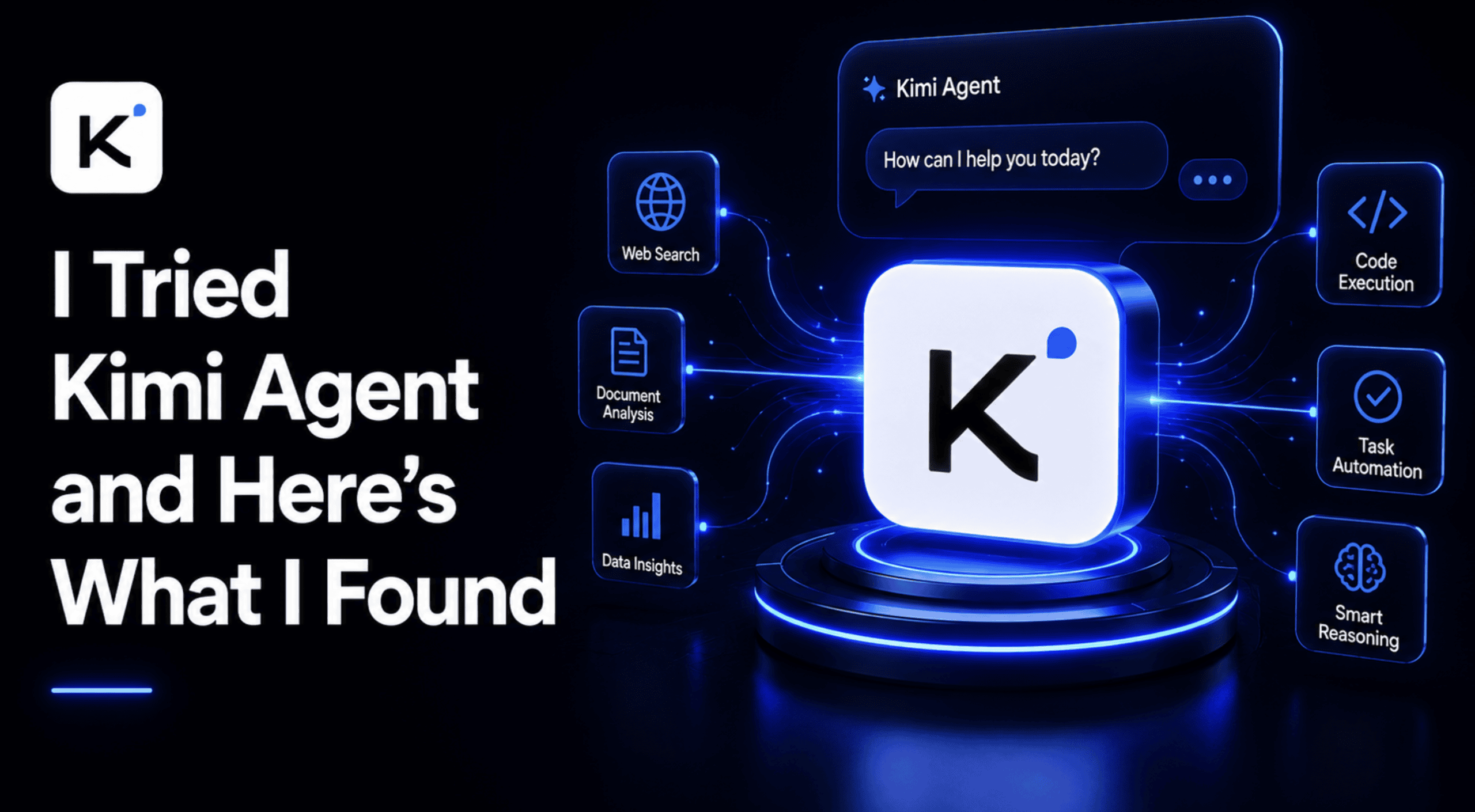
Untangling the Kimi Agent Ecosystem
The term "Kimi Agent" has become a confusing shorthand for a diverse set of AI capabilities, often conflated into a single entity. This ambiguity obscures the specific strengths and applications of each component. To understand what Kimi Agent truly represents, we must move beyond the singular label and explore the distinct tools that fall under its umbrella. This isn't about a single product launch; it's about navigating a rapidly developing AI landscape where a name can signify a broad strategy rather than a discrete offering.
At its core, Kimi Agent refers to the AI capabilities developed by Kimi, the AI division of SoftBank. However, the public perception and usage of this term have outpaced the clarity of its definition. Users might encounter "Kimi Agent" in discussions about document analysis, code generation, or even creative writing assistance. Each of these applications leverages underlying AI models but serves a fundamentally different purpose and targets a distinct user need.
The challenge for developers, businesses, and even casual users lies in discerning which "Kimi Agent" is being discussed. Is it the tool that can ingest and analyze lengthy documents, acting as a sophisticated research assistant? Or is it the more developer-focused agent capable of understanding and generating code? Without this distinction, discussions can become muddled, and expectations misaligned. This article aims to clarify these distinctions, providing a more precise understanding of the AI tools associated with the Kimi Agent moniker.
Kimi Agent as a Document Analysis Powerhouse
One of the most prominent and widely recognized applications associated with Kimi Agent is its prowess in document analysis. This capability allows users to upload extensive documents – reports, legal contracts, research papers, books – and interact with them using natural language queries. Think of it less like a keyword search and more like having a dedicated research assistant who has read the entire document and can answer specific questions, summarize key sections, or identify relevant information within minutes.
The underlying technology for this function often involves large language models fine-tuned for comprehension and information retrieval. The agent can process vast amounts of text, maintaining context across lengthy inputs. This is particularly valuable for professionals who need to quickly digest complex information. For instance, a legal team could use Kimi Agent to review thousands of pages of discovery documents, pinpointing specific clauses or precedents. Similarly, researchers could use it to summarize lengthy academic papers or identify trends across a corpus of scientific literature.
The user experience for this aspect of Kimi Agent typically involves an upload interface followed by a chat-like interaction. Users pose questions, and the agent provides answers derived directly from the uploaded content. The accuracy and speed of these responses are critical differentiators. This is where the "agent" aspect truly shines – it doesn't just present information; it actively processes and synthesizes it based on user prompts. The surprising detail here is not just the ability to process long documents, but the contextual recall and nuanced summarization it can achieve, going beyond simple keyword matching to genuine comprehension.
Kimi Agent in Software Development
Beyond text-based analysis, another significant facet of Kimi Agent relates to software development. This involves agents trained to understand programming languages, code structures, and development workflows. These agents can assist developers in a variety of tasks, from writing new code snippets to debugging existing applications and even refactoring complex codebases.
For developers, this translates into a potential co-pilot that can accelerate the coding process. Instead of searching Stack Overflow or documentation for specific syntax, a developer can prompt the Kimi Agent to generate the required code. For example, a prompt like "Write a Python function to parse JSON data and return a specific key" could yield functional code. The agent can also be used for more complex tasks, such as suggesting optimizations for performance-critical sections or identifying potential security vulnerabilities within the code.
The effectiveness of these developer-focused agents hinges on their ability to understand the nuances of different programming languages and development environments. They need to grasp not just syntax but also idiomatic usage, common libraries, and architectural patterns. While general-purpose LLMs can generate code, specialized agents like those under the Kimi Agent umbrella are often fine-tuned for greater accuracy and relevance in a development context. This is where the "agent" designation becomes crucial – it implies a degree of autonomy and specialized intelligence tailored to a specific domain, much like a human agent specializing in software engineering.
The Future: Integration and Specialization
The evolving nature of AI means that the capabilities associated with "Kimi Agent" will continue to expand and refine. We can expect greater integration between different agent functionalities. For instance, a developer might use a code-generating agent to build a tool, and then use a document analysis agent to generate user manuals or technical documentation for that tool.
Furthermore, the trend toward specialization will likely continue. As AI models become more powerful, they can be trained on increasingly niche datasets to excel in highly specific domains. This could lead to "Kimi Agents" tailored for specific industries, such as finance, healthcare, or scientific research, each with its own unique knowledge base and problem-solving capabilities.
What remains to be seen is how Kimi and SoftBank will structure the public-facing offerings of these diverse capabilities. Will they continue to use the broad "Kimi Agent" umbrella, or will they introduce more distinct product names for each specialized function? Clarity here will be key for user adoption and market understanding. For now, when you hear "Kimi Agent," remember it's likely referring to a suite of powerful AI tools, each with its own distinct purpose and potential.