Introducing Katto: A Next-Generation Coding Agent
The development landscape is constantly evolving, with AI agents promising to streamline and accelerate coding workflows. Building upon the simplicity of its predecessor, Mecha, a new coding agent named Katto has emerged. Katto is designed to overcome the limitations of earlier agents by incorporating enhanced memory management, user note-taking capabilities, and a comprehensive suite of integrated tools. The goal is to empower developers by automating more complex and time-consuming aspects of the software development lifecycle, allowing them to focus on higher-level conceptualization and application design.
Mecha, the agent it aims to improve upon, was lauded for its simplicity and effectiveness in building applications from scratch. However, even with Mecha's capabilities, developers still had to manually handle crucial steps like database creation, schema definition, data population, testing, and Git commits. Katto is engineered to eliminate this manual overhead entirely. Its design philosophy centers on providing a more autonomous development experience, where the agent handles the entire process from initial concept to a committed codebase.
Katto's Enhanced Capabilities and Tooling
Katto's core improvement lies in its advanced memory management. Unlike agents with more ephemeral memory, Katto is designed to retain context and learn from previous interactions and tasks more effectively. This enhanced memory is crucial for managing the complexities of larger projects and for understanding nuanced user instructions. The agent can now maintain a more persistent understanding of the project's state, dependencies, and developer preferences.
Furthermore, Katto introduces robust note-taking functionality. Developers can provide specific instructions, project requirements, or design decisions, and Katto will integrate these notes into its workflow, ensuring that the development process adheres to the specified guidelines. This feature acts as a bridge between human intent and AI execution, minimizing misinterpretations and ensuring the final product aligns with the developer's vision.
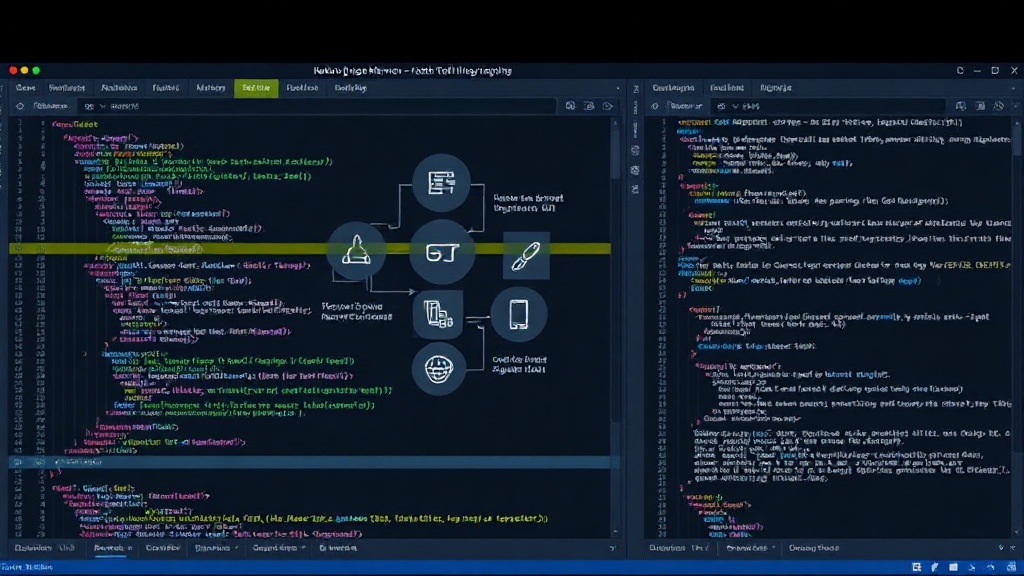
The integration of a comprehensive toolset is another significant leap. Katto includes:
- Web Fetching Tools: For gathering information, scraping data, or interacting with external APIs.
- Database Management Tools: Capable of creating databases, defining schemas, inserting dummy data, and performing basic queries. This includes support for systems like PostgreSQL.
- Git Control Tools: Automating repository creation, branching, committing, and potentially even basic merging operations.
- File Tools: For managing project files, creating directories, and handling file operations.
This integrated approach means that a developer can simply instruct Katto to create a new application, specifying its requirements, and Katto will handle the creation of the necessary database, set up the Git repository, write the initial code, and commit it, all without further human intervention. This significantly reduces the friction in the early stages of development, allowing developers to move from ideation to a functional, version-controlled project in minutes, not hours.
The Vision: Autonomous Development
The ultimate vision behind Katto is to push the boundaries of autonomous development. While Mecha could build an app from scratch, the developer still had to perform a series of manual, albeit rapid, follow-up tasks. Katto aims to absorb these tasks, transforming the developer's role from an active executor of every step to a strategic director. The developer's time is freed up to focus on higher-value activities such as architectural design, complex problem-solving, and exploring new application ideas.
This shift is significant. It implies a future where the technical overhead of bringing an idea to life is drastically reduced. Instead of spending time on boilerplate code, database setup, and version control configurations, developers can dedicate their cognitive resources to innovation. Katto represents a step towards that future, where the primary bottleneck in software creation becomes the clarity of the idea itself, rather than the execution complexity.
The Road Ahead: Addressing Knowledge Gaps
While Katto promises a highly automated development experience, the excerpt hints at ongoing challenges. The statement, "Now the issue is not about knowledge, it's abou..." suggests that while Katto possesses the tools and memory to execute tasks, there may still be complexities in understanding and prioritizing the *correct* knowledge or making nuanced decisions that require human judgment. The success of such agents often hinges on their ability to interpret ambiguous requirements or to make informed trade-offs when faced with conflicting constraints.
The development team acknowledges that the focus is shifting from providing the agent with raw knowledge to enabling it to apply that knowledge effectively and autonomously. This implies continued research into areas like prompt engineering, reinforcement learning for task prioritization, and sophisticated natural language understanding to ensure Katto can truly act as a capable co-developer, not just a sophisticated script runner.
The evolution from Mecha to Katto highlights a clear trajectory in AI-assisted development: increasing autonomy and reducing the manual burden on developers. Katto's enhanced memory, note integration, and comprehensive toolset position it as a significant advancement, promising to redefine the initial stages of software creation and empower developers to innovate more rapidly.