The Genesis of Intelligence: Base Models vs. Fine-Tuned Giants
Andrej Karpathy, a prominent figure in AI research and former director of AI at Tesla, recently offered a comprehensive deep dive into the inner workings of Large Language Models (LLMs), demystifying concepts that power tools like ChatGPT and Claude Code. His accessible explanation, delivered via a YouTube video, peels back the layers of these complex systems, revealing the journey from raw, foundational models to sophisticated, task-specific AI agents. For developers and AI enthusiasts alike, understanding this evolution is key to leveraging these tools effectively and appreciating the engineering prowess behind them.
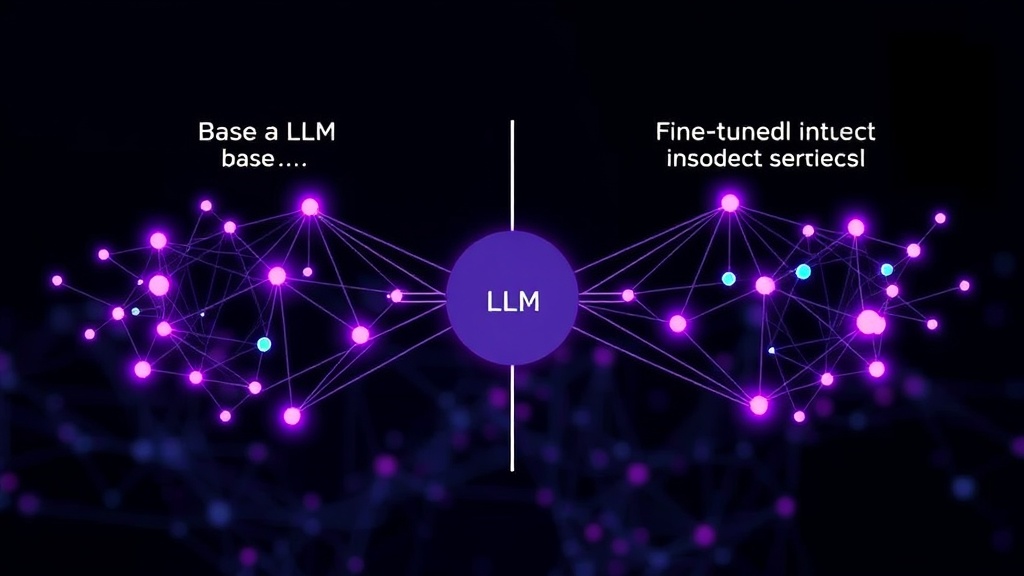
At its core, an LLM begins as a base model. This is the raw material, trained on a massive, diverse dataset encompassing text and code from the internet. Think of a base model as a highly knowledgeable, but somewhat unfocused, student who has read an entire library. It understands grammar, facts, and patterns but lacks specific direction or the ability to engage in coherent dialogue. It can predict the next word in a sequence with remarkable accuracy, but it doesn't inherently know how to answer a question, follow an instruction, or maintain a conversational flow. This foundational knowledge is critical; it's the bedrock upon which all subsequent specialization is built.
The transformation from a base model to a more user-friendly and capable AI like ChatGPT involves several crucial steps. Karpathy highlights the distinction between these foundational models and what are termed chat models or instruct models. These specialized versions are fine-tuned to be helpful, harmless, and honest, and to follow user instructions precisely. This fine-tuning process is not merely about adding more data; it's about shaping the model's behavior. Techniques like Reinforcement Learning from Human Feedback (RLHF) are employed, where human reviewers rate model responses, guiding the AI towards generating outputs that are more aligned with human preferences and safety guidelines. This iterative process imbues the model with the ability to understand context, engage in multi-turn conversations, and perform specific tasks like summarization, translation, or code generation with a higher degree of reliability and coherence.
Optimizing for Specialization: The Art of Task-Specific LLMs
The power of modern LLMs lies not just in their vast general knowledge, but in their ability to be optimized for specific domains, such as coding. Developers using tools like Claude Code or GitHub Copilot experience this firsthand. Karpathy explains that this specialization is achieved through targeted fine-tuning on domain-specific datasets. For coding assistants, this means further training the model on vast repositories of code, programming documentation, and related natural language discussions.
The process is akin to a polymath deciding to become a specialized surgeon. The foundational knowledge of medicine remains, but the focus narrows, and skills are honed for a particular surgical discipline. Similarly, an LLM optimized for coding doesn't forget its general language capabilities. Instead, it learns the syntax, semantics, common patterns, and best practices of various programming languages. It learns to interpret natural language prompts requesting code, to generate functional code snippets, to identify bugs, and even to suggest optimizations. This is why newer model releases often boast improved coding capabilities; they represent refinements in the fine-tuning process, better data curation, or architectural adjustments that enhance their proficiency in specific tasks.
Karpathy emphasizes that understanding this pipeline—from a general-purpose base model to a highly specialized, instruction-following AI—is crucial for developers. It helps in appreciating the limitations and strengths of different models. A base model, for instance, might be excellent for raw text completion tasks or as a starting point for custom fine-tuning, but it would likely perform poorly in a direct Q&A or conversational setting compared to a model like ChatGPT. Conversely, a highly specialized model might be exceptional at coding but less adept at creative writing or philosophical discussions.
The Iterative Improvement Cycle: What Changes with New Releases
The continuous release of new LLM versions, each promising enhanced performance, can be perplexing. Karpathy’s insights provide clarity: improvements stem from both architectural innovations and refined training methodologies. Architectural changes might involve scaling up the model size (more parameters), incorporating more efficient attention mechanisms, or optimizing the Transformer architecture itself. These changes can lead to better context handling, faster inference, or a deeper understanding of complex relationships within data.
However, a significant portion of improvement comes from the training data and the fine-tuning process. Curating higher-quality, more diverse, and less biased datasets is paramount. The quality of the data fed into the model dictates the quality of its output. Furthermore, advancements in fine-tuning techniques, such as RLHF or new forms of supervised fine-tuning, allow developers to steer the model's behavior more precisely. For example, if a model frequently produces harmful or factually incorrect responses, subsequent training iterations will focus on penalizing such outputs and rewarding safer, more accurate ones. This iterative refinement is what allows models to become more helpful, less prone to hallucination, and better aligned with user intent over time.
Karpathy’s deep dive serves as a vital educational resource, bridging the gap between the user experience of interacting with powerful AI tools and the intricate engineering that makes them possible. For anyone who uses LLMs for coding, writing, or research, understanding the fundamental differences between base and fine-tuned models, the principles of specialization, and the iterative nature of their development is not just informative—it's essential for maximizing their utility and for anticipating future advancements in the field.