
Bridging the Human-AI Execution Gap
The burgeoning field of AI agents promises to automate complex workflows, but a persistent challenge remains: translating human direction into actionable tasks for these agents and then tracking their progress effectively. Kaiku emerges as a solution designed specifically for this nascent but rapidly growing need. Unlike generic to-do lists or project management tools built for human collaboration, Kaiku is engineered from the ground up to communicate with and manage AI agents.
The core premise of Kaiku is simple yet profound: it acts as an intermediary, a translator, and a supervisor for AI agents. Think of it less like a project management suite for a team of people and more like a sophisticated air traffic control system for autonomous digital workers. It understands that AI agents don't require the same context or UI interactions as humans. Instead, they need clear, structured instructions and a reliable system to report back on their status, successes, and failures.
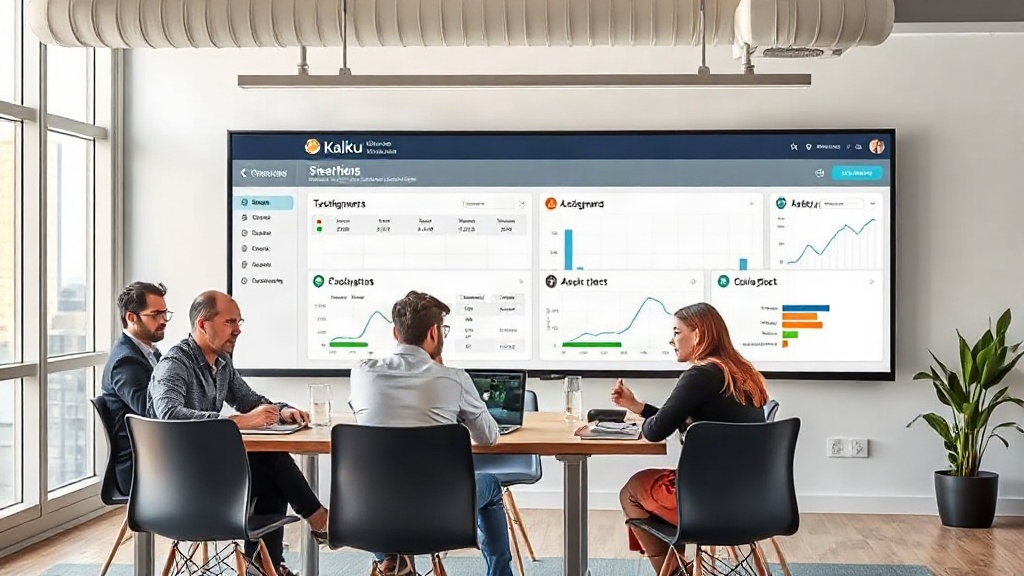
How Kaiku Works: Understanding Agent Needs
Kaiku's design philosophy centers on the unique operational characteristics of AI agents. These agents often operate asynchronously, process information in distinct steps, and require precise, unambiguous commands. Kaiku provides an interface and an underlying architecture that supports these requirements. Users can define tasks, break them down into sub-tasks, and assign them to specific AI agents or agent types. The system then ensures these tasks are formatted correctly for the agents to consume.
One of the key differentiators for Kaiku is its focus on the feedback loop. When an AI agent completes a task, encounters an error, or requires human intervention, Kaiku is designed to capture this information and present it to the user in an understandable format. This isn't just about a simple 'done' or 'failed' status. Kaiku aims to provide context, logs, and even potential reasons for failure, enabling users to refine their prompts, agent configurations, or the task itself. This iterative improvement cycle is crucial for maximizing the effectiveness of AI agents.
For developers and power users building with AI agents, Kaiku offers a structured environment to orchestrate complex, multi-agent workflows. Imagine setting up a series of agents to conduct market research: one agent to gather data from various sources, another to analyze sentiment, and a third to summarize findings into a report. Kaiku would manage the dependencies between these agents, ensuring the data-gathering agent completes its work before the analysis agent begins, and so on. This level of orchestration is difficult to achieve with standard task management tools.
The Problem Kaiku Solves
The proliferation of AI agent frameworks and standalone AI tools has created a fragmented landscape. Users often find themselves managing multiple agents from different providers, each with its own API, logging mechanism, and output format. This creates significant overhead for anyone trying to build sophisticated automated processes. Kaiku aims to provide a unified layer for managing these diverse agents.
Consider the scenario where a user has an AI agent for writing code, another for generating marketing copy, and a third for customer support. Without a dedicated system like Kaiku, tracking the progress of each, ensuring they don't interfere with each other, and aggregating their outputs becomes a manual and error-prone endeavor. Kaiku centralizes this management, allowing users to define a task once and have it routed to the appropriate agent, with all progress and results logged in a single place.
This is particularly relevant for founders and product managers who are increasingly leveraging AI agents to accelerate development cycles, automate customer interactions, or gain deeper market insights. The ability to reliably delegate and monitor tasks performed by AI is becoming a competitive advantage. Kaiku positions itself as the essential tool for unlocking this advantage, moving beyond simple chatbot interactions to robust, agent-driven automation.
Implications for the Future of Work
Kaiku's existence signals a maturing ecosystem around AI agents. As these agents become more capable and integrated into business processes, dedicated management tools will be essential. This product is not just about tracking tasks; it's about building a framework for human-AI collaboration that is both efficient and scalable. The surprising detail here is not the concept itself, but the timing – the market is rapidly demanding such specialized tools as AI agents move from novelty to necessity.
What nobody has addressed yet is what happens to the thousands of developers who built custom scripts and internal tools to manage their own AI agent workflows. Will Kaiku offer migration paths? Will it become the de facto standard, forcing a shift in how these workflows are architected? The success of Kaiku will depend on its ability to integrate with a wide array of existing and emerging AI agent technologies, offering flexibility rather than dictating a rigid structure.
For now, Kaiku offers a glimpse into a future where managing AI isn't about writing complex code for orchestration, but about using a purpose-built tool that speaks the language of AI agents. It’s a critical step towards making AI agents not just powerful tools, but reliable, manageable collaborators in our digital endeavors.