
The Shifting Battlefield: Autonomous Systems as Predators
General Charles Q. Brown Jr., Chairman of the Joint Chiefs of Staff, has issued a stark warning: U.S. military forces must prepare for a future where they are not just targets, but actively hunted by autonomous systems. This declaration, made in a recent address, signals a profound shift in the nature of warfare, moving beyond human-versus-human combat to a scenario where artificial intelligence and robotic platforms could dictate the terms of engagement. The implication is clear: the traditional advantages of human soldiers – strategic thinking, adaptability, and resilience – may be countered by the speed, scale, and relentless nature of AI-powered adversaries.
Brown’s message underscores a growing concern within defense circles about the rapid proliferation of AI technologies and their potential application in military contexts. Unlike previous technological leaps, the integration of AI into warfare introduces a new dimension of threat. Autonomous systems, ranging from swarms of drones to sophisticated ground and sea vehicles, can operate with a degree of independence that challenges conventional command and control structures. They can process vast amounts of data, identify targets, make targeting decisions, and execute attacks with a speed that far surpasses human reaction times. This capability transforms them from mere tools of war into potential predators, capable of sustained, intelligent pursuit.
The essence of Brown's warning lies in the concept of being "hunted." This implies a proactive, adaptive, and persistent threat, rather than a static or predictable one. Autonomous systems, armed with advanced sensors and AI algorithms, can theoretically track, analyze, and engage enemy forces continuously, exploiting any vulnerability or lapse in awareness. This is not about simply being shot at; it's about being systematically sought out and eliminated by machines that do not tire, do not fear, and do not exhibit the same cognitive limitations as human combatants. The psychological impact of such a scenario, where a soldier is aware they are being stalked by an unfeeling, intelligent entity, is a factor that military planners must now consider.
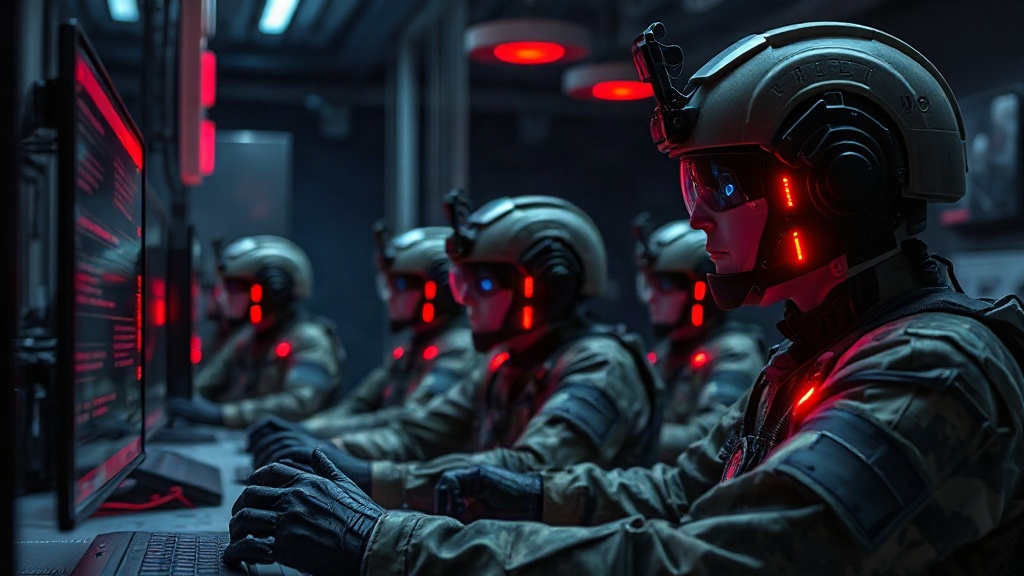
The AI Imperative: Adaptation and Countermeasures
Preparing for this future demands a multi-faceted approach. Firstly, it requires a fundamental rethinking of military doctrine and training. Soldiers will need to be educated on the capabilities and operational patterns of autonomous adversaries. This includes understanding how AI-driven systems detect, track, and engage targets, and developing tactics to evade, deceive, or neutralize them. Training simulations will need to incorporate these advanced threats, pushing soldiers to adapt their decision-making processes under the pressure of machine-speed attacks.
Secondly, the U.S. military must accelerate its own development and deployment of autonomous and AI-enabled capabilities. To counter an enemy that hunts with machines, one must be able to hunt back with machines, or at least defend against them effectively. This means investing in AI research and development, particularly in areas such as swarm intelligence, autonomous navigation, and AI-powered sensor fusion. The goal is not just to match an adversary's capabilities but to surpass them, ensuring that U.S. forces retain the initiative.
The development of effective countermeasures is paramount. This could involve electronic warfare capabilities designed to disrupt enemy AI systems, cyber warfare tactics to infiltrate and disable autonomous platforms, and the deployment of counter-drone technologies. Furthermore, the military must explore novel approaches to camouflage, deception, and signature management to make human forces less detectable by AI sensors. This might involve dynamic, adaptive camouflage systems or strategies that leverage environmental factors to mask troop movements and positions.
The Unanswered Question: Human Control in Autonomous Warfare
While the imperative to develop and deploy advanced autonomous systems is clear, a critical and largely unresolved question looms: how much human control is ultimately necessary and desirable in lethal autonomous weapons systems (LAWS)? General Brown's warning implies a future where machines are not just supporting human decision-making but potentially making critical targeting decisions independently. This raises profound ethical, legal, and strategic dilemmas. The speed at which autonomous systems can operate might necessitate giving them greater autonomy, but delegating life-and-death decisions to machines carries immense risks. What happens when an autonomous system makes an error, misidentifies a target, or escalates a conflict beyond human intent? The current debates around lethal autonomous weapons often grapple with the concept of "meaningful human control," but as systems become more sophisticated and operate at machine speeds, defining and maintaining this control becomes increasingly challenging. This is not a question that can be deferred; it must be addressed proactively as the technology matures.
Broader Implications for Global Security
The prospect of autonomous systems hunting human soldiers has far-reaching implications for global security and the future of conflict. It signals an arms race in artificial intelligence, where nations will vie for dominance in AI-driven military capabilities. This could lead to increased instability and a higher risk of unintended escalation, as AI systems may not fully comprehend the nuances of human diplomacy or the thresholds for conflict. The proliferation of such technologies also raises concerns about accessibility to non-state actors, potentially lowering the barrier to entry for sophisticated warfare.
Moreover, the integration of AI into warfare challenges existing international humanitarian law and the laws of armed conflict. Concepts like distinction, proportionality, and precaution in attack, which are central to protecting civilians, may need to be re-evaluated in the context of autonomous decision-making. The very definition of combatant and civilian could blur if machines are making targeting decisions based on complex algorithms rather than direct human judgment.
General Brown's warning is a call to action. It demands that defense strategists, policymakers, engineers, and soldiers alike confront the reality of AI-enabled warfare. The future battlefield will likely be one where the lines between predator and prey are redrawn by algorithms, and where human forces must adapt or risk becoming obsolete, or worse, systematically hunted by the very machines they create.