The Challenge of Sustainable Aviation

The aviation industry faces immense pressure to decarbonize, a task complicated by the energy-dense requirements of flight. Traditional jet engines, while incredibly efficient for their time, rely on fossil fuels, contributing significantly to global carbon emissions. The search for viable alternatives has led to a spectrum of solutions, from advanced biofuels and synthetic fuels to electric and hydrogen propulsion systems. Each approach presents its own set of challenges, including energy storage, infrastructure, and technological maturity. Electric propulsion, while promising for smaller aircraft, struggles with the energy density required for larger, longer-range commercial flights. Battery technology, in particular, remains a significant bottleneck, with weight and charging times being major hurdles. Hydrogen, either through fuel cells or direct combustion, offers a higher energy density but requires entirely new aircraft designs and extensive fueling infrastructure. This is where hybrid-electric propulsion emerges as a pragmatic, near-to-medium term solution, aiming to bridge the gap between current technology and future zero-emission flight.

JetZero's Hybrid-Electric Solution

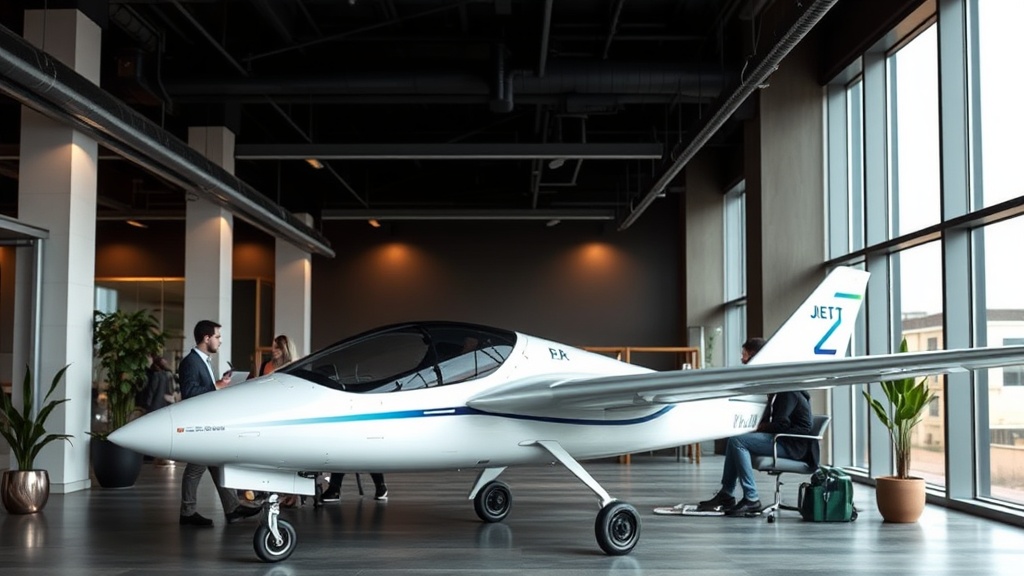
JetZero is a startup dedicated to developing a hybrid-electric propulsion system designed to reduce aviation emissions without requiring a complete overhaul of existing aviation infrastructure. Their core innovation lies in a novel turbofan engine architecture that integrates electric power to augment or replace traditional combustion at critical flight phases. This approach allows for greater efficiency and reduced fuel burn during takeoff and climb, the phases where engines are typically most stressed and least efficient in terms of emissions per passenger mile. The system envisions a distributed propulsion architecture where smaller electric fans are integrated into the airframe, powered by a central hybrid-electric turbofan. This turbofan acts as both a generator and a primary thrust producer. During operations, the turbofan can generate electricity to power the distributed fans, or it can operate in a more conventional, yet optimized, mode. This flexibility allows the aircraft to adapt its power usage based on flight conditions, maximizing efficiency and minimizing emissions. The goal is to achieve up to 50% reduction in carbon emissions for regional and narrow-body aircraft, with a long-term vision of reaching zero emissions.
Conceptual rendering of JetZero's hybrid-electric aircraft design
This hybrid approach is particularly attractive because it can leverage existing airport infrastructure for refueling with sustainable aviation fuels (SAFs) and can be retrofitted onto existing aircraft designs or integrated into new, more aerodynamically efficient airframes. The distributed nature of the electric fans also offers potential benefits in terms of noise reduction and improved aerodynamic efficiency through boundary layer ingestion. By optimizing airflow and reducing drag, JetZero aims to create aircraft that are not only cleaner but also quieter and more economical to operate.

Technological Pillars and Development

JetZero's technology is built upon several key pillars. Firstly, the development of a highly efficient, smaller turbofan engine that can operate effectively as both a primary thrust provider and a generator. This requires advanced materials, sophisticated control systems, and optimized combustion processes. Secondly, the integration of high-power-density electric motors and fans. These components must be lightweight, reliable, and capable of delivering significant thrust when needed. Thirdly, the sophisticated power management system that seamlessly blends power from the turbofan and electric sources, optimizing for efficiency, performance, and emissions across the entire flight envelope. This system is akin to the intelligent management found in hybrid cars, but scaled up for the demanding environment of aviation. The company is working with industry partners to mature these technologies. Their approach is not about reinventing the wheel entirely but about intelligently integrating cutting-edge electric and combustion technologies. This strategy allows for a faster development cycle and a clearer path to certification and commercialization compared to radical new propulsion methods.

Path to Certification and Market Impact

Achieving certification for a novel propulsion system is a rigorous and lengthy process. JetZero is focused on demonstrating the safety, reliability, and performance of its hybrid-electric technology to regulatory bodies like the FAA and EASA. Their strategy of leveraging existing aircraft architectures where possible, and focusing on incremental improvements to established engine principles, is designed to streamline this process. The company aims to demonstrate its technology on smaller aircraft initially, gradually scaling up to larger commercial airliners. The potential market impact of JetZero's technology is substantial. If successful, it could offer a pragmatic pathway for airlines to significantly reduce their carbon footprint in the medium term, while the aviation industry works towards longer-term zero-emission solutions. This could provide a competitive advantage for airlines that adopt the technology, meeting growing passenger demand for sustainable travel and complying with increasingly stringent environmental regulations. Furthermore, the development of efficient hybrid-electric systems could spill over into other transportation sectors, driving innovation in electrification and energy management.

The Unanswered Question of Scalability

While JetZero's hybrid-electric approach offers a compelling near-term solution, a significant question remains: how scalable is this technology to the largest commercial aircraft? Reducing emissions by 50% is a crucial step, but the ultimate goal for many is true zero-emission flight for all aircraft types. The energy demands of a transatlantic flight on a wide-body jet are orders of magnitude higher than those for regional routes. While JetZero's current focus is on regional and narrow-body aircraft, the path to applying similar principles to larger aircraft, especially concerning the power generation and storage required, presents a formidable engineering challenge. Will this hybrid model serve as a stepping stone, or will it reach its own scalability ceiling, necessitating a complete shift to hydrogen or other advanced technologies for the largest aircraft?