Introducing JetBrains Air: A New Paradigm for Software Development
JetBrains, a company synonymous with developer productivity tools, has announced a significant expansion of its ecosystem with the introduction of JetBrains Air. This isn't just another AI assistant; it's a comprehensive system of products engineered to facilitate agentic software development. The core idea behind Air is to move beyond simple code completion and leverage AI agents that can understand, plan, and execute complex development tasks autonomously, working alongside human developers.
The launch signals JetBrains' strategic pivot towards deeply integrating artificial intelligence into the very fabric of software creation. Instead of offering a single, monolithic AI product, Air presents a modular approach, allowing developers to adopt AI capabilities tailored to their specific needs and workflows. This system aims to significantly accelerate the development lifecycle, reduce boilerplate work, and enable developers to focus on higher-level problem-solving and architectural design.
The Core Components of JetBrains Air
JetBrains Air is not a single product but a collection of interconnected tools, each designed to tackle different aspects of agentic development. The system is built around several key pillars, each leveraging sophisticated AI models to provide intelligent assistance.
Intelligent Code Generation and Refinement
At the forefront is an advanced AI code generation engine. This goes beyond generating snippets; it can draft entire functions, classes, or even modules based on natural language descriptions or high-level requirements. Crucially, Air's agents are designed to understand the context of your entire project, ensuring generated code is consistent with existing styles, patterns, and dependencies. They can also proactively identify areas for code refinement, suggesting optimizations for performance, readability, or security. This capability is akin to having a senior developer constantly reviewing your code and offering improvements, but on demand and at scale.
Automated Testing and Debugging
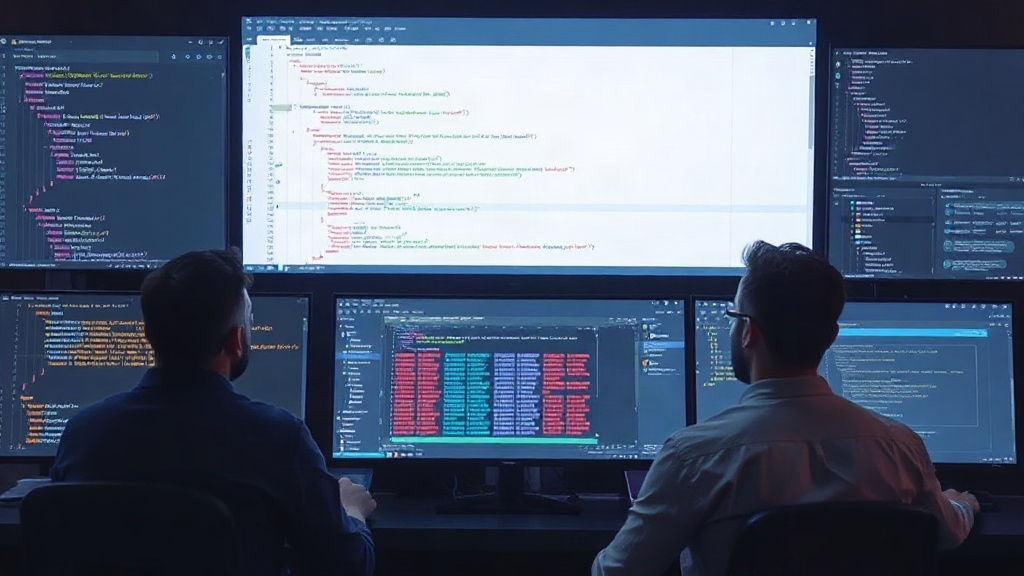
A significant bottleneck in software development is the creation and maintenance of robust test suites, as well as the often-tedious process of debugging. JetBrains Air introduces AI agents capable of automatically generating unit tests, integration tests, and even end-to-end test scenarios based on code changes and project requirements. When bugs are detected, these agents can assist in pinpointing the root cause, suggesting fixes, and even automating the patching process. This feature aims to drastically reduce the time developers spend on quality assurance and bug fixing, allowing for faster iteration cycles.
Agentic Workflow Orchestration
The true power of Air lies in its agentic workflow orchestration capabilities. Developers can define complex tasks or projects using natural language, and the AI agents will break them down into actionable steps, manage dependencies, and execute them. This could involve setting up new microservices, integrating third-party APIs, managing CI/CD pipelines, or even drafting documentation. Think of it less like a command-line interface and more like a project manager who understands code, capable of delegating and overseeing tasks. This allows development teams to operate with a higher degree of automation, freeing up human talent for strategic decision-making and innovation.
Contextual Understanding and Knowledge Management
A critical challenge for AI in development is maintaining project-specific context. JetBrains Air addresses this by building deep, persistent context models for each project. Agents can access and reason over the entire codebase, documentation, and even historical commit data. This enables them to provide highly relevant suggestions, understand nuanced project requirements, and assist in onboarding new team members by quickly conveying project architecture and conventions. This persistent contextual awareness is what differentiates Air from more generic AI coding assistants.
Implications for the Software Development Landscape
The introduction of JetBrains Air is poised to reshape the developer experience. By automating many of the repetitive and time-consuming aspects of software engineering, it allows developers to concentrate on creativity, complex problem-solving, and architectural design. This shift could lead to significantly faster development cycles, improved code quality, and a more enjoyable and less frustrating development process.
For businesses, Air promises increased efficiency and reduced development costs. Teams can potentially deliver more features with the same headcount, or achieve ambitious project goals with fewer resources. The ability for AI agents to handle routine tasks means that developers can be deployed on more strategic initiatives, driving innovation and competitive advantage.
However, this also brings new considerations. The reliance on AI agents for critical tasks raises questions about accountability, the evolving role of human oversight, and the potential for over-reliance on automated systems. Developers will need to adapt their skills, focusing on prompt engineering, AI system supervision, and strategic task definition rather than solely on manual coding.
The Future of Agentic Development
JetBrains Air represents a significant step towards a future where AI is not just an assistant but a collaborative partner in the software development process. The system's modular design and focus on deep contextual understanding suggest a flexible and powerful platform that can evolve with the rapidly advancing field of AI. As AI agents become more capable, the line between human and AI contributions to software will continue to blur, ushering in an era of agentic software development that could redefine what is possible.