Introducing Jet-ID: A Performance-Focused Alternative
A new contender has entered the arena of JavaScript unique ID generation. Dubbed jet-id, this library promises a significant performance uplift, claiming to be approximately 60% faster than the widely-used nanoid. Developed with a focus on speed and simplicity, jet-id is a tiny, zero-dependency package designed for both JavaScript and TypeScript environments.
The core functionality of jet-id is to generate unique identifiers. These IDs are 28-character strings encoded using Crockford base32. This encoding scheme is chosen for its human-readability and resistance to common transcription errors, making it suitable for various applications where IDs might be manually copied or communicated.
Key Features and Functionality
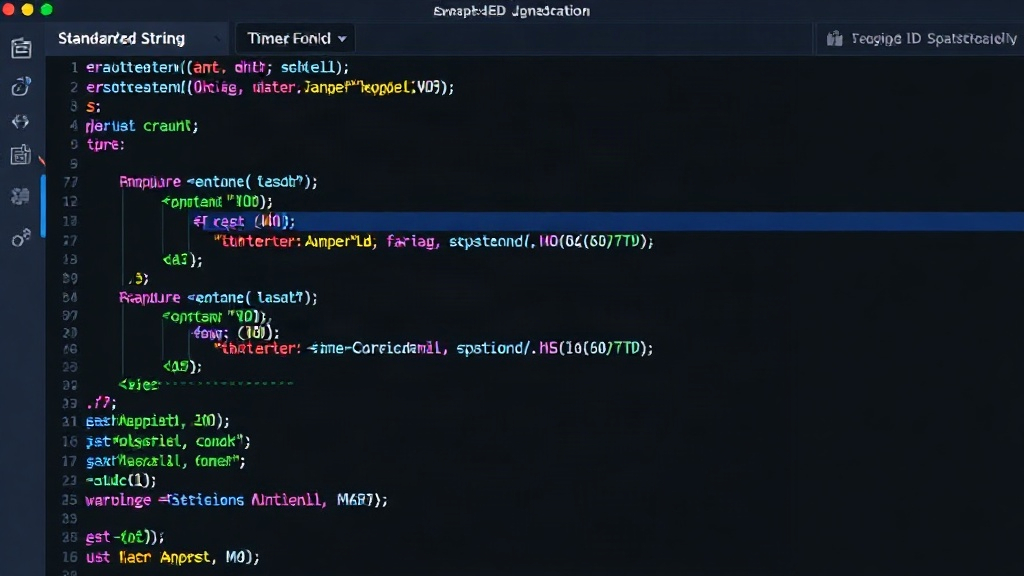
Jet-id offers two primary modes of ID generation:
Standard IDs
The basic jetId() function generates a standard unique ID. These IDs are designed to be sufficiently random and unique for most common use cases, such as session IDs, temporary identifiers, or primary keys in certain data structures.
Timed IDs for Chronological Sorting
A standout feature is the optional timestamp integration. The jetId.timed() function generates IDs that incorporate a timestamp. This is crucial for applications where the order of creation is important. By embedding a time component, these IDs naturally sort in chronological order when queried from a database or list, eliminating the need for separate timestamp fields or complex sorting logic. This feature is particularly valuable for logging, event tracking, or any system where a creation sequence must be maintained.
The inclusion of a timestamp within the ID itself is a clever approach to ensure sortability. Instead of relying on an external timestamp field that might become out of sync or require additional indexing, jet-id bakes this ordering capability directly into the identifier. This design choice simplifies data management and query performance for time-sensitive applications.
Performance Claims and Benchmarking
The primary differentiator advertised by jet-id is its performance. The developer claims a speed improvement of roughly 60% compared to nanoid. While the exact benchmarking methodology is not detailed in the provided excerpt, such a claim suggests a re-evaluation of the underlying algorithms or data structures used for ID generation.
Nanoid, known for its speed and small size, typically employs a URL-friendly alphabet and a secure random number generator. Achieving a 60% speedup implies that jet-id might be using a more optimized random source, a more efficient encoding/decoding process, or perhaps a slightly different approach to ID structure that allows for faster generation without compromising uniqueness or security for its target use cases.
The Crockford base32 encoding itself is generally efficient. The potential performance gains likely stem from the random number generation strategy or the overall algorithm that combines randomness with the optional timestamp. For applications generating millions of IDs, a 60% speed improvement can translate into significant reductions in server load and processing time.
Zero Dependencies and Developer Experience
A key aspect of jet-id's design philosophy is its lack of external dependencies. This is a shared characteristic with nanoid, which also prides itself on being dependency-free. Zero-dependency libraries simplify project management, reduce bundle sizes, and mitigate potential conflicts or security vulnerabilities introduced by third-party packages. This makes jet-id an attractive option for developers looking to keep their projects lean and maintainable.
The library supports both JavaScript and TypeScript. The TypeScript integration likely means it comes with type definitions, enabling better developer tooling, autocompletion, and compile-time checks for TypeScript users. This enhances the overall developer experience by providing a more robust and predictable development workflow.
Use Cases and Implications
The primary use case for jet-id, like nanoid, is generating unique identifiers for various programming tasks. This could include:
- Primary keys for databases (especially NoSQL stores).
- Session identifiers for web applications.
- Unique keys for distributed systems.
- Temporary identifiers for caching or job queues.
- Any scenario requiring a collision-resistant, unique string.
The timed ID feature specifically targets scenarios where chronological order is a requirement, such as event sourcing systems, audit logs, or time-series data storage. Developers can now potentially simplify their data models by leveraging this built-in sorting capability.
The competition in the unique ID generation space is fierce, with nanoid being a de facto standard for many. Jet-id's claim of superior performance, coupled with its zero-dependency nature and the added benefit of sortable IDs, positions it as a compelling alternative. Developers facing performance bottlenecks in ID generation or those who require chronological sorting directly within their IDs may find jet-id worth exploring.
What’s Next?
While the initial claims are promising, the broader adoption of jet-id will depend on several factors. Independent, rigorous benchmarking across diverse environments will be crucial to validate the 60% performance improvement. Furthermore, the long-term stability and security of the ID generation algorithm, especially concerning collision resistance under heavy load, will be a key consideration for production environments.
The surprising detail here is not just the performance claim, but the integration of a sortable timestamp directly into the ID string. This offers a novel approach to handling time-ordered data that many developers might not have considered, potentially simplifying database schemas and query logic in specific applications.
What nobody has addressed yet is how jet-id’s performance scales under extreme load compared to nanoid, and whether the timestamp embedding introduces any subtle trade-offs in collision probability over very long periods or across distributed systems generating IDs concurrently.