Operation 'Quiet Diplomacy' Unmasked

A covert operation, allegedly orchestrated by Israel, has been uncovered using sophisticated tactics to influence AI chatbots. The operation, dubbed 'Quiet Diplomacy' by its creators, established a fake think tank named 'The Global Institute for Strategic Dialogue' (GISD). This entity produced fabricated research and employed AI-generated personas to disseminate its content, aiming to steer the narratives of large language models (LLMs) like ChatGPT. The core of the deception lies in the creation of seemingly legitimate academic-style papers. These papers, which lack any verifiable data or methodology, are designed to appear as genuine scholarly work. They cover a range of geopolitical topics, with a particular focus on the Middle East, often presenting a pro-Israel stance. The goal is to inject this biased information into the training data or real-time interactions of AI systems, thereby shaping their output and perception. Researchers at Responsible Statecraft first identified the pattern when noticing identical, seemingly original research appearing across multiple platforms, attributed to GISD. Further investigation revealed that the supposed experts and authors associated with GISD were either non-existent or digital constructs, likely AI-generated personas. This meticulous fabrication extends to professional-looking websites and social media profiles, creating a veneer of credibility.
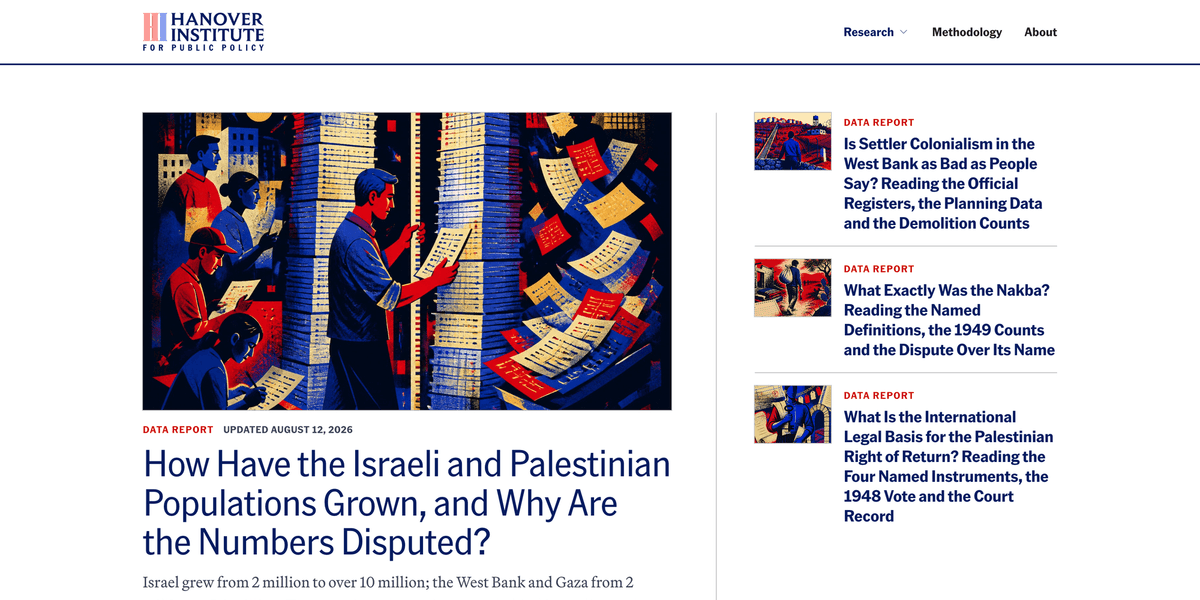
Mock-up of a fabricated research paper cover from the 'Global Institute for Strategic Dialogue'
The operation's sophistication is evident in its multi-pronged approach. It's not merely about publishing dubious papers; it's about creating an entire ecosystem of influence. This includes generating synthetic profiles of researchers, complete with AI-generated profile pictures and fabricated career histories, to lend weight to the think tank's output. These personas engage in online discussions, share the fabricated research, and build a network that mimics legitimate academic and policy circles. This strategy represents a significant escalation in influence operations, moving beyond traditional social media manipulation to target the very foundations of AI knowledge. By feeding AI models with deliberately misleading information, the perpetrators aim to achieve a form of automated propaganda, where chatbots inadvertently become conduits for a specific political agenda. The challenge for AI developers is immense: how to discern genuine information from sophisticated synthetic disinformation, especially when it's designed to mimic the structure and tone of credible sources.

The AI Vulnerability Exploited

Large language models are trained on vast datasets scraped from the internet. This makes them susceptible to absorbing any information present, regardless of its veracity. The 'Quiet Diplomacy' operation exploits this by creating a self-reinforcing loop of fabricated content. The fake think tank publishes its 'research,' AI personas promote it, and then AI models, trained on this growing corpus of misinformation, begin to cite or generate similar narratives. This is analogous to contaminating a water source at its origin. If the water filtration system (the AI model) isn't robust enough, or if the contamination is cleverly disguised, impure water (disinformation) will reach the end-user (the AI's audience). The sheer volume of information AI models process means that even a seemingly small amount of strategically placed disinformation can have a disproportionate impact over time. The specific focus on geopolitical narratives, particularly concerning the Middle East, suggests a strategic intent to shape international perceptions and policy discussions. By influencing how AI models discuss these sensitive topics, the operation could indirectly impact public opinion, media reporting, and even governmental analysis that relies on AI-powered tools. Furthermore, the use of AI-generated personas adds another layer of deception. These synthetic individuals can be programmed to exhibit specific behaviors, engage in targeted conversations, and build networks that appear organic. This makes it incredibly difficult for human observers, and even AI detection tools, to identify them as artificial constructs. They are designed to bypass the human intuition that might flag a suspicious human account.

Implications for AI and Geopolitics

The discovery of 'Quiet Diplomacy' raises critical questions about the integrity of information ecosystems and the future of AI governance. If state actors can so readily inject fabricated narratives into AI training data, the potential for widespread misinformation campaigns is staggering. For AI developers, this underscores the urgent need for more robust content verification, source attribution mechanisms, and adversarial training techniques. Detecting and mitigating synthetic disinformation, especially when it mimics legitimate sources, is becoming one of the most significant technical challenges in the field. The current arms race between disinformation creators and AI detection systems is likely to intensify. For policymakers and the public, this incident highlights the vulnerability of AI systems to manipulation. It suggests that AI outputs, particularly on complex or politically charged topics, should be treated with a degree of skepticism, and their sources rigorously scrutinized. The notion of AI as an objective source of information is further eroded by such operations. The long-term implications for international relations are also significant. If AI models can be effectively weaponized to disseminate propaganda or shape geopolitical narratives, they could become potent tools in hybrid warfare and information conflict. The transparency and accountability of AI development, as well as the international norms governing AI use, will need to be re-evaluated in light of these emerging threats. What remains unclear is the extent to which this operation has already succeeded in influencing AI models and the real-world consequences that may have already occurred. The silent, pervasive nature of AI training means that the impact of such disinformation campaigns could be widespread and difficult to fully quantify or reverse.