%22%20%2F%3E%0A%20%20%3C%2Fsvg%3E)
Intel's Nova Lake APU: Integrated Graphics Reaching New Power Thresholds
Intel's upcoming Nova Lake desktop processors, codenamed Arrow Lake-S refresh, are reportedly set to push the boundaries of integrated graphics power consumption. A recent leak suggests that a high-end SKU, potentially featuring 12 Xe3P cores, will demand a substantial 65W of dedicated power delivery specifically for its integrated GPU (iGPU). This figure, if accurate, represents a significant escalation in the power requirements for graphics capabilities built directly into the CPU die, blurring the lines between integrated and discrete graphics performance.
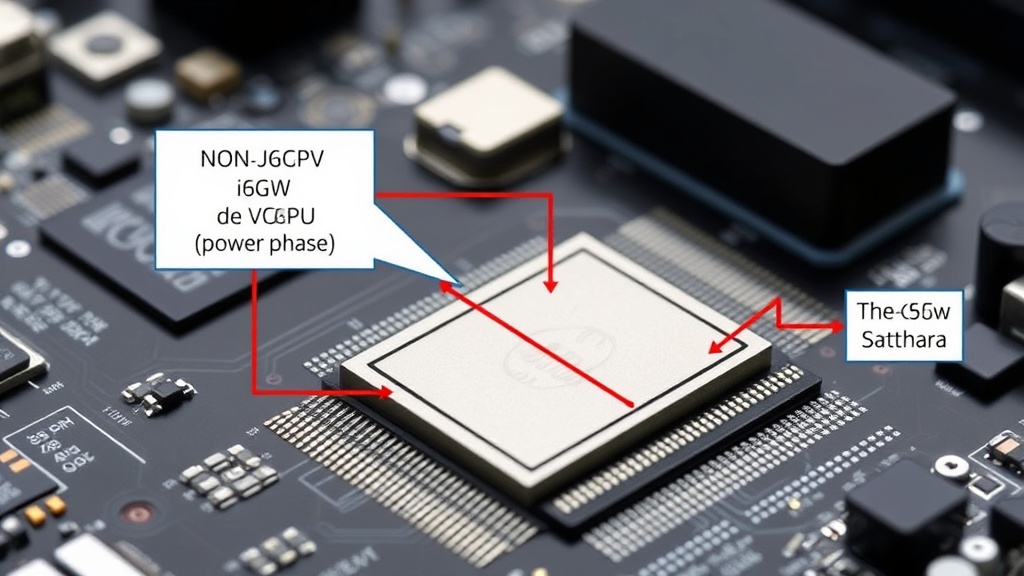
The implication of such a power draw is that standard motherboard VRM solutions, typically designed for CPU cores, might not be sufficient to adequately power the iGPU at its maximum potential. The leak indicates that two separate VCCGT (Voltage Control Chipset Graphics Technology) power phases could be necessary to sustain this 65W requirement, as a single phase may struggle to deliver the necessary stable power. This suggests a fundamental shift in how system builders and motherboard manufacturers will need to approach power delivery for future high-performance desktop APUs.
Implications for System Design and Performance
This reported 65W requirement for the iGPU is not merely an incremental increase; it signals a potential paradigm shift. Historically, integrated graphics have been an option for users prioritizing cost, power efficiency, or a simpler build, often sacrificing significant performance compared to even entry-level discrete GPUs. However, if Nova Lake's iGPU can indeed sustain 65W, it implies a level of performance that could challenge lower-end discrete graphics cards, offering a compelling option for mainstream gaming or content creation without the added cost and complexity of a separate GPU.
The necessity for dual VCCGT phases is a concrete indicator of the engineering challenges involved. Delivering 65W reliably to the iGPU requires robust power delivery circuitry on the motherboard. This might mean that only higher-end motherboards, or motherboards specifically designed with Nova Lake APUs in mind, will be able to unlock the full performance potential of these integrated graphics. Users looking to leverage this power will need to pay close attention to motherboard specifications, ensuring they have the necessary VRM cooling and phase count to support the iGPU's demands. This is akin to how high-end CPUs have dictated specific motherboard requirements for years; now, it seems the iGPU is joining that conversation.
For developers and performance enthusiasts, this development opens up new avenues. It suggests that Intel is seriously investing in its Xe graphics architecture for mainstream desktop platforms, potentially offering a viable path for users who do not require the absolute highest frame rates but still want a capable graphical experience. This could democratize access to more powerful graphics processing, making it easier for users to build capable systems without the premium associated with discrete graphics cards. The challenge, however, will be ensuring that software and drivers are optimized to take full advantage of this increased iGPU power and architectural complexity.
The Evolving Landscape of Integrated Graphics
The trend towards more powerful integrated graphics is not new, but Nova Lake appears poised to make a significant leap. Previous generations of Intel integrated graphics, while improving, have largely remained a step behind even modest discrete offerings. The Xe architecture, however, has shown promise, and with this reported power budget, Intel seems intent on making its integrated solutions a genuine alternative for a broader range of users. This move could put pressure on entry-level discrete GPU manufacturers and potentially redefine the baseline performance expectations for mainstream PCs.
The question that remains is how Intel will position these processors. Will they be marketed as a premium APU option, or will they be integrated across a wider range of SKUs? The specific mention of 12 Xe3P cores suggests a high-end configuration, but the underlying technology could trickle down. The success of this strategy will depend not only on raw performance but also on power efficiency under load and thermal management. Pushing 65W through an iGPU will undoubtedly generate heat, requiring effective cooling solutions within the CPU package itself and, by extension, the PC case.
This development also raises an interesting point about the future of PC building. As integrated graphics become more powerful, the decision between an APU and a CPU-plus-discrete-GPU configuration becomes more nuanced. For many users, the cost savings and reduced complexity of a powerful APU could outweigh the performance gains of a separate, entry-level graphics card. This could lead to a resurgence of APU-centric builds, especially in the pre-built market and for budget-conscious DIY builders.
Broader Market and Competitive Considerations
Intel's aggressive push into integrated graphics performance could have significant repercussions for AMD, which has long been a dominant player in the APU market with its Ryzen processors and Radeon integrated graphics. While AMD's current offerings are strong, Intel's potential to deliver a high-power, Xe-based iGPU could disrupt AMD's stronghold in certain segments, particularly among users seeking a balance of CPU and GPU performance without a discrete card. This competitive pressure might spur further innovation from both companies, leading to even more capable integrated graphics solutions in the future.
Furthermore, the increased power demands could influence the motherboard market. Manufacturers may need to develop new VRM designs and cooling solutions specifically tailored for these high-power APUs. This could lead to a bifurcation of motherboard offerings, with some models optimized for CPU-only performance and others designed to fully support the power-hungry iGPU of future Intel desktop processors. The industry is constantly adapting to new silicon capabilities, and Nova Lake's iGPU appears to be another catalyst for evolution.
The actual performance gains and stability of these high-power iGPUs will ultimately determine their market success. Benchmarks and real-world testing will be crucial to see if the 65W power draw translates into a performance leap that justifies the added complexity and potential cost. However, the mere prospect of such powerful integrated graphics signifies Intel's commitment to challenging the status quo and providing users with more versatile and capable processing solutions directly from the CPU itself.