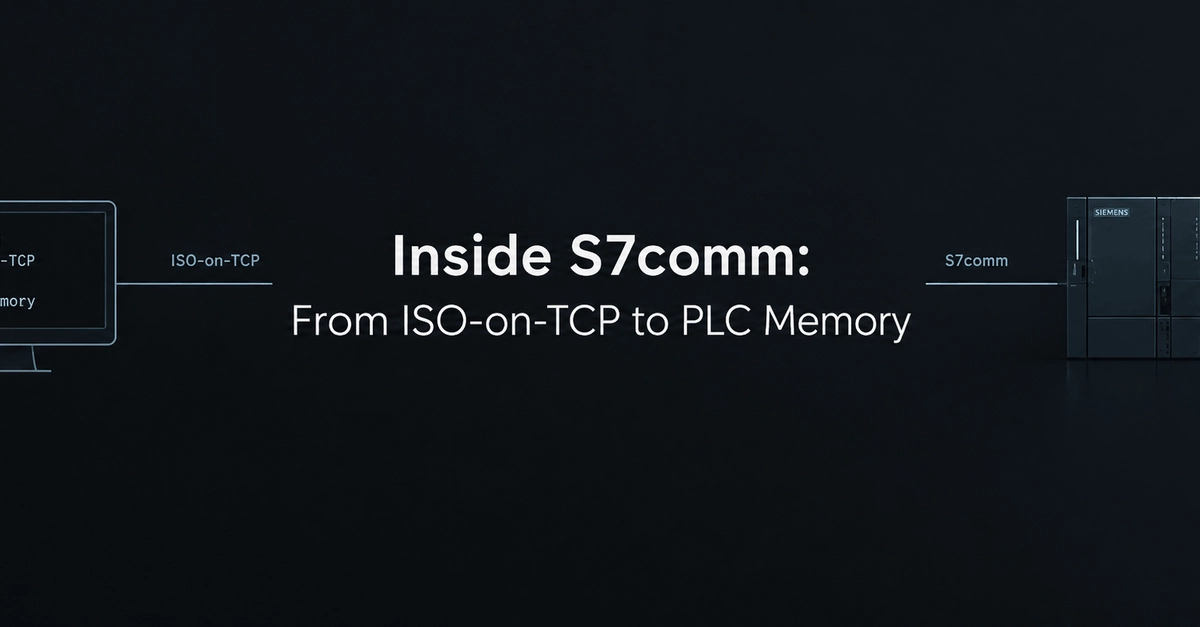
The S7comm Protocol: A Layered Journey
S7comm, the communication protocol for Siemens PLCs, presents a fascinating case study in industrial networking. While it might appear straightforward at first glance—often initiated with a TCP connection to port 102—its true complexity unfolds as one dissects its layered architecture. This protocol is not a monolithic entity but a series of nested protocols, each with its own purpose and negotiation phase. The journey begins with the fundamental Transport Layer Security (TLS) handshake, which establishes a secure channel, followed by the Transport Protocol Data Unit (TPKT), the standard for transporting OSI protocol data over TCP. Above TPKT lies the Connection-Oriented Transport Protocol (COTP), responsible for managing the connection state, including establishment, data transfer, and termination.
Once these foundational layers are navigated, the conversation delves into Siemens-specific connection parameters. This phase involves a unique negotiation process where both the PLC and the client establish the terms of their interaction. This includes defining session parameters, buffer sizes, and other crucial settings that govern how data will be exchanged. It's a handshake within a handshake, ensuring that both ends are synchronized before any actual operational data is transmitted. The complexity here is not just academic; it’s a practical necessity for reliable industrial control, where dropped packets or mismatched expectations can have significant consequences.
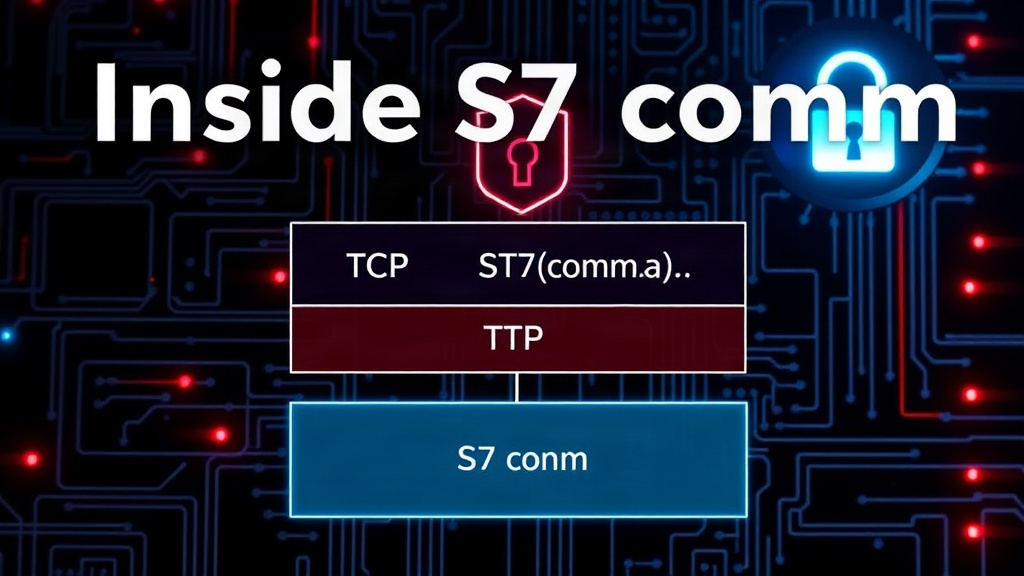
From Negotiation to Memory Access
Following the successful negotiation of the S7comm session, the protocol's focus shifts to the core task: interacting with the PLC's memory. This is where S7comm truly reveals its power and potential for direct manipulation. A single function code within an S7comm packet can transform a seemingly innocuous read request into a potent write operation, capable of altering PLC logic or data. This capability underscores the critical importance of understanding the protocol’s nuances, especially for security professionals and developers working with industrial control systems.
The ability to directly access PLC memory means that an attacker, or a well-intentioned but misguided engineer, could potentially read sensitive operational data, modify setpoints, or even inject malicious code. The protocol defines specific memory areas, such as data blocks (DBs), inputs (I), outputs (Q), and markers (M), each with its own addressing scheme. Understanding this addressing is key to crafting valid S7comm requests. For instance, a request to read a byte from data block 1, starting at offset 10, would require a specific function code (e.g., `FC1` for read) and a precisely formatted memory address string.
This direct memory access is analogous to having a low-level pointer in a C program. It bypasses higher-level abstractions and allows for granular control. While this is invaluable for legitimate maintenance, diagnostics, and integration tasks, it also represents a significant attack surface. The S7comm protocol, in its various versions, has evolved over time, with later iterations incorporating security enhancements. However, older systems or improperly configured networks may still be vulnerable to exploits that leverage the protocol's inherent capabilities for direct memory manipulation.
The Research Context and Practical Implications
The investigation into S7comm, as detailed by researcher RUGERO Tesla (@404Saint), follows a trajectory of deep dives into other industrial protocols like Modbus TCP, EtherNet/IP, DNP3, BACnet, OPC UA, IEC 104, IEC 61850, and PROFINET. While previous research often emphasized establishing the system architecture before examining network traffic, this particular study prioritized staying “on the wire.” This approach allows for a granular understanding of the protocol's behavior in real-time, capturing the exact sequence of packets and their payloads as they traverse the network.
The laboratory setup involved a Snap7 server, an open-source implementation that emulates Siemens S7-style communication. This provides a safe and controlled environment to experiment with S7comm packets without risking damage to live industrial equipment. The goal was to follow the conversation “all the way down,” from the initial TCP connection to the meaningful interpretation of PLC memory addresses and function codes. This methodical dissection is crucial for developing robust security tools, effective diagnostic utilities, and reliable integration solutions for the vast array of industrial systems that rely on Siemens PLCs.
The practical implications of understanding S7comm are far-reaching. For security professionals, it means being able to identify and mitigate potential vulnerabilities in Operational Technology (OT) networks. For developers, it enables the creation of custom interfaces and applications that can interact with PLCs for data acquisition, control, and monitoring. For system integrators, a deep grasp of S7comm is essential for ensuring seamless communication between different components of an industrial automation system. The protocol’s layered nature, combined with its direct memory access capabilities, makes it a powerful yet potentially dangerous tool in the realm of industrial control.
An Unanswered Question in Protocol Evolution
What remains largely unaddressed in the public discourse around protocols like S7comm is the long-term strategy for migrating systems that rely on older, less secure versions. While security patches and newer protocol versions exist, the inertia of operational technology means that many facilities continue to run legacy equipment for decades. The challenge is not just in identifying vulnerabilities but in developing practical, phased migration paths that minimize disruption and cost. How do organizations manage the transition from protocols with known weaknesses to more secure alternatives without compromising ongoing operations? This question looms large for the industrial sector, demanding innovative solutions beyond simple software updates.