
The Idempotency Problem in Python
Handling retries for operations in distributed systems is notoriously difficult. Developers often implement idempotency using mechanisms like the Idempotency-Key header for HTTP requests. The textbook approach involves storing a response associated with a unique key. If the same key reappears, the stored response is replayed. However, as demonstrated by real-world failures, this seemingly simple pattern is prone to subtle race conditions and logic errors.
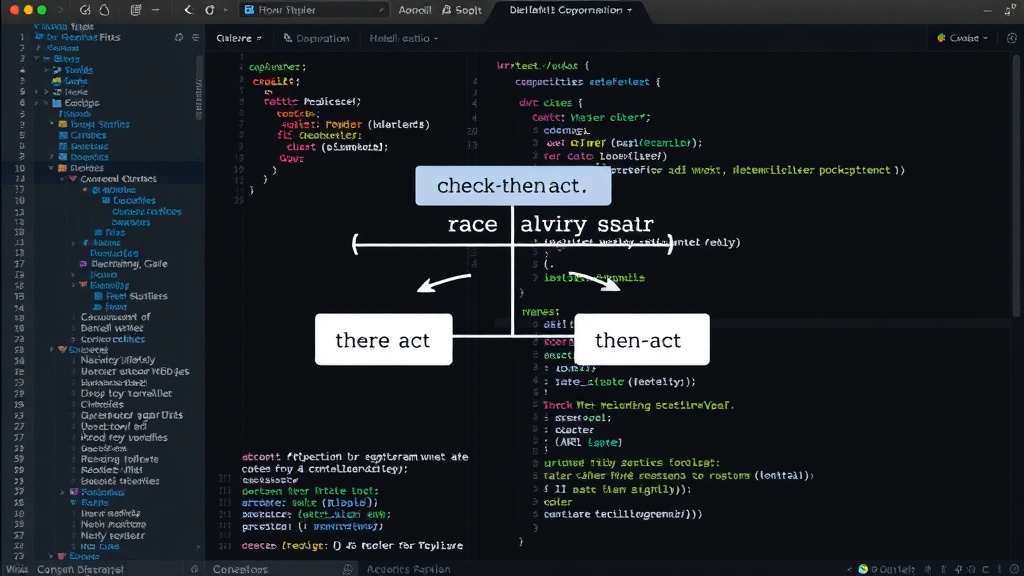
A common pitfall is the check-then-act race. If two requests with the same idempotency key arrive milliseconds apart, both might first check for an existing record, find none, and then proceed to write their own record and execute the operation. This results in duplicate execution despite the presence of an idempotency key. The author's experience cleaning up duplicate charges highlights this: even with a seemingly robust system, duplicate transactions occurred because the idempotency handling was flawed.
Another failure mode occurs when a worker successfully performs an action, like charging a card, but then crashes before it can record the completion status. The idempotency key remains stuck in a state that prevents retries, leading to operations that hang indefinitely or require manual intervention. This fragility stems from the fact that the key itself is merely a label; the true safety comes from the surrounding distributed state machine logic, which is inherently complex and easy to misimplement.
Introducing Idemkit
Idemkit emerges as a solution to these pervasive idempotency challenges. It aims to make any Python operation safe to retry, whether it involves HTTP requests, message queues, or direct function calls. The library abstracts away the complexities of managing distributed state, providing a more reliable and developer-friendly approach to ensuring operations are executed at most once.
At its core, idemkit focuses on making the write operation itself atomic and the definitive check. Instead of a separate check for existence followed by a write, idemkit encourages an atomic insert. This ensures that only one request can successfully create the record for a given key, naturally resolving the check-then-act race condition. If an insert fails because the key already exists, idemkit can then retrieve and replay the stored result of the first successful operation.
How Idemkit Works
Idemkit supports various backends for storing the idempotency state, including Redis, PostgreSQL, and in-memory storage for simpler use cases. This flexibility allows developers to choose the storage solution that best fits their infrastructure and performance requirements.
For HTTP requests, idemkit can integrate with popular frameworks like FastAPI and Flask. When a request with an idempotency key arrives, idemkit checks its backend. If a record exists for the key, the stored response is returned immediately. If not, the decorated function executes. Upon successful completion, the result (including status code, headers, and body) is stored against the idempotency key before being returned to the client. If the operation fails, idemkit can be configured to handle the failure state, preventing infinite retries for operations that cannot be completed.
Similar patterns apply to message queues. When a message is processed, idemkit can ensure that the processing logic runs only once per unique message identifier. This is crucial for systems where messages might be redelivered due to network issues or worker failures. By tracking the processing status of each message identifier, idemkit prevents duplicate processing and ensures data consistency.
The library also extends to arbitrary Python functions. Developers can decorate their functions with idemkit, providing a unique identifier for each invocation. This is particularly useful for background tasks or complex computations that might need to be resilient to interruptions. If a task is interrupted, idemkit ensures that a subsequent retry will either resume the operation or return the cached result without re-executing potentially costly or side-effect-laden logic.
Beyond Basic Retries
Idemkit goes beyond simply preventing duplicate executions. It also addresses the scenario where an operation succeeds but its result recording fails. In such cases, idemkit can be configured to detect this state and attempt to re-execute the operation, or at least log the ambiguity, preventing operations from being lost or stuck indefinitely. This is achieved by careful state management and potentially by making the state update itself part of an atomic transaction with the operation's side effects where possible.
The library's design emphasizes developer ergonomics. By providing clear decorators and a consistent API across different operation types, idemkit lowers the barrier to implementing robust idempotency. This allows development teams to focus on business logic rather than intricate distributed systems patterns.
The Future of Reliable Python Operations
Idemkit offers a compelling solution to a problem that has plagued distributed systems for years. By providing a standardized, robust, and flexible way to handle idempotency in Python, it promises to reduce the number of bugs related to duplicate operations and improve the overall reliability of applications. For any developer working with HTTP, queues, or background functions in Python, understanding and potentially adopting idemkit is a critical step towards building more resilient systems.