
The Cost Imperative in AI
The current landscape of artificial intelligence is heavily defined by its escalating costs. Training and, more significantly, inference for large, proprietary models demand substantial computational resources, primarily concentrated in data centers. This concentration leads to high operational expenses for AI providers and can limit the accessibility and scalability of advanced AI services. The drive to optimize these costs is a primary motivator for innovation in AI deployment strategies.
A novel concept emerging from the developer community suggests a radical departure from the monolithic, server-bound inference model. The core idea is to distribute the inference process of closed-source, proprietary AI models across both server-side infrastructure and edge devices, such as user smartphones, laptops, or specialized hardware. This hybrid approach aims to leverage the ubiquitous processing power of client devices, thereby offloading a significant portion of the computational burden from expensive data centers.
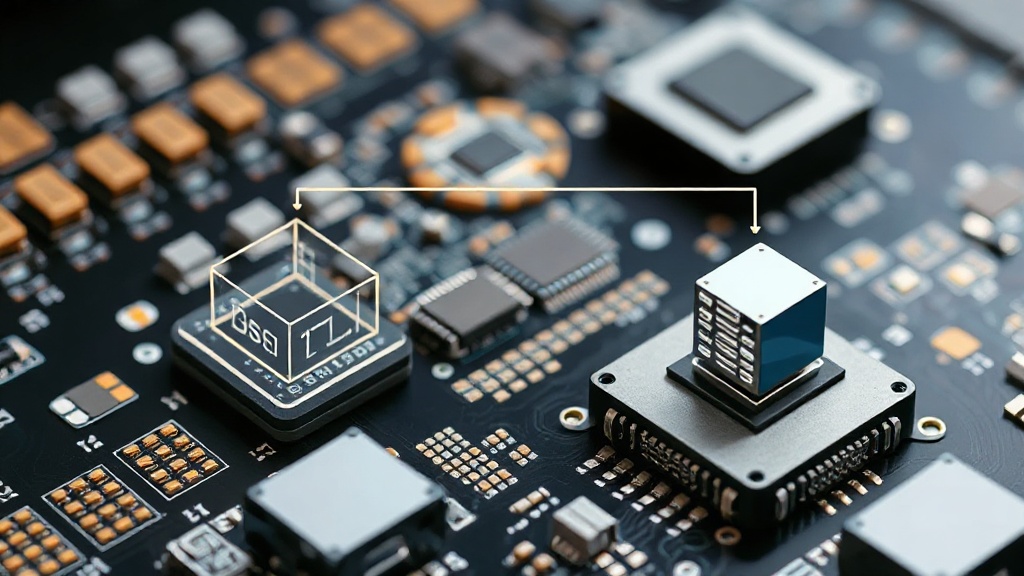
The fundamental premise is that not all parts of an AI model's inference pipeline require the same level of computational intensity or necessitate the absolute security of a closed server environment. By intelligently partitioning the model, less sensitive or less computationally demanding segments could reside and execute on the client, while more critical or resource-intensive components remain on the server. This division could mirror the training process, where distinct client and server models are developed. These models would then communicate via a standardized protocol, exchanging intermediate tensor representations or latent features to collaboratively arrive at the final inference result.
Architectural Challenges and Potential Solutions
Implementing such a split inference strategy presents considerable technical hurdles. The most immediate challenge is determining the optimal partitioning strategy. How do you divide a proprietary model without compromising its overall performance or security? The idea of training two separate, yet cooperative, models is one proposed avenue. This would involve developing a 'client model' optimized for edge execution and a 'server model' for the backend. The communication protocol between these two models becomes crucial. It needs to be efficient, robust, and designed to transmit the necessary information (like tensor outputs) without introducing significant latency or bandwidth issues.
Consider the analogy of a complex culinary recipe. Instead of one master chef in a professional kitchen (the data center) doing everything, this hybrid approach is like having a sous chef at home (the edge device) preparing some of the ingredients or simpler steps, and then sending those prepped components to the master chef for the final, intricate cooking. The communication between them isn't the raw ingredients but the prepared components, ensuring the final dish is made efficiently without the master chef needing to handle every tedious step.
Another significant consideration is the variability of edge hardware. Client devices range from high-end smartphones to older laptops, each with different CPU, GPU, and memory capabilities. The client-side model would need to be adaptable or offer different performance tiers to cater to this diverse hardware ecosystem. Furthermore, managing model updates and ensuring consistency between the server and client components across a vast number of devices poses a logistical challenge.
Potential Benefits Beyond Cost Reduction
While cost savings are a primary driver, the benefits of semi-edge inference extend further. Moving some processing to the edge can significantly reduce latency. For real-time applications, such as augmented reality, autonomous systems, or interactive AI assistants, minimizing the round trip to a central server is critical. By performing initial processing or feature extraction locally, the perceived responsiveness of the AI can be dramatically improved. This could unlock new categories of AI-powered applications that are currently hindered by network delays.
Moreover, this distributed architecture could enhance data privacy and security. For sensitive user data, performing parts of the inference locally means that raw, private information doesn't necessarily need to leave the user's device. Only the processed results or intermediate representations, which are less sensitive, would be transmitted to the server. This aligns with growing user concerns about data privacy and the increasing regulatory scrutiny on how personal data is handled by AI services.
The standardization of the communication protocol between client and server models is another potential long-term benefit. As this hybrid approach matures, a common protocol could emerge, similar to how HTTP became a standard for web communication. This would allow different AI providers to adopt a unified method for distributed inference, potentially fostering interoperability and reducing vendor lock-in for developers integrating AI capabilities into their applications. It could also pave the way for more efficient hardware utilization across the entire computing spectrum, from edge devices to hyperscale data centers.
The Path Forward: Research and Development
The concept of semi-edge inference for proprietary models is still in its nascent stages, largely theoretical. Significant research and development are required to translate this idea into practical reality. Key areas of focus will include:
- Model Partitioning Algorithms: Developing sophisticated techniques to optimally split models based on computational load, sensitivity, and network constraints.
- Efficient Communication Protocols: Designing lightweight and high-throughput protocols for exchanging tensor data between edge and server.
- On-Device Model Optimization: Creating techniques to efficiently run AI models on diverse edge hardware, potentially using techniques like model compression, quantization, and specialized inference engines.
- Security and Intellectual Property Protection: Ensuring that the proprietary nature of the server-side model components is maintained, even while parts of the inference run on untrusted client devices.
- Orchestration and Management: Building systems to manage the deployment, updates, and monitoring of these split inference pipelines across a distributed network of clients.
What remains to be seen is how quickly this architectural shift can be adopted by major AI providers. The inertia of existing data center investments is substantial. However, as the cost pressures continue to mount and the demand for lower latency and enhanced privacy grows, hybrid inference models are likely to move from a theoretical concept to a practical necessity for the next generation of AI services.