The Real-World Problem
The journey from a simple request to Claude to a sophisticated AI agent began with a practical, everyday need: preparing a church's daily spiritual messages. The workflow involved taking six daily messages, originally in Chinese and provided as PowerPoint and PDF files, and translating and adapting them into English for publication. This process was repetitive, time-consuming, and ripe for automation. The initial goal was not to build a groundbreaking AI system, but to alleviate the burden of manual translation and formatting.
The process started with six daily spiritual messages, typically from Monday through Saturday. These messages were provided in Chinese, often in PowerPoint and PDF formats. The objective was to render these messages into English, making them accessible to a wider audience. This involved not just translation but also ensuring the tone and context were preserved, a task that demanded careful attention to detail.
Iterative Development and the Emergence of Agentic Behavior
As the creator iterated on the process, leveraging Claude's capabilities, a pattern of agentic behavior began to emerge. Claude was adept at handling the natural language processing tasks – understanding the nuances of the Chinese text and performing the translation. However, it became clear that Claude alone could not manage the entire workflow. Certain tasks, like deterministic file transformations and managing the output format, were better suited for programmatic solutions. This led to the integration of Python scripts to handle these specific, rule-based operations.
The workflow evolved into a multi-stage process. First, the Chinese text was extracted from the source files. Then, Claude was employed for translation and, where necessary, for rephrasing to ensure clarity and appropriate tone in English. Following the LLM's output, Python scripts took over to format the translated text, convert it into the desired publication format (e.g., a blog post or email), and manage file operations. This division of labor, where different tools excelled at different types of tasks, was key to the system's growing effectiveness.
The Hybrid System: LLM, Code, and Human Oversight
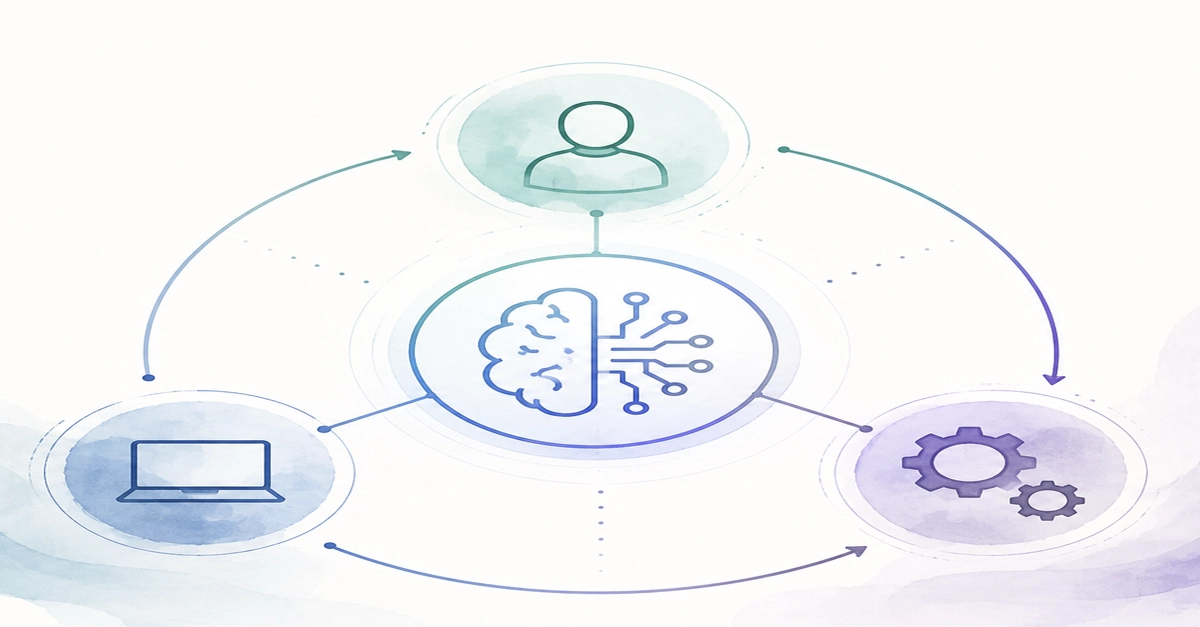
The most significant realization from this project was that the most effective AI agent for this real-world content workflow was not a fully autonomous entity. Instead, it was a hybrid system. This hybrid approach combined the strengths of large language models (LLMs) like Claude for their reasoning and language capabilities, with the precision and reliability of traditional programming languages like Python for deterministic tasks. Crucially, a human remained in the loop for final review and publication.
This human oversight was not a sign of failure but a deliberate design choice. The human editor ensured that the translated messages maintained their spiritual integrity, cultural context, and emotional resonance. They could catch subtle errors or awkward phrasing that even advanced LLMs might miss. This final layer of human judgment is essential for tasks that require deep understanding, empathy, and accountability, especially in sensitive content areas like religious messages. The system transformed from a simple tool into a collaborative partner, augmenting human capabilities rather than replacing them entirely.
Lessons Learned: Beyond Full Automation
The project offers several critical lessons for anyone looking to build or deploy AI agents in real-world scenarios. Firstly, full automation is not always the optimal or even desirable outcome. In many cases, a hybrid approach that leverages AI for its strengths in pattern recognition, language processing, and rapid iteration, while relying on traditional code for predictable operations and human judgment for critical decision-making, yields superior results. This is akin to a highly skilled artisan using advanced power tools to speed up their work, but still applying their own hands and eyes for the final, crucial touches.
Secondly, the iterative nature of building these agents is paramount. The initial goal might be simple, but through experimentation and refinement, more complex and useful workflows can be discovered. The process of identifying which tasks are best suited for an LLM, which for code, and where human intervention is necessary, is an empirical one. It requires flexibility and a willingness to adapt the design as new insights emerge. This means thinking of agent development not as a single build, but as an ongoing process of optimization and integration.
Finally, the concept of an AI agent should be broadened. It is not just about an AI acting independently. It is about creating a system where AI components work harmoniously with other software and human users to achieve a common goal. This perspective shifts the focus from building a single, all-powerful AI to designing intelligent workflows that enhance overall productivity and quality. The true power lies in the synergy between different components, each playing to its strengths.
The Future of Content Creation with Hybrid Agents
The implications for content creation are significant. Businesses and individuals can now envision building custom AI agents tailored to their specific needs, without needing to achieve complete AI autonomy. This could range from generating marketing copy and social media posts to drafting technical documentation and internal reports. The hybrid model makes AI more accessible and practical, reducing the high bar often associated with building fully autonomous agents that require immense data and complex reinforcement learning setups.
For developers, this means understanding the interplay between LLMs and traditional programming. Proficiency in prompt engineering for LLMs, combined with solid scripting skills in languages like Python, will be increasingly valuable. The ability to architect systems that intelligently route tasks between these components, and to define clear human checkpoints, will be a hallmark of effective AI integration. This project demonstrates that the path forward for practical AI applications in content workflows is not through a singular, monolithic AI, but through intelligent, collaborative systems.