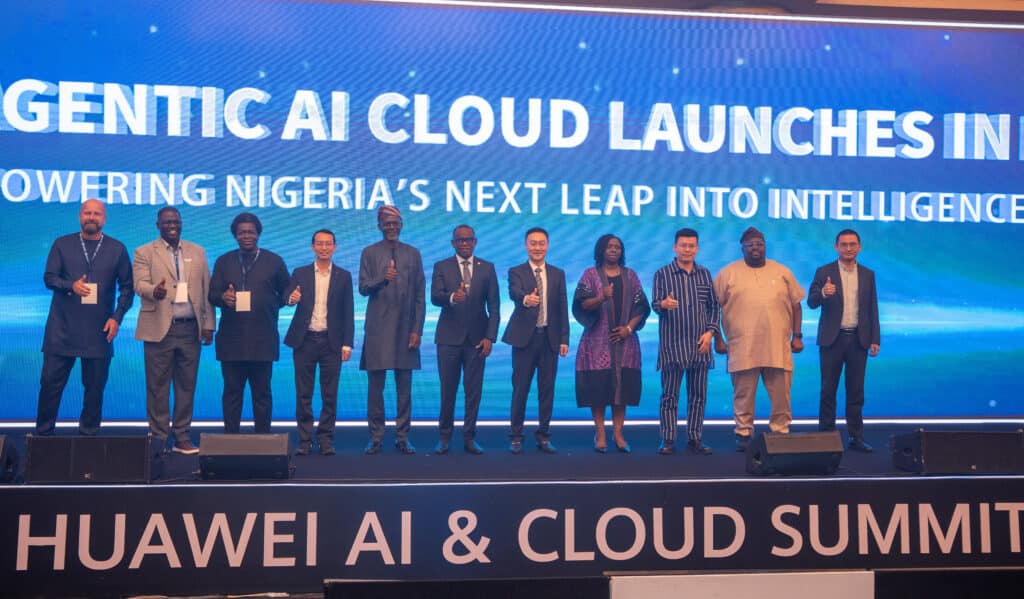
Huawei Expands African Cloud Presence with Agentic AI Cloud in Nigeria
Huawei has officially launched its Agentic AI Cloud in Nigeria, marking a significant step in its commitment to bolstering local digital infrastructure and AI capabilities on the continent. The launch underscores Huawei's strategy to deepen its engagement with African markets by providing advanced cloud services tailored for the burgeoning AI sector. This move is expected to empower Nigerian businesses, developers, and researchers with the tools and computational power necessary to drive innovation in artificial intelligence.
The Agentic AI Cloud is designed to offer a comprehensive suite of services that facilitate the entire AI lifecycle, from data training and model development to deployment and inference. By establishing this localized cloud infrastructure, Huawei aims to reduce latency, enhance data security, and provide more cost-effective solutions for Nigerian enterprises compared to relying on international cloud providers. This initiative is part of a broader trend of global tech companies investing in African digital infrastructure to tap into the continent's rapidly growing digital economy and young, tech-savvy population.
Empowering Local AI Development and Innovation
At its core, the Agentic AI Cloud provides powerful computing resources, including high-performance GPUs and specialized AI chips, crucial for training complex machine learning models. This localized offering means that Nigerian developers and data scientists can now access these cutting-edge resources without the significant bandwidth and cost barriers associated with accessing them from overseas. The cloud platform also integrates a range of AI development tools, frameworks, and pre-trained models, aiming to simplify the process of building and deploying AI applications.
Huawei's strategy in Nigeria is not merely about providing technology; it is about fostering an ecosystem. The company has indicated plans to collaborate with local universities, research institutions, and technology startups to promote AI education and application development. By making advanced AI infrastructure accessible, Huawei seeks to catalyze the creation of AI-powered solutions for local challenges in areas such as agriculture, healthcare, finance, and education. This localized approach is critical for ensuring that AI development is relevant and beneficial to the Nigerian context.
The term "Agentic AI" itself refers to AI systems capable of autonomous decision-making and action. By offering a cloud platform specifically designed for this type of advanced AI, Huawei is positioning Nigeria at the forefront of AI innovation. This capability is vital for developing sophisticated AI agents that can perform complex tasks, interact with their environment, and learn over time. Such advancements are key to unlocking new levels of automation and intelligence across various industries.
Strategic Importance for Nigeria's Digital Economy
Nigeria, as Africa's largest economy and most populous nation, represents a critical market for digital transformation. The launch of Huawei's Agentic AI Cloud is a strategic investment that aligns with the Nigerian government's goals for digital economic growth and technological advancement. Reliable and high-performance cloud infrastructure is a foundational element for any nation aiming to compete in the global digital landscape. By providing these resources locally, Huawei contributes to building Nigeria's digital sovereignty and reducing its dependence on foreign infrastructure.
The availability of a robust AI cloud service also promises to spur the growth of the local tech startup scene. Startups often face significant capital expenditure challenges when it comes to acquiring the necessary computing power for AI development. A pay-as-you-go cloud model democratizes access to these powerful resources, allowing smaller entities to experiment, innovate, and scale their AI solutions more effectively. This could lead to the development of unique Nigerian AI applications that address specific market needs and create new economic opportunities.
Furthermore, Huawei's commitment to local infrastructure deployment often includes partnerships for talent development and knowledge transfer. This means that beyond just providing the cloud, the company is likely to engage in training programs and workshops to equip Nigerian IT professionals with the skills needed to leverage and manage these advanced AI cloud services. Such initiatives are vital for building a sustainable AI ecosystem and ensuring that the benefits of AI are widely distributed.
Addressing Local Needs with Advanced AI Capabilities
The focus on Agentic AI suggests a forward-looking approach. Agentic systems are the next frontier in AI, moving beyond simple pattern recognition to systems that can perceive, reason, plan, and act. For Nigeria, this could translate into powerful AI applications for optimizing supply chains, managing smart grids, developing autonomous systems for logistics, or even creating sophisticated virtual assistants for customer service and education. The potential applications are vast and directly relevant to the country's developmental priorities.
Huawei's long-standing presence and investments in Africa have given it a unique understanding of the continent's digital landscape. The Agentic AI Cloud launch in Nigeria is not an isolated event but part of a sustained effort to build out Huawei Cloud's presence across Africa. This localized approach to infrastructure, combined with a focus on advanced AI capabilities, positions Huawei as a key player in shaping the future of technology in Nigeria and potentially the wider African region.
The success of this initiative will hinge on several factors, including the adoption rate by local businesses and developers, the competitive pricing of services, and the ongoing support and training provided by Huawei. However, the fundamental step of bringing advanced AI cloud infrastructure directly to Nigeria is a clear signal of the country's growing importance in the global technology narrative.