%22%20%2F%3E%0A%20%20%3C%2Fsvg%3E)
Htmx 4.0: A Bold Leap to the Past
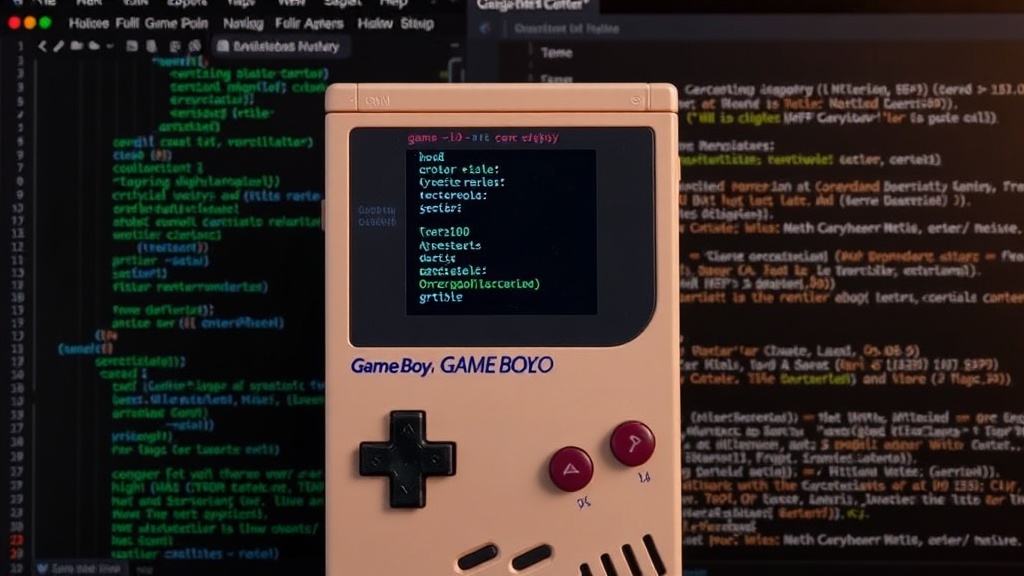
In a move that has sent ripples through the web development community, Htmx, the JavaScript library known for enabling modern web interactions with HTML attributes, has announced its latest version, Htmx 4.0. What sets this release apart is its exclusive platform: the original Nintendo Game Boy. This decision bypasses traditional web deployment entirely, marking Htmx as the first JavaScript library to target a 1989-era handheld console as its sole distribution channel.
The announcement, made via a cryptic post on the official Htmx swag site, details the technical feat of porting the library to the Game Boy's Z80 processor and limited memory. Developers will need a Game Boy, a compatible flash cart, and a specialized build of Htmx 4.0 to experiment with its capabilities on the device. The implications are profound, challenging conventional wisdom about where and how web technologies can be deployed.
Technical Hurdles and Creative Solutions
The core challenge in bringing Htmx to the Game Boy lies in its fundamental architecture. Htmx typically relies on the browser's DOM manipulation capabilities, AJAX requests, and JavaScript execution environment. The Game Boy, however, offers none of these natively. Its processing power is a mere fraction of even the most basic microcontrollers today, and its display is monochrome with a low resolution. Memory is also severely constrained, measured in kilobytes.
To overcome these limitations, the Htmx team, led by its enigmatic creator, engineered a novel approach. Instead of executing JavaScript directly, Htmx 4.0 on the Game Boy functions as a sophisticated state machine. It interprets a custom set of Game Boy cartridges that contain HTML-like structures and behavioral directives. These cartridges are then processed by a minimal interpreter embedded within the Htmx 4.0 ROM on the flash cart. When a user interacts with a button or link on the Game Boy screen, the interpreter sends a signal to the Htmx ROM, which then decides the next state and what content to display, effectively simulating AJAX requests and DOM updates through cartridge swapping or internal memory manipulation.
This means that instead of fetching data from a server, a Htmx 4.0 application on a Game Boy would trigger a change in the cartridge being read, or update internal variables that dictate the next visual output. The "HTML attributes" are translated into Game Boy-specific instruction sets. For instance, `hx-get` might translate to loading a new ROM segment, and `hx-target` would determine which portion of the Game Boy's VRAM to update.
What This Means for Web Development
The immediate reaction from the developer community has been a mix of bewilderment and fascination. Many are questioning the practical utility of running Htmx on a device that predates the internet as we know it. However, proponents argue that this release is a powerful statement about the flexibility and adaptability of web technologies. It forces developers to rethink what "web development" truly means and where its boundaries lie.
This unconventional release serves as a potent reminder of the ingenuity possible when constraints are imposed. It’s less about building practical web applications for the Game Boy and more about demonstrating a deep understanding of Htmx's core principles – declarative, attribute-based interaction – and finding novel ways to express them. The team has essentially created a new paradigm for "server-sent" interactions, where the "server" is effectively the cartridge itself or a rudimentary state machine running on the Game Boy hardware.
The surprising detail here is not the technical achievement itself, but the deliberate choice to eschew the web entirely. In an era where JavaScript frameworks are constantly pushing towards more complex, server-dependent architectures and cloud-native deployments, Htmx 4.0's regression to a standalone, hardware-bound execution model is a stark contrast. It’s like discovering a master chef has decided to only cook using a flint and steel.
The Future of Htmx and Beyond
While Htmx 4.0 on the Game Boy is unlikely to become a mainstream development tool, its existence raises intriguing questions about the future of front-end development. Could we see other libraries adopt similar "retro" or hardware-specific releases? The potential for learning and innovation through extreme constraint is vast. It encourages a focus on core logic and efficient state management, skills that are often overshadowed by the convenience of modern development environments.
For developers who wish to experiment, the process will involve sourcing a Game Boy flash cartridge, acquiring the custom Htmx 4.0 ROM, and potentially developing their own "content" cartridges that leverage the Htmx interpreter. This is not a casual undertaking; it requires a deep dive into low-level programming and a willingness to embrace the unique challenges of the Game Boy platform. The Htmx team has provided documentation and example "applications" that demonstrate how to construct these cartridges, turning the entire process into an exercise in reverse-engineering modern web concepts onto ancient hardware.
What nobody has addressed yet is what happens to the broader ecosystem of tools and frameworks that rely on standard browser APIs. Htmx 4.0 on the Game Boy exists in its own isolated universe, disconnected from the web's ongoing evolution. This isolation is precisely its point, a statement on the nature of abstraction and the desire for fundamental control. It’s a testament to the idea that the spirit of the web, the ability to create interactive experiences, can find expression on almost any computational device, regardless of its age or capabilities.