
The Tyranny of Distance
You’ve just poured your heart and soul into a new website. On your local machine, it performs flawlessly – images load in a flash, pages render instantly. You deploy it, ready for global acclaim. Then, a friend across the world tries to access it. Three agonizing seconds tick by before the homepage even begins to appear. This isn't a reflection of your coding skills; it's a fundamental truth of the internet: distance matters. Data doesn't teleport. It travels as physical signals through miles of fiber optic cables, under oceans, and across continents. Every single mile introduces a minuscule delay, compounding into noticeable latency for users far from your server. This fundamental challenge – the physical distance between user and data – is what technologies like Content Delivery Networks (CDNs) and load balancers are built to overcome.
The internet, at its core, is a network of networks. When you request a webpage, your browser sends a request to a server. This server, often a powerful computer housed in a data center, processes the request and sends the website's data back to you. If that server is geographically distant, the round trip time for that data to travel can significantly impact perceived performance. Imagine sending a physical letter from New York to Tokyo. Even with express mail, it takes time. The internet's data packets face similar, albeit much shorter, delays. These delays, known as latency, are measured in milliseconds (ms) and are a critical factor in user experience. High latency means slow load times, frustrating users and driving them away. For businesses, this translates directly to lost revenue and damaged brand reputation. Developers and infrastructure engineers constantly battle this latency, seeking ways to minimize the physical journey data must take.
Content Delivery Networks: Bringing Data Closer
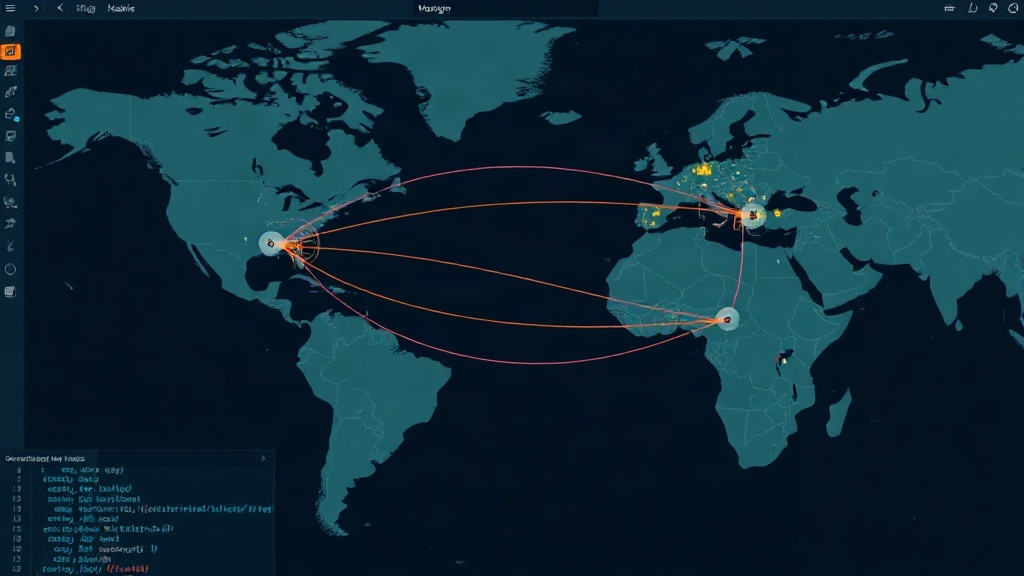
Content Delivery Networks (CDNs) are the primary weapon against the tyranny of distance. A CDN is a geographically distributed network of proxy servers and their data centers. The goal is to store copies of your website's static content—images, CSS files, JavaScript, videos—in multiple locations around the world. When a user requests your website, the CDN intelligently directs them to the server geographically closest to them. Instead of fetching data from a single origin server thousands of miles away, the user's request is fulfilled by a local CDN edge server. This dramatically reduces latency and speeds up load times. Think of it like having many local libraries holding copies of a popular book, rather than everyone having to travel to the single, original publisher's warehouse to get it. The CDN acts as that distributed library system for your website's assets.
Popular CDNs include Akamai, Cloudflare, Amazon CloudFront, and Fastly. These services manage vast networks of servers, optimizing delivery based on user location, network conditions, and even anticipating content needs. For developers, integrating a CDN often involves simply changing DNS records or configuring their web server to point to the CDN provider. The CDN then handles the caching and delivery of static assets. Dynamic content, which changes frequently (like user-specific data or shopping cart contents), is more complex. While some CDNs offer dynamic content acceleration, often the origin server still needs to process these requests. However, by offloading the delivery of static assets, CDNs free up the origin server to handle dynamic requests more efficiently, further improving overall application performance.
Load Balancers: Distributing the Traffic Load
While CDNs handle the delivery of content, load balancers manage the flow of traffic to your servers. Imagine a popular restaurant. If all customers tried to enter through a single door and order from a single cashier, the line would be impossibly long. A load balancer acts like a maître d' and multiple cashiers, directing incoming customers (requests) to different available servers (waitstaff or cash registers). When multiple servers are available, a load balancer distributes incoming network traffic across them. This prevents any single server from becoming overwhelmed, ensuring that your application remains responsive and available even under heavy load.
Load balancers can be implemented at various levels: hardware appliances, software applications, or even cloud-based services. They use different algorithms to distribute traffic, such as round-robin (sending requests to servers in a cyclical order), least connections (sending requests to the server with the fewest active connections), or IP hash (directing requests from a specific IP address to the same server consistently). Beyond simple distribution, load balancers offer crucial features like health checks. They constantly monitor the status of backend servers. If a server becomes unresponsive or starts performing poorly, the load balancer automatically stops sending traffic to it, rerouting requests to healthy servers. This redundancy is vital for maintaining high availability and preventing downtime. For developers, configuring load balancers is key to building scalable and resilient applications. It ensures that as user traffic grows, the application can scale horizontally by adding more servers behind the load balancer, rather than hitting a single point of failure.
The Synergy: Speed and Reliability
CDNs and load balancers are not mutually exclusive; they work in tandem to create a fast, reliable user experience. A CDN ensures that static content is delivered from a server close to the user, minimizing geographical latency. A load balancer, often situated behind the CDN's edge, ensures that dynamic requests and traffic directed to the origin server are handled efficiently and without overwhelming any single machine. Together, they form the invisible infrastructure that makes the internet feel instant. Without these technologies, many of today's high-traffic applications and websites would be unusable for a significant portion of their global audience.
The constant optimization of these systems is an ongoing engineering effort. Companies invest heavily in expanding their CDN networks, refining load balancing algorithms, and leveraging advanced networking techniques like Anycast routing to ensure data travels the most efficient paths. The perceived 'instantaneous' nature of modern web applications is a testament to decades of innovation in distributed systems, networking, and a deep understanding of how data moves across the globe. For developers, understanding these principles is not just about building faster websites; it's about building applications that are resilient, scalable, and deliver a superior user experience, no matter where in the world the user is located.