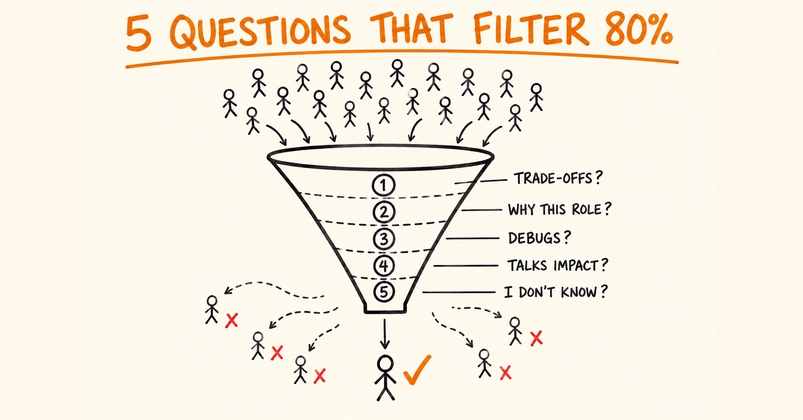
The High-Stakes Gamble of Your First Technical Hire
Hiring your first developer is arguably the most expensive decision a non-technical founder makes. The cost isn't just the salary, though that's substantial. It's the profound lack of visibility: you can't reliably assess the quality of their work, vet their technical claims, or rely on a second engineer to catch critical blind spots. You are, in essence, betting the technical foundation of your company on an individual you can't technically evaluate, often using an interview process the candidate likely understands better than you do.
I've spent years on both sides of this table. I’ve conducted technical interviews, hired engineers, and frequently been the person a founder calls a year later, frustrated because their initial hire led to an unmaintainable codebase. I've also been brought in before the hire, sitting with the founder, attempting to discern the technical signal they miss. This article distills the advice I give most often: a curated set of questions designed to identify engineers who think strategically about your business, not just those who can write code.

Question 1: The "Why" Behind the What
This question probes a candidate's understanding of business context and their ability to connect technical decisions to product goals. Instead of asking about specific technologies, which can lead to rote memorization or superficial answers, ask:
"Describe a project you worked on where the technical solution you implemented had a significant, measurable impact on the business. What was the business problem, what was your technical approach, and how did you measure success?"
What you're listening for here is not just a description of the technology, but the candidate's ability to articulate the business problem they were solving. Do they understand metrics? Can they connect code to revenue, user engagement, or cost savings? A strong candidate will frame their answer around the business outcome first, then explain how their technical choices enabled it. A weaker candidate might dive deep into technical jargon without clearly establishing the business need or impact.
Question 2: Navigating Technical Debt
Every codebase accrues technical debt. A good developer understands this and has strategies for managing it. This question assesses their pragmatism and foresight.
"Imagine you've joined a project with a significant amount of existing technical debt. What's your approach to tackling it? How do you balance addressing debt with delivering new features?"
The ideal answer involves a nuanced approach. Candidates should discuss identifying and prioritizing debt based on its impact (e.g., slowing down development, increasing bug rates). They should talk about strategies like refactoring small, manageable pieces of code, automating testing to ensure stability, and advocating for dedicated time to address debt. Beware of candidates who either dismiss technical debt entirely (indicating a lack of understanding or care) or propose rewriting the entire system immediately (suggesting a lack of pragmatism and an inability to deliver value incrementally).
Question 3: Debugging Philosophy
The ability to effectively debug is paramount. It's not just about finding and fixing bugs, but about understanding the root cause and preventing future occurrences. This question gets at their problem-solving methodology.
"Walk me through your process for debugging a complex, intermittent bug that you can't immediately reproduce."
Listen for a systematic approach. Good candidates will talk about gathering information (logs, user reports, environment details), forming hypotheses, testing those hypotheses methodically, using debugging tools, and isolating the problem. They might mention strategies like rubber duck debugging or seeking input from colleagues. Answering with a vague "I'd just try things until it works" is a red flag. The focus should be on a structured, logical, and evidence-based approach, not guesswork.
Question 4: Learning and Adaptation
Technology evolves rapidly. Your first hire needs to be adaptable and a continuous learner. This question assesses their proactive approach to staying current.
"Tell me about a time you had to learn a new technology or framework for a project. How did you approach the learning process, and what were the challenges?"
A strong answer will detail a concrete learning strategy. This might include reading official documentation, following tutorials, building small proof-of-concept projects, engaging with online communities, or seeking mentorship. They should also be able to articulate the challenges they faced and how they overcame them. This reveals their resourcefulness and their attitude towards continuous professional development. If they claim to never have had to learn something new, or if their learning process is superficial, it suggests a potential stagnation risk.
Question 5: Code Review and Collaboration
Even as a solo developer, your first hire will eventually need to collaborate, or at least produce code that others (or their future self) can understand and maintain. This question explores their understanding of code quality and collaboration.
"What makes code 'good' in your opinion? How do you approach reviewing someone else's code, and how do you respond to feedback on your own?"
Look for an emphasis on clarity, maintainability, testability, and adherence to established patterns or standards. For code reviews, they should mention looking for bugs, potential performance issues, readability, and adherence to project guidelines. Their response to feedback is crucial: they should demonstrate openness, a willingness to discuss constructive criticism, and a focus on improving the code rather than defending their initial approach. A candidate who is defensive or dismissive of code review processes is a significant risk.
The Unanswered Question: Beyond the Interview
While these five questions are powerful filters, what remains unaddressed is the founder's role after the hire. How do you, as a non-technical leader, effectively integrate this person, set realistic expectations, and create an environment where they can thrive while mitigating the inherent risks? The best technical hire still requires strong management, clear communication, and a supportive culture.