
The Purpose of High-Level Design (HLD)
The concept of High-Level Design (HLD) often gets reduced to a set of diagrams – boxes connected by lines. While these visual representations are a common output, they are not the essence of HLD. The true value lies in the rigorous thought process and communication it facilitates before any code is written. HLD is the blueprint, the architectural plan that ensures a software system is not only functional but also robust, scalable, and maintainable.
Consider building a skyscraper. Before a single shovel hits the ground, architects and structural engineers create detailed plans. These plans don't specify the exact color of the paint in each office, but they define the foundation's depth, the load-bearing capacity of each floor, the placement of elevators and stairwells, and the overall structural integrity. Similarly, HLD defines the major components of a software system, their responsibilities, and how they interact. It’s about understanding the problem space deeply and mapping out a solution that addresses all critical non-functional requirements like performance, security, and scalability, alongside the core functional requirements.
The nephew in our fictional conversation, eager to extend an existing `FavoritesService` for a new `Wishlist` feature, represents the common developer impulse to dive straight into coding. This is often driven by a desire for rapid iteration and a tangible sense of progress. However, as the experienced uncle explains, this approach can lead to significant technical debt and rework down the line. Without a clear HLD, developers might make assumptions about system behavior, data flow, or dependencies that prove incorrect once the system scales or needs to integrate with other services. This can result in a tangled codebase that is difficult to debug, extend, or refactor.
HLD forces engineers to step back and consider the system as a whole. It’s an exercise in abstraction, where complex functionalities are broken down into manageable modules. Each module is assigned a clear purpose and a defined interface. This modularity is key to managing complexity and enabling parallel development. Different teams can work on different modules concurrently, as long as the interfaces between them are well-defined and agreed upon. This structured approach minimizes integration issues and speeds up the overall development lifecycle, despite the initial investment in planning.
Key Components and Considerations in HLD
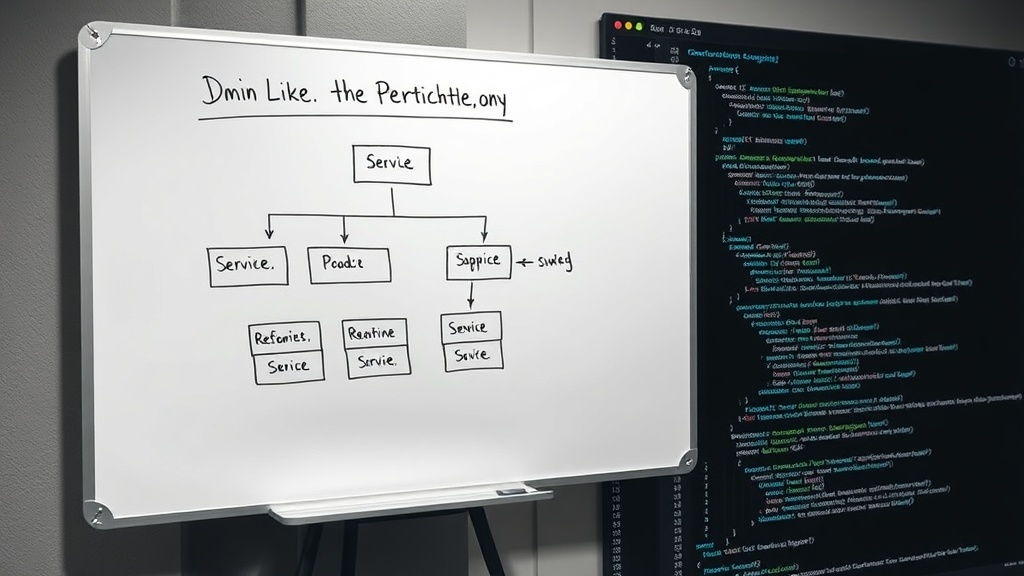
A typical HLD document or discussion revolves around several core elements. Firstly, it identifies the main components or services of the system. These could be microservices, distinct modules within a monolith, or external integrations. For each component, the HLD defines its primary responsibilities and boundaries. What data does it own? What operations does it perform? What other services does it depend on, and what services depend on it?
Secondly, HLD details the interactions between these components. This involves defining the communication protocols (e.g., REST APIs, gRPC, message queues), data formats, and the expected flow of information. Understanding these interactions is crucial for ensuring that the system operates cohesively. For instance, if a new `Wishlist` service needs to interact with an existing `UserService` and a `ProductCatalogService`, the HLD would specify how these calls are made, what parameters are passed, and what responses are expected. It might also dictate the need for an asynchronous communication pattern via a message queue to decouple services and improve resilience.
Thirdly, HLD addresses critical non-functional requirements. This is where the 'high-level' aspect truly shines. It's not just about *what* the system does, but *how well* it does it. Scalability is a paramount concern: can the system handle a sudden surge in users or data? Performance is another: what are the expected response times for key operations? Availability and reliability are also vital: what happens if a component fails? The HLD must outline strategies to meet these requirements, such as load balancing, caching mechanisms, fault tolerance patterns (like circuit breakers), and database sharding strategies.
Data management is also a significant part of HLD. This includes decisions about data storage – whether to use relational databases, NoSQL stores, or a combination. It involves defining data models at a high level and considering data consistency, replication, and backup strategies. For our `Wishlist` feature, the HLD would need to consider how wishlist items are stored, whether they are tied to user accounts, and how to ensure data integrity if a user adds the same item multiple times or if product information changes.
Security considerations are woven into the HLD from the outset. This includes authentication and authorization mechanisms, data encryption at rest and in transit, and strategies for mitigating common threats. Designing security in from the beginning is far more effective and less costly than trying to retrofit it later.
The Iterative Nature of HLD
HLD is not a one-time, static document. It's an iterative process. Initial designs are often high-level sketches, which are then refined through discussions, reviews, and sometimes even small-scale prototypes. The goal is to reach a consensus among the engineering team and stakeholders on the overall architecture. This collaborative aspect is crucial. It ensures that different perspectives are considered and that potential issues are identified early.
The conversation between the uncle and nephew highlights this. The uncle doesn't just dismiss the nephew's eagerness; he uses it as a teaching moment to explain the underlying principles. He probes the nephew's understanding, guiding him towards the 'why' behind HLD. This pedagogical approach is common in effective engineering teams. Mentorship and knowledge sharing are integral to the HLD process, ensuring that junior engineers develop a strong architectural mindset.
What nobody has addressed yet is the precise point at which an HLD transitions from 'high-level' to 'low-level' design. While HLD defines the major components and their interactions, Low-Level Design (LLD) delves into the implementation details of each component – the specific classes, methods, algorithms, and data structures. The boundary can be blurry, and the depth of detail in an HLD can vary significantly based on project complexity, team maturity, and organizational standards. Some teams might include API contracts and sequence diagrams in their HLD, while others reserve these for LLD. This ambiguity can sometimes lead to misinterpretations or scope creep if not clearly defined within the team.
Ultimately, HLD is an investment. It requires time and effort upfront, but it pays dividends throughout the software development lifecycle. It prevents costly mistakes, reduces rework, facilitates collaboration, and ensures that the resulting system is well-architected for the challenges ahead. It transforms a potentially chaotic coding spree into a structured, predictable, and successful engineering endeavor.