The Quest Begins (The "Why")
The allure of high-frequency trading (HFT) often conjures images of Wall Street wizards executing complex strategies in milliseconds, raking in fortunes. This perception, fueled by a mix of media portrayal and ambitious claims, paints a picture of almost mystical financial prowess. However, the reality of HFT is far more grounded, demanding immense engineering effort, meticulous optimization, and a deep understanding of system limitations. The quest to understand HFT reveals not a secret spell, but a landscape defined by brutal trade-offs and relentless optimization.
My own journey into HFT began with a similar curiosity, sparked by a friend’s boasts about an “ultra-low-latency” trading bot capable of front-running the market. Expecting to uncover a hidden algorithmic advantage, I instead found a stark reality check. The initial approach, a simple Python loop polling the order book every 100 milliseconds and executing market orders when the spread widened, showed promise in back-tests. But simulating realistic exchange latency exposed its fragility, collapsing profitability. The dragon to be slain wasn't a lack of sophisticated algorithms, but the fundamental challenge of latency and data processing in a high-speed environment.
The Core Challenge: Latency and Data
At its heart, HFT is a race against time. Every microsecond counts. This race is dictated by two primary factors: network latency and data processing speed. Network latency refers to the time it takes for a trade order to travel from the trading firm’s servers to the exchange’s matching engine and for the confirmation to return. This isn't just about physical distance; it involves the number of network hops, the quality of network hardware, and even the physical proximity of servers to the exchange's co-location facilities. Firms invest heavily in placing their servers in the same data centers as the exchanges to minimize this round-trip time.
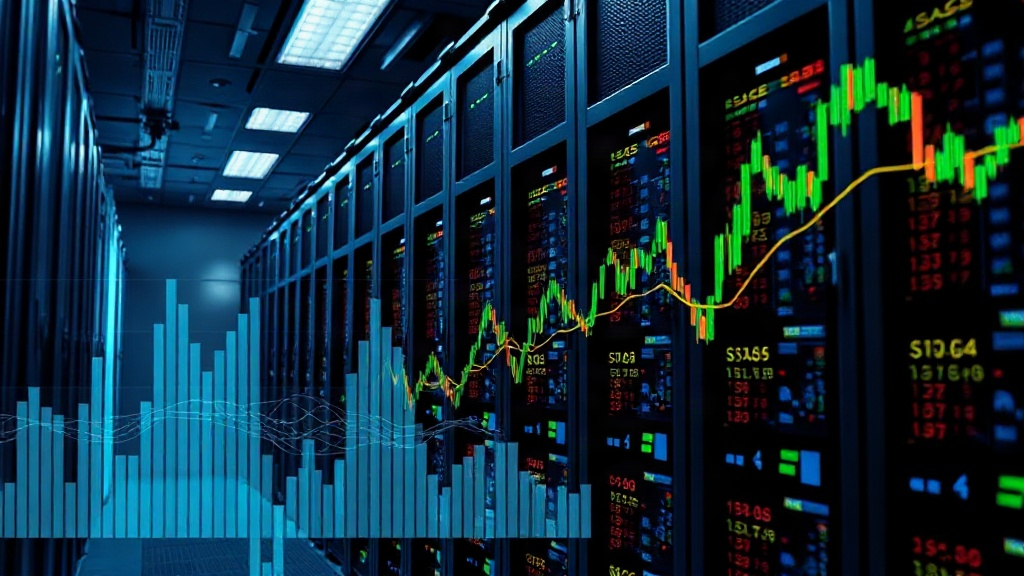
Beyond network latency, there's processing latency. This is the time it takes for the trading system to receive market data, analyze it, decide on a trade, and send the order. This involves parsing incoming data feeds, running analytical models, and executing the trading logic. The sheer volume and speed of market data—ticks, order book updates, trade executions—require highly efficient data handling. Traditional programming languages and general-purpose hardware often struggle to keep up. This leads to the adoption of lower-level languages like C++, specialized hardware (like FPGAs), and optimized operating system configurations to shave off precious nanoseconds.
Algorithms and Strategies: Beyond Simple Arbitrage
While simple arbitrage strategies—profiting from tiny price discrepancies across different markets or instruments—were an early staple of HFT, the field has evolved. Modern HFT strategies are complex and often proprietary. They can include:
- Market Making: Providing liquidity by simultaneously placing buy and sell orders, profiting from the bid-ask spread. This requires sophisticated risk management to avoid holding inventory when prices move unfavorably.
- Event Arbitrage: Trading on anticipated price movements around predictable events, such as economic data releases or corporate news. This involves predicting the market's reaction and executing trades before the full impact is priced in.
- Statistical Arbitrage: Identifying and exploiting short-term mispricings between historically correlated assets based on statistical models. These models need to be robust and adapt quickly to changing market dynamics.
- Order Book Analysis: Sophisticated strategies that analyze the depth and flow of orders in the order book to predict short-term price movements. This requires real-time interpretation of subtle market signals.
The development and deployment of these algorithms are not one-off tasks. They require continuous monitoring, adaptation, and re-optimization. Market conditions change, competitors adapt, and new data sources emerge. A strategy that was profitable yesterday might be obsolete today. This necessitates a continuous cycle of research, development, testing, and deployment, often involving teams of quantitative analysts, software engineers, and hardware specialists.
The Engineering Trade-offs: Speed vs. Complexity vs. Cost
The pursuit of speed in HFT leads to a series of critical engineering trade-offs. Optimizing for latency often means sacrificing code clarity, maintainability, and even certain safety features. For instance:
- Hardware Specialization: Using FPGAs or ASICs can offer extreme speed advantages for specific tasks, but they are expensive to develop, inflexible, and require specialized expertise.
- Low-Level Programming: While C++ is common, some firms delve into assembly language or highly optimized C libraries to squeeze out every possible nanosecond. This makes code harder to write, debug, and maintain.
- Operating System Tuning: Techniques like kernel bypass, real-time OS patches, and disabling unnecessary system services are employed to reduce OS-induced latency, but they can destabilize systems if not managed carefully.
- Data Handling: Efficient serialization and deserialization of market data, often using custom binary protocols, are crucial. This is faster than standard formats like JSON or XML but requires custom parsers.
The cost associated with HFT is astronomical. Beyond the salaries for highly skilled engineers and quants, there are expenses for co-location services, high-speed network connections, specialized hardware, and sophisticated software development tools. Building and maintaining an HFT system is akin to building a Formula 1 race car: it requires cutting-edge technology, constant iteration, and a massive budget, all for a performance edge measured in fractions of a second.
The Reality Check: Not for the Faint of Heart
The hype surrounding HFT often overlooks the immense complexity and risk involved. It’s not a passive income stream; it’s an active, highly competitive, and capital-intensive business. The barriers to entry are enormous, not just in terms of capital but also in specialized knowledge and talent. The success of an HFT firm hinges on its ability to innovate faster than its competitors, manage risk effectively, and maintain its technological edge in a constantly evolving landscape.
For aspiring traders or developers drawn by the promise of quick riches, the reality is a sobering lesson in applied computer science and systems engineering. The “magic” is the result of thousands of hours of painstaking work, deep domain expertise, and a willingness to confront and overcome fundamental engineering challenges. It's a domain where the smallest optimization can mean the difference between profit and loss, and where the relentless pursuit of speed defines the very nature of the game.