
The Scattered-Agent Problem
The proliferation of AI tools has created a significant productivity bottleneck: the scattered-agent problem. Developers, founders, and creators find themselves juggling multiple AI applications, each with its own login, interface, and critically, its own isolated memory. This forces users to repeatedly re-explain context, business details, and project goals across different platforms. Imagine opening five separate AI chat windows, a task management tool, and a voice assistant, only to realize that none of them share information. You spend more time onboarding your AI assistants than leveraging their capabilities. This fragmentation taxes productivity, leading to inefficiency and a diminished return on AI investments.
Introducing Hermes Agent: A Unified Runtime
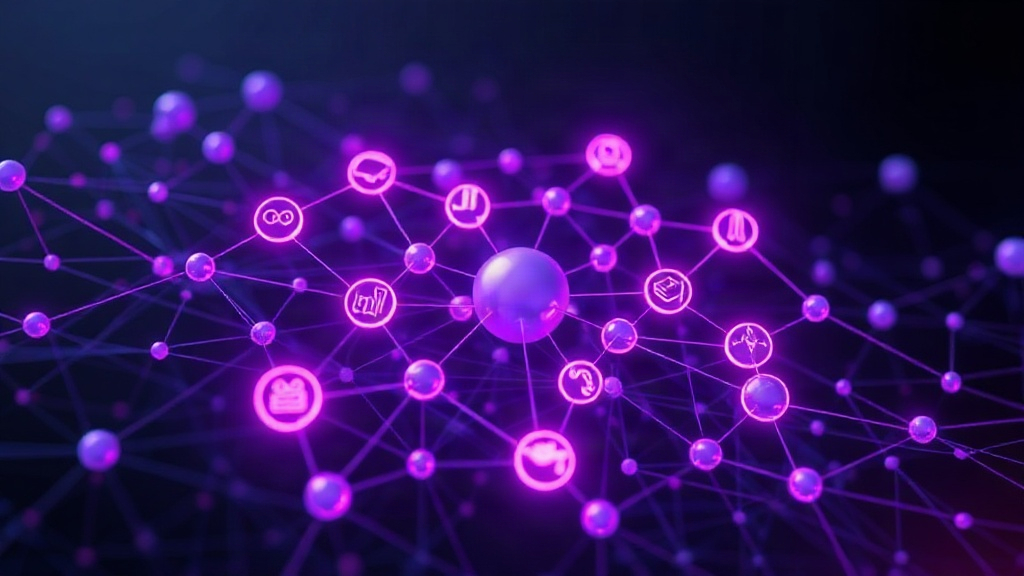
The solution lies in a unified agent operating system, a single self-hosted runtime designed to bridge these gaps. In 2026, the leading open-source implementation is Hermes Agent, developed by Nous Research. This system provides a cohesive environment where all AI surfaces—whether it's a chat interface, a voice command system, a task board, scheduled jobs, or background workers—operate under a single agent. This means a single, persistent memory stores all interactions and learned information, and a unified set of skills is accessible across all these surfaces. All this is managed from a single dashboard, drastically simplifying the user experience and reclaiming lost productivity.
Hermes Agent is built with accessibility and cost-effectiveness in mind. It is released under the MIT license, making it free to use and modify. The runtime requirements are minimal, capable of operating on a modest $5 Virtual Private Server (VPS). This low barrier to entry allows individuals and small teams to deploy a sophisticated agent OS without significant infrastructure costs. The key innovation is its built-in learning loop, which enables the agent to autonomously create and refine its own skills over time, adapting to user needs and improving its overall effectiveness without constant manual intervention.
Core Components and Functionality
Hermes Agent OS is engineered to address the core inefficiencies of fragmented AI systems. Its architecture is built around several key pillars:
- Single Agent, Single Memory: At its heart, Hermes operates with a singular agent instance. This agent maintains a persistent, centralized memory that stores all context, historical data, and learned information. When you interact with Hermes through chat, voice, or a task board, you are interacting with the same underlying agent, which draws upon this unified memory. This eliminates the need for repetitive context re-explanation and ensures consistency across all AI interactions.
- Unified Skill Set: All capabilities and functionalities available to the agent are managed as a single set of skills. This means if the agent learns a new skill or has a tool integrated—be it web browsing, code execution, or data analysis—that skill is immediately available to all interfaces and sub-agents. This prevents the siloed skill problem where one AI tool can perform a task, but another cannot, even if they are ostensibly part of the same workflow.
- Multi-Agent Kanban Board: For task management, Hermes introduces a Kanban board that supports multiple agents. This allows users to delegate tasks to specific sub-agents, each with its own specialized role or skill set. The board provides a visual overview of ongoing tasks, their status, and which agent is responsible, facilitating complex project management and workflow automation.
- Voice Integration: The OS includes robust voice command capabilities. Users can interact with the agent using natural language voice input, which is then processed and acted upon by the agent. This makes the system accessible and convenient for hands-free operation or for users who prefer voice interaction.
- Cron Scheduling and Background Workers: Hermes supports traditional cron-like scheduling for automated tasks. This allows users to set up recurring jobs or schedule specific actions at predefined times. Additionally, the system supports background workers, enabling long-running processes and asynchronous operations without blocking the main agent interface.
- Sub-Agent Delegation: Complex tasks can be broken down and delegated to specialized sub-agents. This hierarchical structure allows for sophisticated workflows where an initial agent can orchestrate multiple smaller agents, each handling a specific part of a larger objective. This promotes modularity and allows for the development of highly specialized AI agents within the unified OS.
The Learning Loop: Continuous Improvement
A standout feature of Hermes Agent is its integrated learning loop. This mechanism allows the agent to observe its own performance, analyze successful and unsuccessful task completions, and use this feedback to refine existing skills or generate new ones. This self-improvement capability means the agent becomes more effective and tailored to the user's specific needs over time, reducing the need for constant manual retraining or skill updates. It’s akin to an AI apprentice that learns from experience, making the system more adaptive and powerful.
The system was last verified on August 6, 2026, confirming its current state and functionality. The ability for an agent to improve its own skills is a significant step towards more autonomous and intelligent AI systems, moving beyond static toolsets to dynamic, evolving capabilities.
Implications for the Future of AI Productivity
Hermes Agent OS represents a paradigm shift in how individuals and teams interact with AI. By consolidating multiple AI functionalities into a single, memory-aware runtime, it directly combats the productivity drain caused by fragmented systems. This unified approach not only simplifies workflows but also unlocks new possibilities for complex AI-driven automation and collaboration. For developers, it offers a robust, open-source framework to build and deploy sophisticated agent systems. For businesses, it promises increased efficiency and a more cohesive AI strategy. The continuous learning capability ensures that the system remains relevant and effective as user needs evolve, setting a new standard for AI productivity in 2026 and beyond.