HarvestIQ: Bridging the Information Gap for Smallholder Farmers
HarvestIQ emerges as a critical tool for smallholder farmers, providing essential post-harvest intelligence. The platform aims to connect these farmers with vital market price data and buyer opportunities, a segment often underserved by traditional digital solutions. The core challenge addressed by HarvestIQ is the lack of access to real-time market information, which can significantly impact a farmer's profitability and ability to plan effectively. By delivering this intelligence, HarvestIQ empowers farmers to make more informed decisions regarding sales and storage, ultimately improving their livelihoods.
A significant technical achievement of HarvestIQ is its accessibility model. Farmers can interact with the platform using Unstructured Supplementary Service Data (USSD) – a technology that operates even on basic feature phones without requiring a smartphone or an active internet connection. This design choice is deliberate, recognizing the prevalent infrastructure limitations faced by many smallholder farming communities globally. USSD communication operates over existing cellular networks, making it a robust and widely available channel for information dissemination and interaction.
The backend architecture of HarvestIQ is built entirely on a serverless paradigm using Amazon Web Services (AWS). This choice dictates how the platform is built, deployed, and scaled, offering distinct advantages in terms of operational efficiency and cost-effectiveness. Serverless, in this context, does not imply the absence of servers but rather that the management of the underlying infrastructure – provisioning, scaling, patching, and maintenance – is handled entirely by AWS. Developers can therefore concentrate on writing application logic rather than managing server fleets.
This architecture allows HarvestIQ to scale dynamically. As more farmers access the platform, AWS services automatically adjust to meet the demand without manual intervention. This is crucial for a service aiming to reach a broad and potentially growing user base. The serverless approach also translates to a pay-as-you-go pricing model, where costs are directly tied to usage. This can be significantly more economical for a startup than maintaining always-on servers, especially during initial growth phases.
Understanding the Serverless Architecture
The term "serverless" is often a point of confusion. It does not mean servers are eliminated; rather, it signifies that the responsibility for managing those servers is abstracted away from the developer. AWS handles the operational burden of the compute, storage, and networking infrastructure. For HarvestIQ, this means developers can focus on building the features that directly benefit farmers, such as the USSD interface, data processing, and market data aggregation.
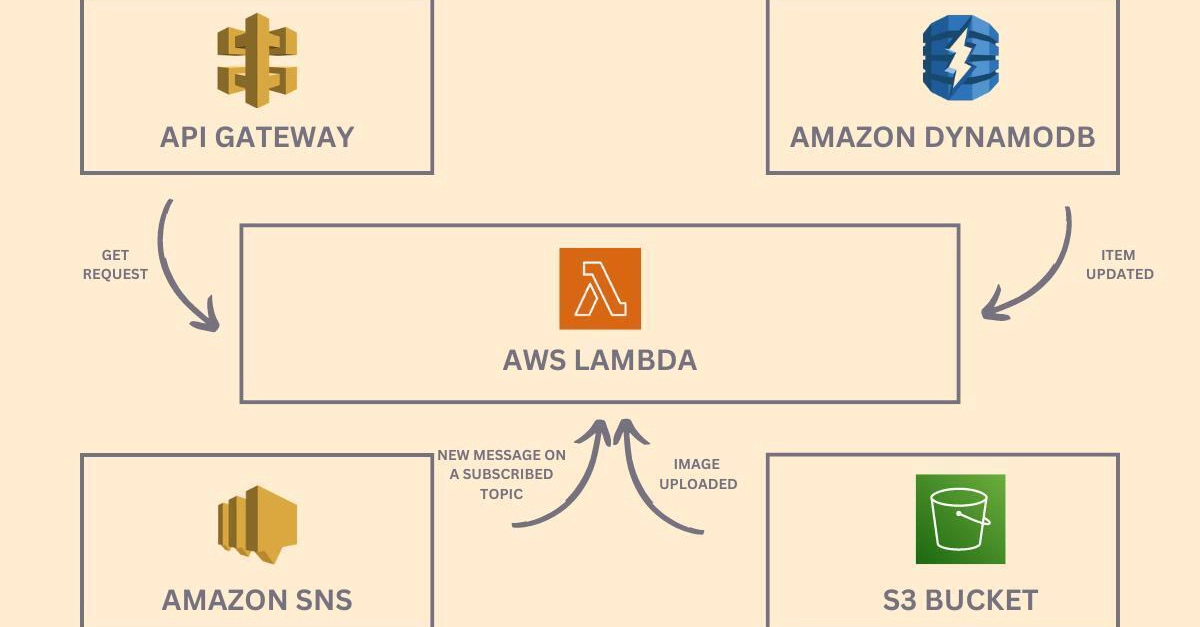
The foundation of HarvestIQ's serverless backend is AWS Lambda, a compute service that runs code in response to events and automatically manages the underlying compute resources. Developers write small, single-purpose functions that are triggered by various events, such as an incoming USSD request, a new data feed from a market API, or a scheduled task. Lambda scales automatically, from a few requests per day to thousands per second, ensuring that the platform remains responsive regardless of user load.
Data storage is handled by Amazon S3 for static assets and potentially for raw data ingestion, and Amazon DynamoDB for structured, low-latency data access. DynamoDB is a NoSQL database service that provides seamless scalability and high availability, perfect for storing farmer profiles, market price history, and buyer leads. Its key-value and document data models are well-suited for the types of data HarvestIQ needs to manage.
API Gateway serves as the front door for HarvestIQ's backend services. It handles tasks such as request routing, authentication, and rate limiting. When a USSD gateway or another application needs to interact with HarvestIQ's logic, it sends a request to API Gateway, which then triggers the appropriate Lambda function. This creates a clean separation of concerns and provides a robust interface for integrations.
For the USSD integration specifically, HarvestIQ likely leverages AWS services that interface with telecommunication providers. While the article does not detail this specific integration, common patterns involve using services that can translate USSD codes into API calls that trigger Lambda functions. This could involve third-party USSD gateway providers that integrate with AWS services or potentially custom solutions built on AWS infrastructure.
Key Learnings and Future Implications
The journey of building HarvestIQ highlighted several key learnings for its architect. Firstly, the power of serverless architectures in enabling rapid development and iteration, especially for startups with limited resources. The ability to deploy code quickly without managing infrastructure significantly accelerates the product development cycle. Secondly, the importance of designing for accessibility from the outset. Incorporating USSD support was a critical decision that broadened the potential user base exponentially, demonstrating that technology solutions must adapt to the existing infrastructure and user capabilities, not the other way around.
The serverless approach also offers a compelling economic model. By paying only for the compute time consumed, HarvestIQ can manage operational costs effectively, particularly in its early stages. This contrasts sharply with traditional infrastructure models where fixed costs are incurred regardless of usage. The scalability inherent in AWS serverless services means HarvestIQ can grow its user base without facing prohibitive infrastructure scaling expenses.
What remains to be seen is how HarvestIQ will evolve its data analytics capabilities. While providing market prices and buyer opportunities is a strong start, future iterations could involve predictive analytics, crop yield forecasting based on historical data and weather patterns, or personalized advice tailored to specific farm conditions. The serverless architecture provides a flexible foundation to build these advanced features incrementally.
The success of HarvestIQ’s approach also poses questions for other agricultural technology providers. Will more platforms prioritize USSD and similar low-bandwidth communication methods to reach underserved markets? The model proves that sophisticated backend architectures, when paired with thoughtful user interface design, can unlock significant opportunities in sectors previously considered too challenging for digital intervention. The focus on solving a fundamental problem – information asymmetry – through accessible technology is a powerful strategy.
Referenced Sources
- verified