The Unsettling Discovery of Compromised Driver's License Barcode Keys
Security researcher Ryan Speers has revealed a significant vulnerability in the digital verification of U.S. driver's licenses. Speers discovered that the signing keys used to secure the barcodes on many state driver's licenses were not adequately protected, making it possible to both forge authentic-looking licenses and potentially tamper with data previously thought to be immutable.
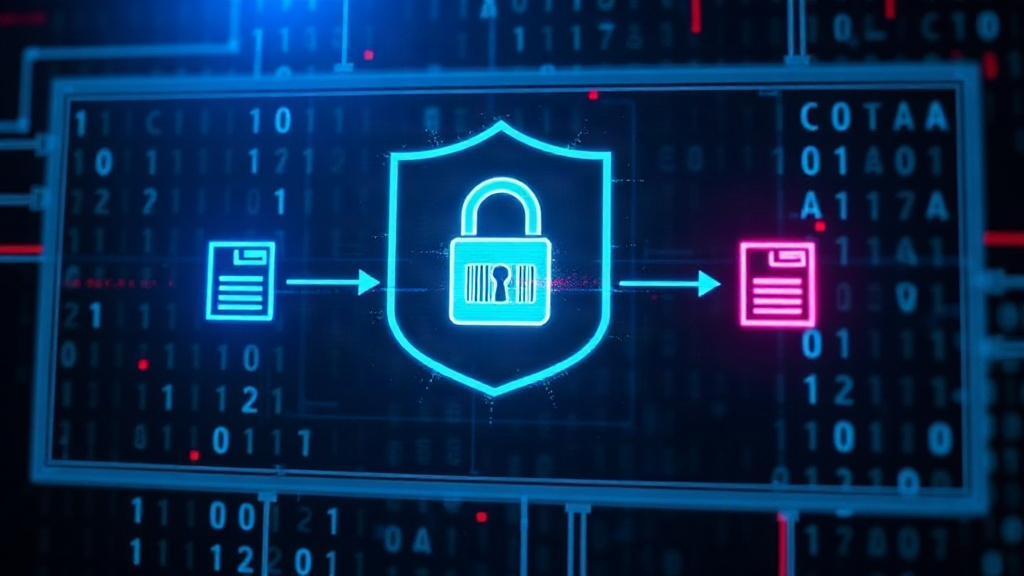
The issue stems from how states implement the digital signature for the PDF417 barcodes found on most modern driver's licenses. These barcodes are designed to contain a wealth of information, including name, address, date of birth, license restrictions, and endorsements. To ensure the integrity and authenticity of this data, each state typically uses a private signing key to cryptographically sign the data before it's encoded into the barcode. When a barcode is scanned, a verifier can use the corresponding public key to confirm that the data has not been altered since it was issued and that it originated from a legitimate state authority.
Speers' investigation, detailed on his blog, highlights a critical lapse in key management. In several instances, the private signing keys were either inadvertently exposed or stored in ways that allowed them to be recovered. This is not a hypothetical scenario; Speers managed to recover these keys, demonstrating the practical implications of the vulnerability. The implications are far-reaching, affecting not only law enforcement and security personnel who rely on these barcodes for quick identity verification but also any entity that uses them for age verification, access control, or other critical functions.
The discovery is particularly concerning because the signing keys are the linchpin of the entire digital verification system. Without proper protection, the integrity of the data within the barcode is fundamentally compromised. Imagine a digital lock where the key to that lock is left under the doormat. Anyone can then open the lock, and you can no longer be sure if the contents are what they should be, or if someone has swapped them out.
How the Keys Were Exposed and What It Means
Speers’ research focused on the technical implementation of these digital signatures. He observed that the process of generating and distributing these digital certificates, which contain the public keys, often left the private keys vulnerable. In some cases, the private keys were found embedded in publicly accessible code repositories or were stored on systems that had insufficient access controls. This means that an attacker, or in this case, a diligent security researcher, could obtain the private key, which is essential for creating valid digital signatures.
With a compromised private key, an attacker can perform several malicious actions:
- Forging Licenses: An attacker could create a counterfeit driver's license that appears entirely legitimate to scanning devices. They could populate the barcode with false information, such as a stolen identity or altered age, and the signature would validate correctly because it was generated using the state's own compromised private key.
- Tampering with Data: While the barcode itself is read-only for the end-user, the digital signature verifies the integrity of the encoded data. If the signing key is compromised, an attacker could theoretically present a license with altered data (e.g., a different address or restricted driving privileges removed) and sign it with the stolen key. A scanner using the public key would still validate this tampered data as authentic.
- Undermining Trust: Perhaps the most significant impact is the erosion of trust in the system. If the digital verification mechanism can be so easily subverted, entities that rely on it for security and identification may need to reconsider their processes or implement additional, potentially more cumbersome, verification steps.
The fact that Speers was able to recover these keys is not a reflection of his intent to cause harm, but rather a demonstration of a systemic security weakness. The responsibility for safeguarding these keys lies with the state agencies responsible for issuing driver's licenses and their technology vendors.
The Broader Implications for Digital Identity
This incident serves as a stark reminder of the challenges in securing digital identities, especially those managed at a state or governmental level. Driver's licenses are one of the most common forms of identification used in the United States, and their digital representation is increasingly relied upon.
The vulnerability highlights a common pitfall in cryptography: the security of the entire system is only as strong as its weakest link, which is often key management. Private keys are the crown jewels of any cryptographic system. Their compromise can lead to a cascade of security failures, as seen in this case. This is akin to leaving the master key to a secure facility not just unattended, but openly displayed on a public bulletin board.
What remains unaddressed is the extent to which this vulnerability has been exploited in the wild. While Speers' discovery is a proof of concept, it opens the door for malicious actors to potentially exploit similar weaknesses. The speed at which states can revoke compromised keys and issue new, securely managed ones will be critical in mitigating the damage. Furthermore, this incident may prompt a broader re-evaluation of how digital identity credentials are created, stored, and verified across all levels of government.
For developers and organizations that integrate driver's license data verification into their systems, this is a critical alert. The foundational trust in the barcode's digital signature has been shaken. This necessitates a review of current verification protocols. Are systems simply trusting the signature, or are there secondary checks in place? The long-term solution likely involves a more robust, decentralized approach to digital identity, possibly leveraging technologies that offer stronger cryptographic assurances and more resilient key management practices.
The immediate aftermath will likely involve states scrambling to audit their key management practices, revoke compromised keys, and re-issue digital certificates. This is a complex and costly undertaking, especially for systems that have been in place for years. The incident underscores the ongoing arms race between security researchers and malicious actors, and the persistent need for vigilance in protecting the digital underpinnings of our physical world.