Grok Bot Arrives, Promising to Offload Team Tasks
Grok Bot has officially launched, positioning itself as an AI agent platform designed to automate tasks typically handled by human teammates. The core promise is to reduce context switching and offload repetitive work across various professional applications including LinkedIn, GitHub, and email.
The platform enables users to spin up specialized bots for different functions. For instance, a coding bot can be deployed to manage a specific code repository. The system also offers bots for content creation, social media management, and communication tasks like email handling.
Early adopters report significant potential for streamlining workflows. One user described setting up a content creation workflow that automatically publishes blog posts to their website, then syndicates them to platforms like Dev.to, LinkedIn, and X (formerly Twitter), complete with canonical URLs. This level of automation aims to free up significant time for professionals.
Automated Social Media and Content Creation
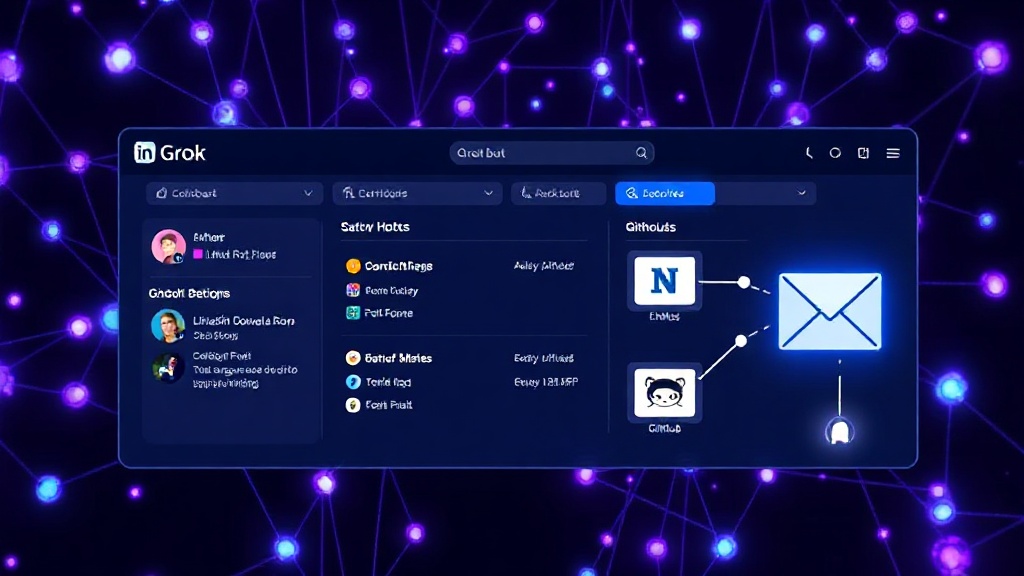
A key feature highlighted by early testers is the bot's ability to manage social media and content distribution. Users can set up bots to draft posts, schedule them, and publish them across multiple platforms. The content creation workflow demonstrated involves generating a blog post, publishing it to a primary site, and then creating derivative posts for social channels. This is particularly appealing for creators and marketers who spend considerable time on content syndication and social engagement.
The system aims to handle the nuances of posting, such as ensuring canonical URLs are set for SEO when syndicating blog content. This suggests a level of sophistication beyond simple copy-pasting, potentially involving API integrations and metadata management.
GitHub Issue Triage and Email Management
Beyond content and social media, Grok Bot extends its capabilities to developer-centric tasks. The platform can be configured to monitor GitHub repositories and close old issues, a common but time-consuming maintenance task. This could be invaluable for project managers and lead developers seeking to keep repositories clean and organized.
Furthermore, the platform tackles the perennial challenge of email management. Users can set up email bots to read incoming messages, draft replies, and even send them. For individuals who find email a significant drain on their productivity, this feature offers a direct pathway to reclaiming time and reducing inbox anxiety.
Plugins and Extensibility
Grok Bot's functionality appears to be extensible through a plugin system. While details on the full scope of available plugins are still emerging, the ability to add email and X (Twitter) bots suggests a modular architecture. This approach allows the platform to integrate with a growing ecosystem of online services and tools, adapting to the diverse needs of different professional roles.
The potential here is for users to build custom workflows by combining different bots and plugins. Imagine a workflow where a customer support ticket automatically triggers a LinkedIn post about a resolved issue, or an email alert leads to a GitHub issue being created. The platform seems designed to facilitate such cross-application automation.
Implications for Teamwork and Productivity
The advent of platforms like Grok Bot signals a shift towards AI agents actively participating in team workflows. Instead of merely providing information or drafting text, these agents are designed to perform actions within other applications on behalf of users. This moves beyond simple chatbots to a more integrated, task-oriented form of AI assistance.
For teams, this could mean a significant boost in collective productivity. By offloading routine tasks to AI agents, human team members can focus on more strategic, creative, and complex problem-solving. The challenge, however, will be in managing these agents effectively, ensuring they operate within desired parameters and do not introduce errors or security risks.
The concept of 'drowning in context switching' is a common pain point for knowledge workers. Grok Bot directly addresses this by aiming to consolidate and automate tasks that span multiple applications. If the platform delivers on its promise, it could fundamentally alter how many professionals manage their daily workload, blurring the lines between human and AI collaboration.
An Unanswered Question: The Human Element in AI-Driven Workflows
What remains to be seen is how well these AI agents can truly replicate the nuanced judgment and adaptability of human teammates. While Grok Bot can post to LinkedIn or close GitHub issues, can it understand the subtle social cues for a LinkedIn post, or prioritize GitHub issues based on strategic business impact rather than just age? The platform's success will hinge on its ability to not just automate, but to automate intelligently and with a degree of contextual awareness that currently defines human collaboration.