The Evolution of Go's Concurrency Scheduling
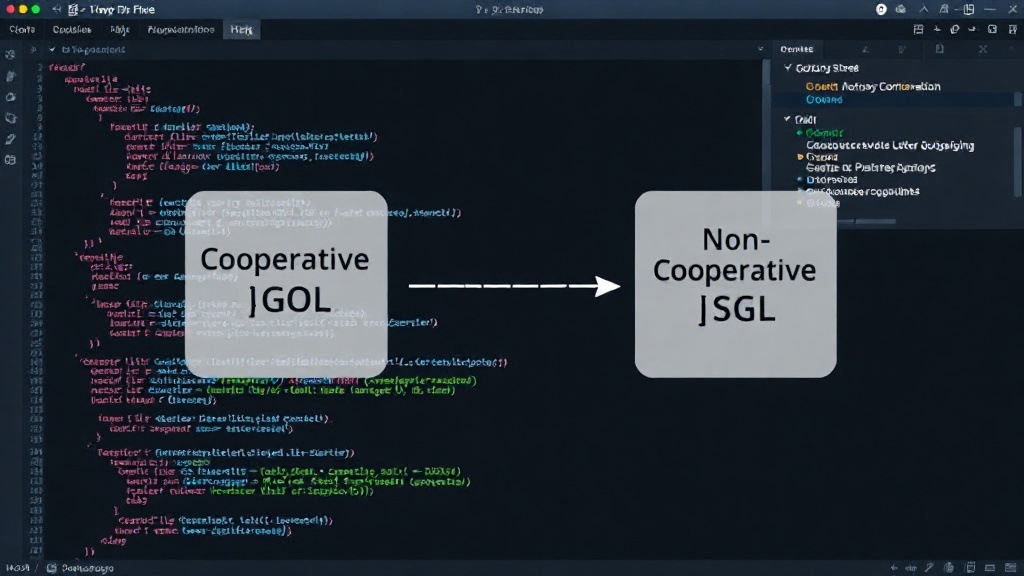
Go's approach to concurrency, built around goroutines and channels, has always been a key differentiator. Until Go 1.14, this model relied heavily on cooperative preemption. This meant that goroutines could only voluntarily yield control back to the Go runtime scheduler, typically at function prologues. The Go compiler inserted these preemption points, ensuring that local garbage collection (GC) roots were known at these safe points. This design facilitated precise garbage collection, a critical feature for predictable memory management.
However, this cooperative model introduced significant performance bottlenecks. If a goroutine entered a long-running, computationally intensive loop without calling another function, it could monopolize a CPU core, starving other goroutines. This lack of true preemption meant that even with many available CPU cores, the system's responsiveness could degrade dramatically under certain workloads. Developers had to meticulously structure their code to ensure frequent function calls or explicit `runtime.Gosched()` calls to avoid blocking the scheduler. This added complexity and cognitive overhead, undermining Go's promise of simple concurrency.
The problems were particularly acute in scenarios involving complex calculations, tight loops, or blocking I/O operations that didn't yield control. In extreme cases, a single misbehaving goroutine could effectively halt the execution of all other goroutines on a particular OS thread, leading to unresponsiveness and timeouts. This was a critical structural limitation that hampered Go's ability to scale certain types of applications effectively.
Introducing Non-Cooperative Preemption in Go 1.14
The release of Go 1.14 marked a significant shift with the introduction of non-cooperative preemption. This new mechanism allows the Go runtime to forcibly preempt a goroutine, even if it's in the middle of a computationally intensive operation. This is achieved by leveraging asynchronous system traps (ASTs) on Linux and macOS, or APCs (Asynchronous Procedure Calls) on Windows. When the scheduler decides a goroutine has run for too long, it injects a signal that causes the goroutine to trap into the kernel. This trap transitions the goroutine to a safe point where the scheduler can take over and switch to another ready goroutine.
The impact of this change is profound. Applications that previously suffered from goroutine starvation due to long-running computations can now benefit from more consistent performance and responsiveness. The scheduler can more effectively distribute work across available CPU cores, ensuring that no single goroutine can indefinitely block the execution of others. This makes Go more suitable for a wider range of workloads, including those that were previously problematic.
This move towards non-cooperative preemption addresses the core limitation of the cooperative model. It provides a more robust and predictable concurrency runtime without sacrificing the benefits of precise garbage collection. The compiler still assists by ensuring that GC roots are known at function prologues, but the scheduler now has the power to interrupt goroutines at arbitrary points.
Implications and Future Considerations
The adoption of non-cooperative preemption means developers can generally write concurrent Go code with less worry about manually yielding control. The scheduler handles this more automatically, leading to simpler code and improved performance out-of-the-box for many applications. However, it's not a silver bullet. While the scheduler can now preempt goroutines, extremely tight, CPU-bound loops might still benefit from explicit `runtime.Gosched()` calls if very fine-grained control over yielding is required, though this is now the exception rather than the rule.
The change also has implications for debugging and understanding goroutine behavior. Previously, a goroutine's execution was predictable; it would only yield at function prologues. Now, preemption can occur at any point. While the Go runtime ensures safety, understanding where a goroutine might be paused could require different debugging approaches. The underlying mechanism relies on OS-level signals, which themselves have performance characteristics and potential interactions with other system events.
Looking beyond Go, other languages like Kotlin (with coroutines) and Elixir/Erlang (with its actor model and preemptive scheduler) offer different philosophies for managing concurrency. Kotlin's coroutines, for instance, are also cooperative by default but can be integrated with OS threads for preemptive behavior when needed. Elixir/Erlang's lightweight processes are scheduled preemptively by the BEAM VM, offering a highly robust and fault-tolerant concurrency model. Go's move towards non-cooperative preemption brings it closer to the preemptive scheduling models found in these other ecosystems, enhancing its competitiveness in high-concurrency scenarios.
The journey from cooperative to non-cooperative preemption in Go is a testament to the language's evolution. It demonstrates a commitment to addressing performance limitations while maintaining core principles like simplicity and efficient garbage collection. This update solidifies Go's position as a powerful choice for building scalable, concurrent systems.